25 min readcymaticsmodal-dispersion
Cymatics Modal Dispersion Vortical Geometry Dynamics
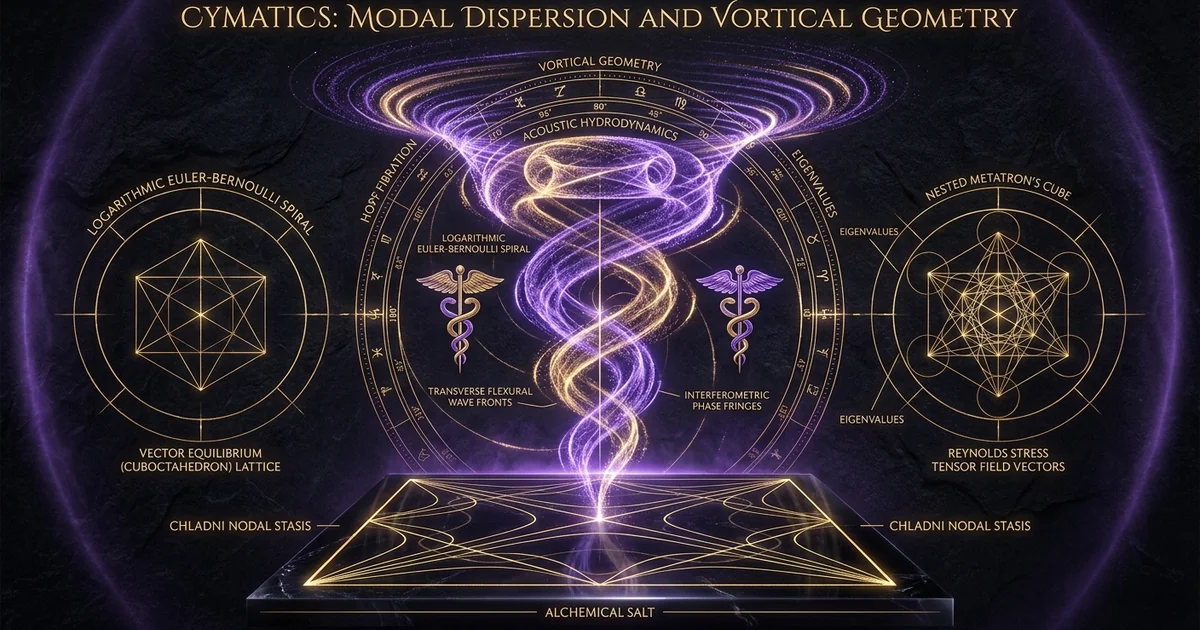
Investigating cymatics modal dispersion vortical geometry reveals how boundary-layer acoustic streaming governs hydrodynamic morphological phase shifts.
Visible Vibration, Standing Wave Harmonics & Acoustic Geometry
Sound is the invisible sculptor of physical form. When frequency acts upon matter, geometry crystallizes into life.
Epistemological principles, cosmological framework, and ontological mechanics.
Acoustics is the study of mechanical wave propagation through physical media, but Cymatics reveals its secret architectural function: sound is the primary geometric organizing force of the universe. In 1787, German physicist Ernst Chladni demonstrated that drawing a violin bow across a sand-covered brass plate caused particulates to spontaneously migrate away from vibrating regions toward nodal lines of zero motion, producing breathtaking geometric mandalas. In the 1960s, Swiss medical doctor Hans Jenny coined the term "cymatics" (from the Greek kyma, meaning "wave"), proving that sound structures fluids, powders, and viscous pastes into dynamic, pulsating analogs of organic biology.
The physics of cymatic geometry is governed by standing waves, modal dispersion, and Bessel functions. When an acoustic wave reflects between bounded surfaces, incident and reflected waves interfere constructively and destructively, establishing static pressure nodes and antinodes. In fluids, this generates Faraday wave instabilities, hydrodynamic streaming, and toroidal vortex circulations that precisely mirror embryonic cellular division, sunflowers, and galactic spiral arms.
Beyond passive visualization, advanced acoustic physics harnesses mechanical sound waves for active manipulation of physical matter. Through acoustic levitation, ultrasonic standing wave traps generate non-linear Gor'kov acoustic radiation potentials capable of suspending liquids and biological organisms in mid-air against gravity. Furthermore, in the phenomenon of sonoluminescence, acoustic pressure waves collapse microscopic gas bubbles in liquids, concentrating energy by twelve orders of magnitude to generate temperatures hotter than the surface of the Sun and emitting picosecond flashes of light.
Systematized repositories, categorical frameworks, and primary archetypal divisions.
Primary principles of wave interference, vibration geometry, and frequency visualization.
Ernst Chladni's nodal lines, boundary conditions, and particulate self-organization.
Vortices, hydrodynamic circulation, paste topologies, and living cymatic forms.
Interference patterns, acoustic pressure nodes, antinodes, and resonance harmonics.
Ultrasonic standing wave traps, Gor'kov radiation pressure, and non-contact particle manipulation.
Pythagorean tuning, just intonation, the harmonic overtone series, and musical intervals.
Endogenous cellular vibrations, mechanotransduction, and frequency-mediated healing.
111 Hz subterranean acoustic resonance in megalithic chambers and ancient sound temples.
Systematic pedagogical progression from elemental principles to operative synthesis.
Grasp fundamental acoustic wave physics, frequency, amplitude, and simple nodal patterns.
Master standing wave interference, ultrasonic transducer arrays, and fluid cymatics.
Synthesize acoustic geometry with biological morphogenesis, sonoluminescence, and archaeoacoustics.
Exhaustive historical analysis, metaphysical mechanics, and empirical syntheses.
Investigating cymatics modal dispersion vortical geometry reveals how boundary-layer acoustic streaming governs hydrodynamic morphological phase shifts.

Explore solfeggio frequencies neuroacoustics cellular repair mechanisms to decode how 528 Hz acoustic resonance regulates biomolecular dynamics in cells.
Using a containerless processing high temperature melts acoustic levitator prevents wall nucleation, unlocking deep undercooling and novel phase states.
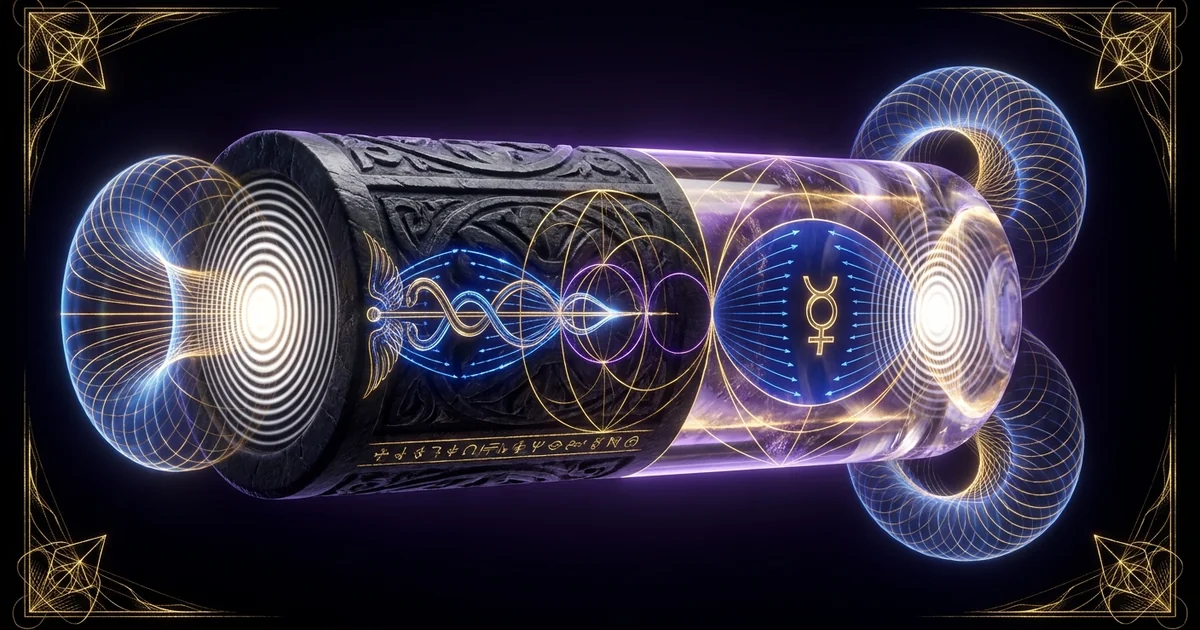
Discover how quarter-wave and half-wave resonance in open and closed cylinder acoustic systems governs standing waves and boundary impedance mismatches.

Discover how archaeoacoustics, infrasound, and altered states of consciousness intersect in ancient ritual architecture to drive somatic entrainment.
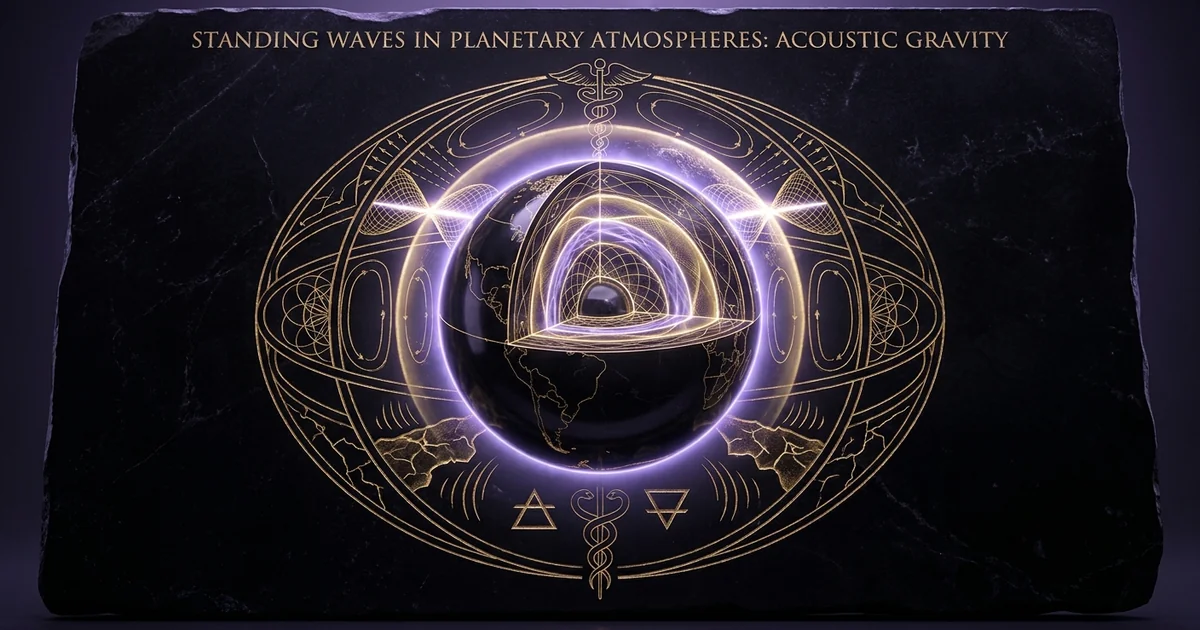
In atmospheric acoustic gravity waves standing oscillations Earth manifests global resonant cavity eigenmodes and dynamic ionospheric-plasma coupling.
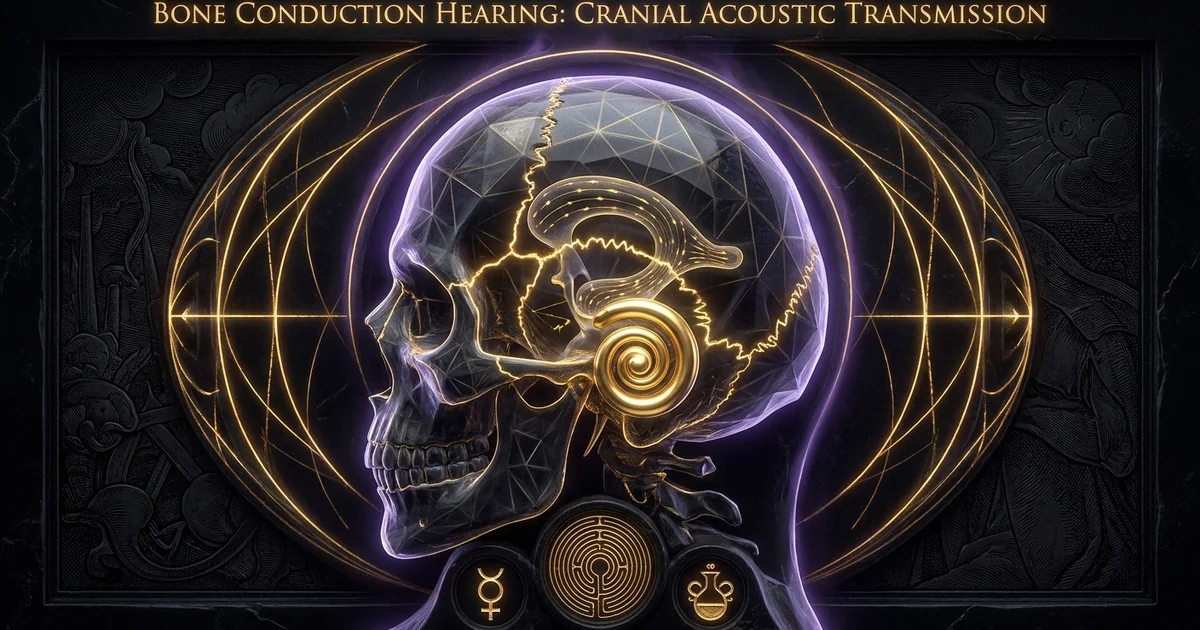
Investigating bone conduction hearing acoustic transmission skull cochlea pathways reveals non-ossicular elastodynamic acoustic wave propagation modes.
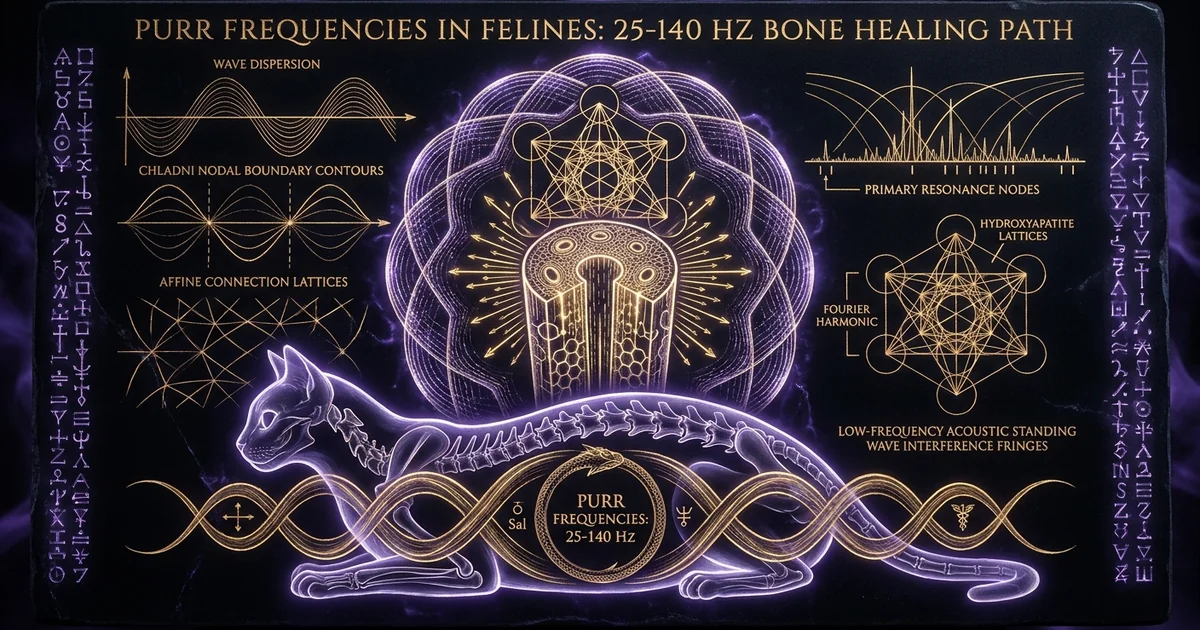
Cat purr frequencies 25 to 140 Hz bone density healing acoustic mechanisms drive osteogenesis and cellular repair through endogenous mechanotransduction.

Investigating the density limit in acoustic levitation for heavy metals like osmium and tungsten, bounded by non-linear acoustic streaming and cavitation.
Full categorical archive of all 87 authoritative treatises, historical decodings, and practical commentaries across this domain.
Primary principles of wave interference, vibration geometry, and frequency visualization.
Ernst Chladni's nodal lines, boundary conditions, and particulate self-organization.
Vortices, hydrodynamic circulation, paste topologies, and living cymatic forms.
Interference patterns, acoustic pressure nodes, antinodes, and resonance harmonics.
Ultrasonic standing wave traps, Gor'kov radiation pressure, and non-contact particle manipulation.
Pythagorean tuning, just intonation, the harmonic overtone series, and musical intervals.
Endogenous cellular vibrations, mechanotransduction, and frequency-mediated healing.
111 Hz subterranean acoustic resonance in megalithic chambers and ancient sound temples.
Experience esoteric wisdom through digital simulation. Our specialized apps model traditional archetype distributions and energetic resonance calculations in real-time.
Advanced Meditation Audio Production Studio & Sonic Alchemical Workstation
Immersive Brainwave Entrainment, Solfeggio Harmonics & Meditative Soundscapes
How Sound & Cymatics Knowledge Hub intersects with companion traditions across the four hermetic pillars.
Piezoelectric Transduction & Crystalline Oscillators
Archaeoacoustic Engineering of Megalithic Temples
Solfeggio Frequencies & Frequency Following Response
Authoritative answers to primary inquiries, historical controversies, and esoteric mechanics.
Cymatics is the study of visible sound and wave phenomena. While Ernst Chladni first popularized nodal sand patterns on vibrating metal plates in 1787, Swiss physician and natural scientist Hans Jenny formally founded modern cymatics in 1967. Using crystal oscillators and tonoscopes, Jenny demonstrated that sound frequencies organize fluids, powders, and pastes into intricate, dynamic sacred geometries mirroring biological forms.
Acoustic levitation utilizes ultrasonic transducers placed opposite an acoustic reflector (or opposing transducer arrays) to generate a high-intensity standing wave. At the acoustic pressure nodes (points of minimum acoustic pressure fluctuation), the non-linear Gor'kov acoustic radiation force counterbalances the force of gravity, trapping liquids, micro-particles, and small biological specimens in mid-air.
Sonoluminescence occurs when an intense acoustic standing wave is driven through a degassed liquid, causing microscopic gas bubbles to oscillate, expand, and violently collapse. During the final collapse phase, temperatures inside the bubble surge past 10,000 Kelvin—hotter than the surface of the Sun—emitting a sub-nanosecond flash of broadband ultraviolet and visible light.
Acoustic resonance testing conducted inside megalithic stone chambers across Europe (such as Newgrange in Ireland and the Hal Saflieni Hypogeum in Malta) reveals strong acoustic resonance spikes around 110 to 112 Hz. Neuroimaging research shows that exposure to 111 Hz selectively switches brain activity from left-hemisphere dominant linguistic processing to right-hemisphere emotional and spatial processing.
Cells are not passive biochemical bags; they possess an intricate structural cytoskeleton of actin filaments and microtubules that acts as an acoustic tensegrity network. Through mechanotransduction, external acoustic vibrations are converted into intracellular biochemical signals via stretch-activated ion channels and integrins, directly influencing gene expression and tissue regeneration.