Quarter, Half Wave Acoustic Resonance: Open-Closed Cylinder
Discover how quarter-wave and half-wave resonance in open and closed cylinder acoustic systems governs standing waves and boundary impedance mismatches.
Interference patterns, acoustic pressure nodes, antinodes, and resonance harmonics.

Discover how quarter-wave and half-wave resonance in open and closed cylinder acoustic systems governs standing waves and boundary impedance mismatches.

In atmospheric acoustic gravity waves standing oscillations Earth manifests global resonant cavity eigenmodes and dynamic ionospheric-plasma coupling.

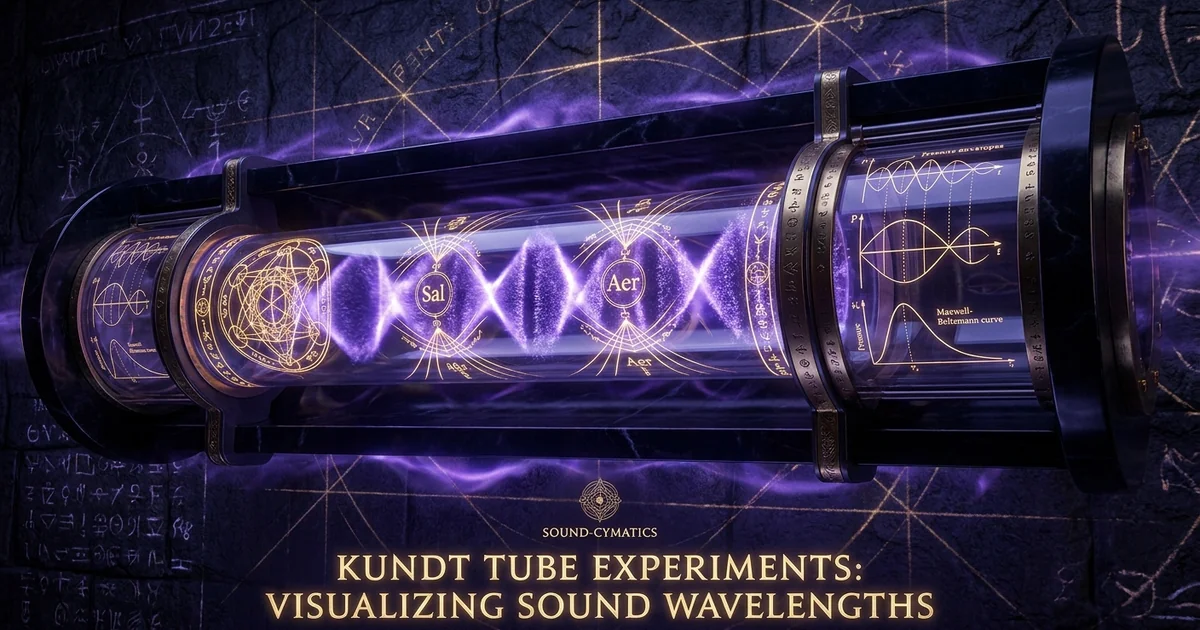
Explore the kundt tube experiment sound wavelength speed of sound gas dynamics to measure standing acoustic waves and particulate striations in tubes.

Analyze acoustic impedance matching z rho c reflection transmission across solid-gas boundaries to eliminate severe acoustic transmission loss in systems.

Discover how acoustic metamaterials and sonic crystals generate bandgaps for low frequency noise isolation, overcoming mass-density laws via resonance.

Explore acoustic pressure nodes particle trapping acoustic tweezers and radiation pressure gradient forces governing contactless micromanipulation.

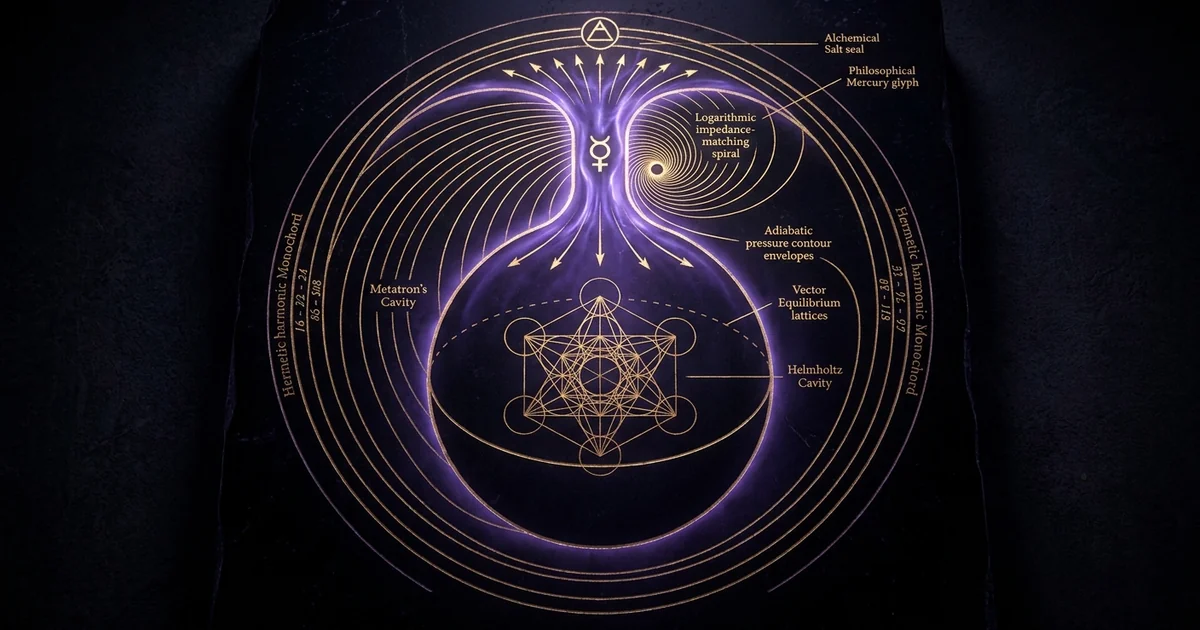
Explore the Helmholtz resonator acoustic cavity equation frequency derivation through lumped parameter modeling and acoustic compliance mechanics.

Analyze the langevin transducer piezoelectric bolt clamped ultrasonic sandwich design, electromechanical coupling factors, and resonant horn dynamics.

Explore nonlinear acoustics, shock waves, and finite amplitude distortion in gas media via Burgers equation, harmonic cascades, and acoustic streaming.

Explore the physics of room modes, standing waves, and axial, tangential, or oblique eigenmodes governing low-frequency acoustic enclosure resonances.

In standing wave physics interference counter propagating waves nodes form stationary architectures governed by zero net energy transport envelopes.

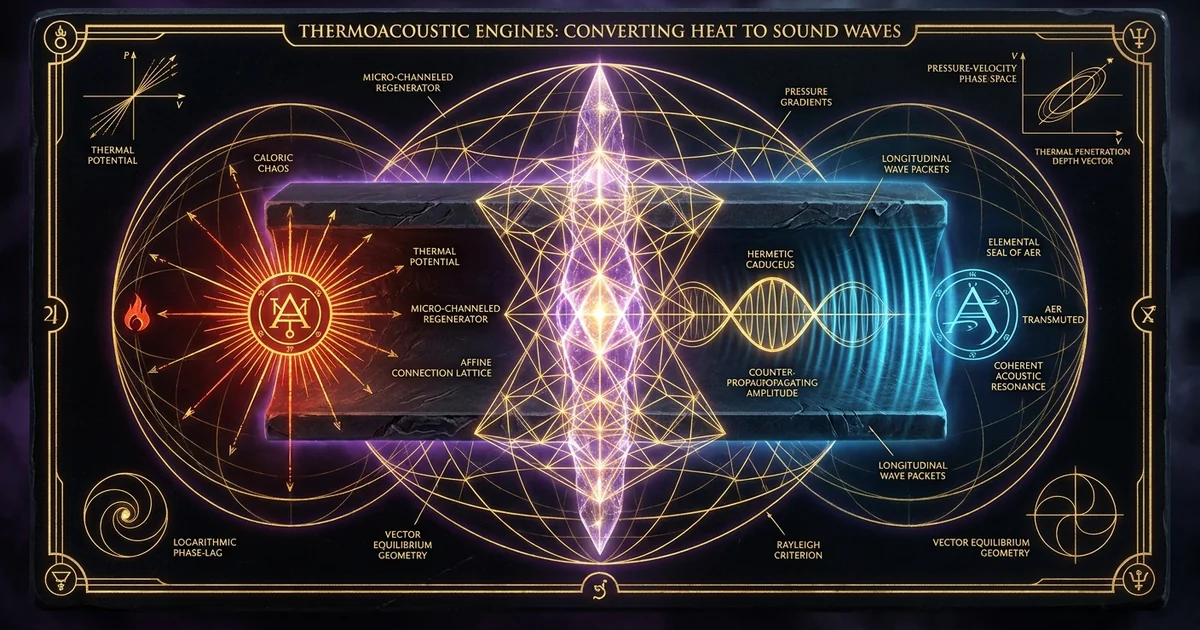
See how the thermoacoustic engine heat to acoustic power standing wave mechanism converts steep thermal gradients into work using Rott's wave equations.