28 min readpiezoelectricitypyroelectricity
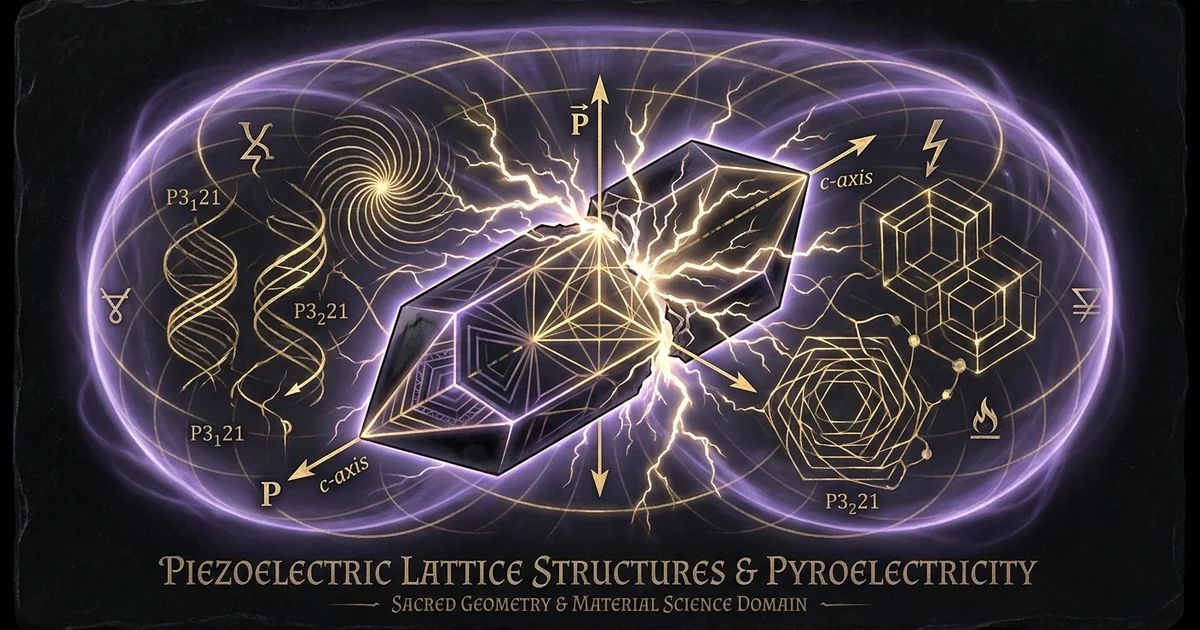
Piezoelectric Lattice Structures and Pyroelectricity
Explore piezoelectric lattice structures, pyroelectricity, and electromechanical coupling within non-centrosymmetric crystals and dielectric domains.
Mineral Lattices, Piezoelectricity & Solid-State Subtle Energetics
Crystalline lattices are nature’s pristine solid-state resonators—stabilizing electromagnetic frequencies and transducing subtle energies into physical form.
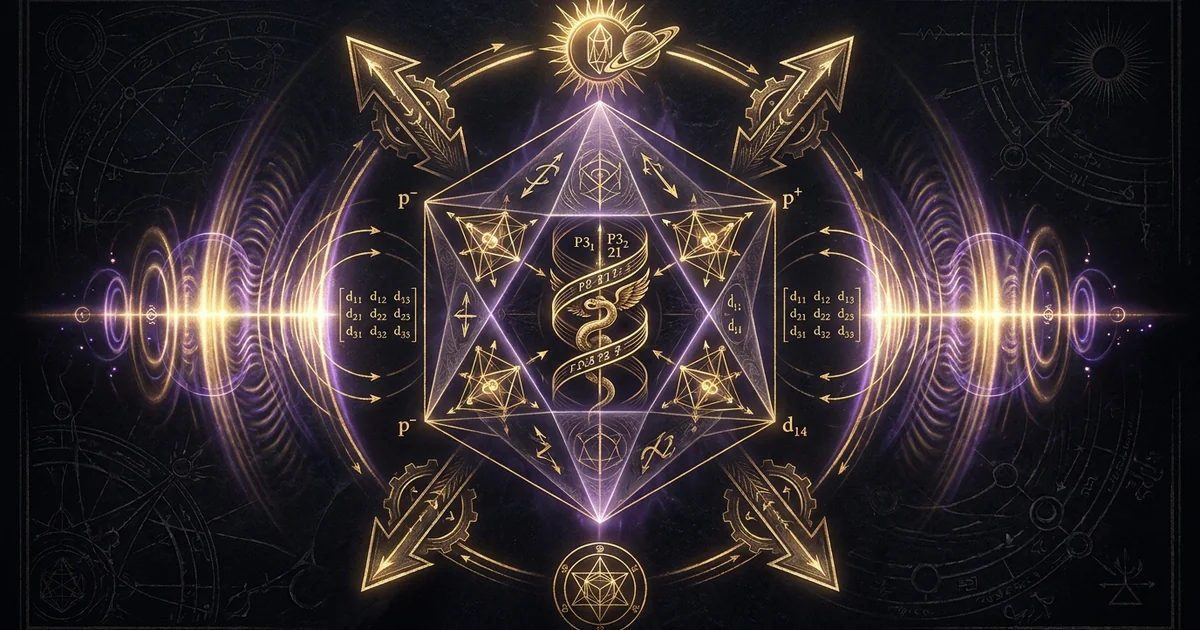
Epistemological principles, cosmological framework, and ontological mechanics.
Crystallography represents the bridge where atomic geometry dictates macroscopic physical reality. Solid matter organizes itself into one of seven fundamental crystal systems (cubic, tetragonal, orthorhombic, hexagonal, trigonal, monoclinic, triclinic) spanning the 14 Bravais lattices. These symmetrical repeating unit cells possess long-range periodic order, transforming mineral lattices into immaculate solid-state wave-guides and resonators capable of cohering electromagnetic and subtle energetic fields.
In 1880, Jacques and Pierre Curie discovered the piezoelectric effect in alpha-quartz (SiO2). Because quartz lacks a center of inversion symmetry, mechanical stress displaces positive silicon and negative oxygen ions, inducing electrical polarization across its crystalline faces. Conversely, applying an alternating electric current triggers precise mechanical oscillations. This property became the foundation of modern technology: AT-cut quartz resonators provide the unwavering chronometric heartbeat for every microprocessor, computer clock, and telecommunications satellite on Earth.
Beyond classical mineralogy, advanced materials science has engineered synthetic metamaterials displaying negative refractive indices, sub-wavelength optical focusing, and acoustic cloaking. Concurrently, pioneering research by IBM scientist Marcel Vogel demonstrated that precisely cut natural quartz crystals act as coherent subtle energetic amplifiers, focusing bio-magnetic intent in a manner directly analogous to a solid-state laser. Today, 5D optical data storage inside fused quartz glass encodes hundreds of terabytes of data across billions of years, fulfilling ancient traditions of crystals as living repositories of cosmic memory.
Systematized repositories, categorical frameworks, and primary archetypal divisions.
Over 52 minerals categorized by Mohs hardness, lattice geometry, chemical composition, and metaphysical resonance.
Curie electromechanics, dipole moments, AT-cut crystal resonators, and microelectronics.
Engineered dielectric structures, sub-wavelength optical manipulation, and acoustic cloaking.
Diamagnetism, hopper crystal geometry, scalar wave shielding, and anomalous metallurgical alloys.
Systematic pedagogical progression from elemental principles to operative synthesis.
Learn mineral identification, the seven crystal systems, Mohs hardness, and basic quartz cleaving.
Master piezoelectric dipole physics, quartz oscillator circuits, and laboratory crystal growth.
Explore exotic metamaterials, Marcel Vogel geometric cuts, and solid-state subtle energy transduction.
Exhaustive historical analysis, metaphysical mechanics, and empirical syntheses.
Explore piezoelectric lattice structures, pyroelectricity, and electromechanical coupling within non-centrosymmetric crystals and dielectric domains.
Analyze shungite fullerene molecular shielding through C60 carbon allotropes, electromagnetic attenuation, and complex dielectric permittivity dynamics.
Explore the benitoite crystal structure, uv fluorescence, barium sites, and anomalous optical dispersion in rare ditrigonal dipyramidal cyclosilicates.
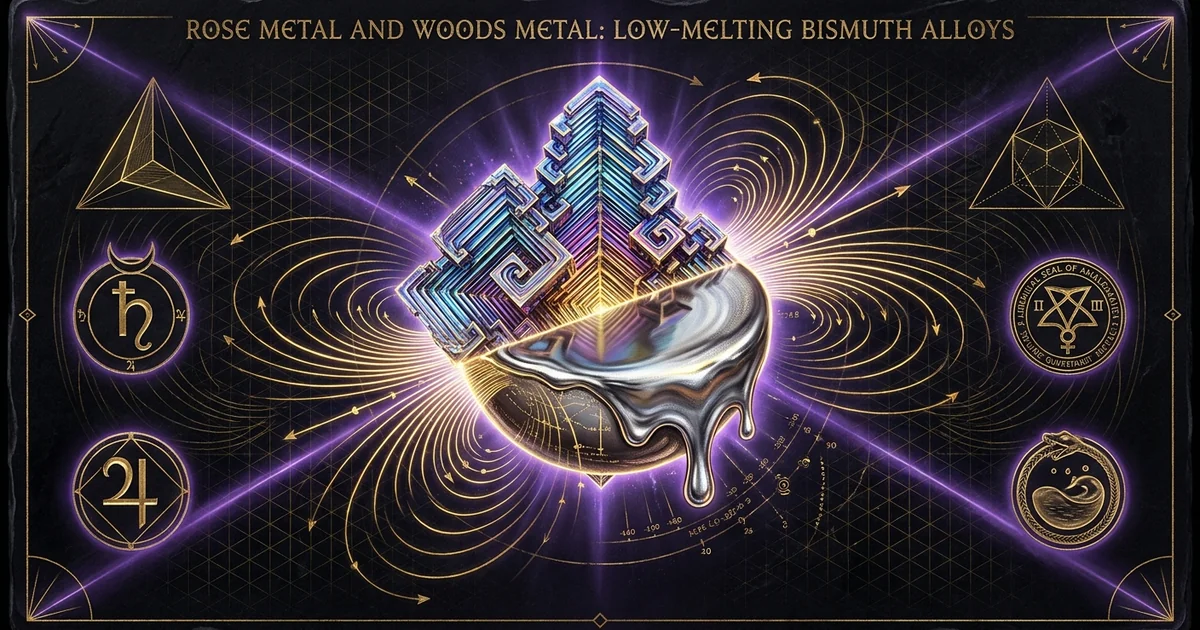
Study bismuth eutectic alloys: Woods metal, Rose metal melting thresholds, anomalous solid volume expansion, and complex quaternary phase equilibria.
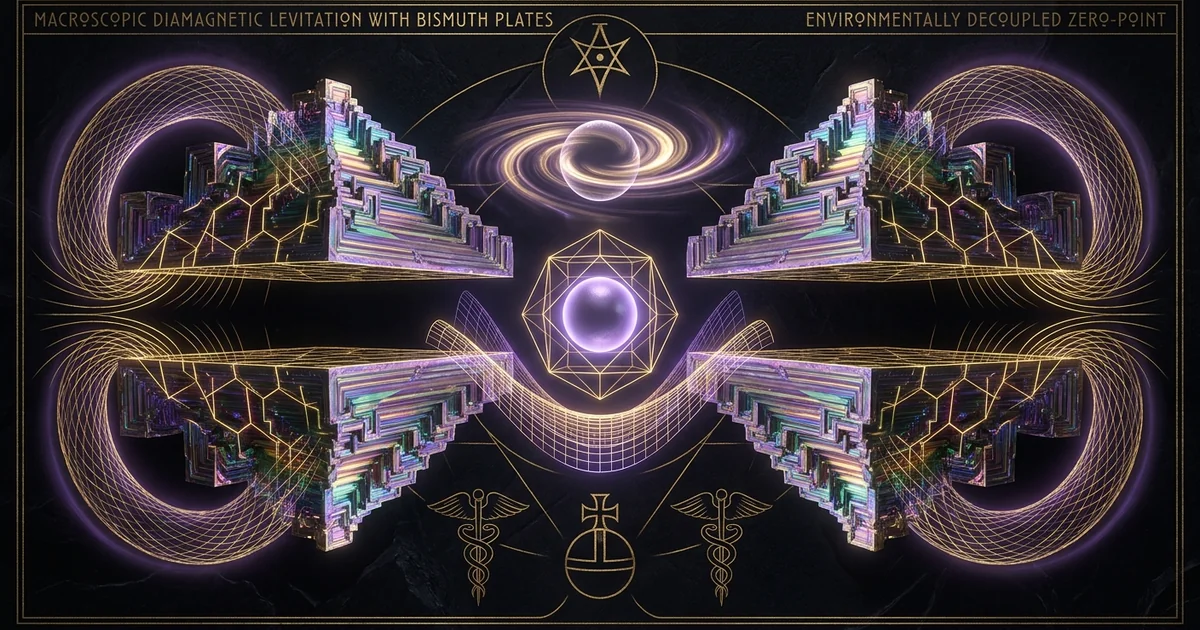
Study diamagnetic levitation bismuth neomagnets room temperature systems to bypass Earnshaw's theorem using stable macroscopic magnetic trap geometry.
Explore euclase mineralogy, a beryllium silicate perfect cleavage crystal formed in hydrothermal pegmatites with singular monoclinic acoustic resonance.
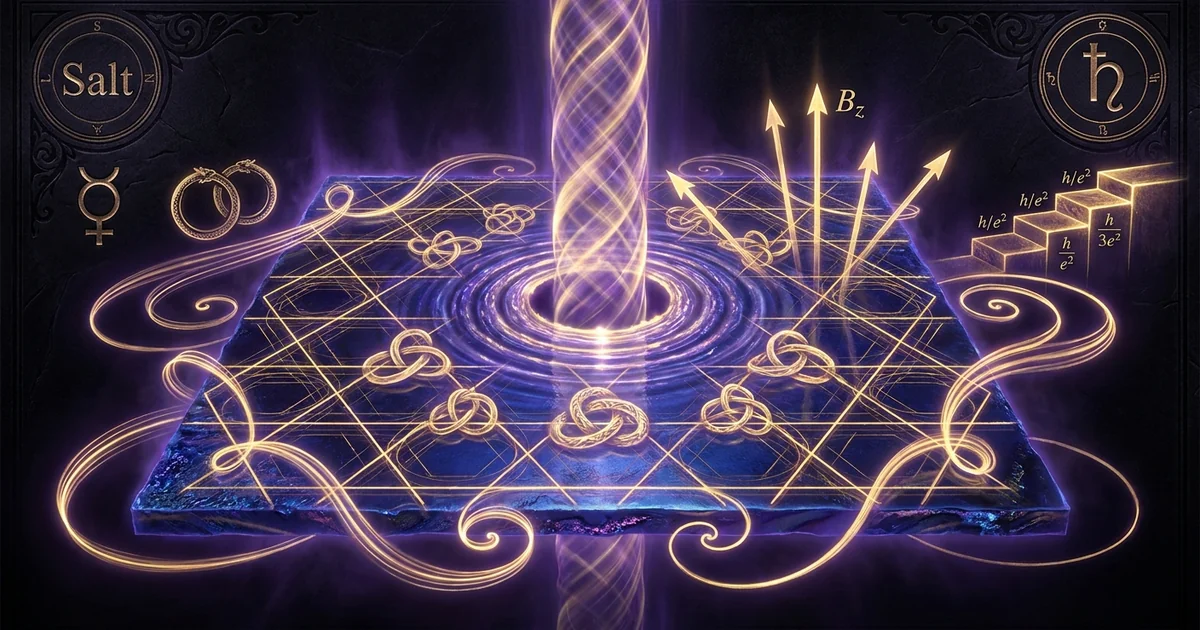
Explore the fractional quantum hall effect 2d electron gas crystals host, analyzing topological Landau levels quantization and exact von Klitzing states.
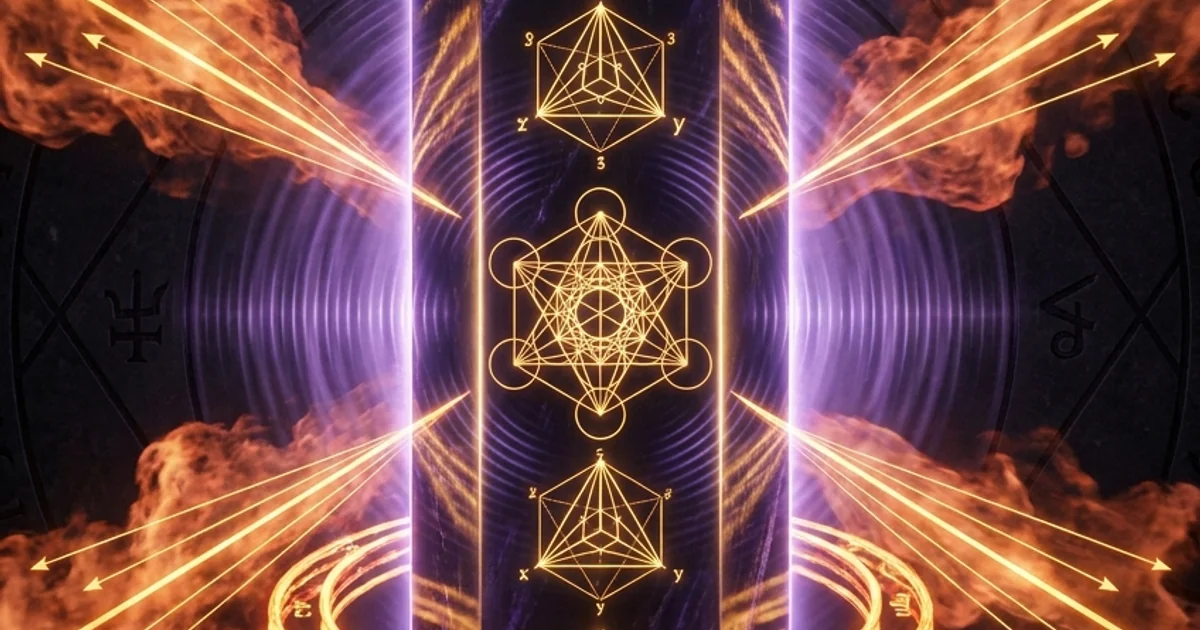
The langasite crystals high temperature piezoelectric sensor sustains electromechanical coupling up to 1400 °C without phase transitions or lattice decay.
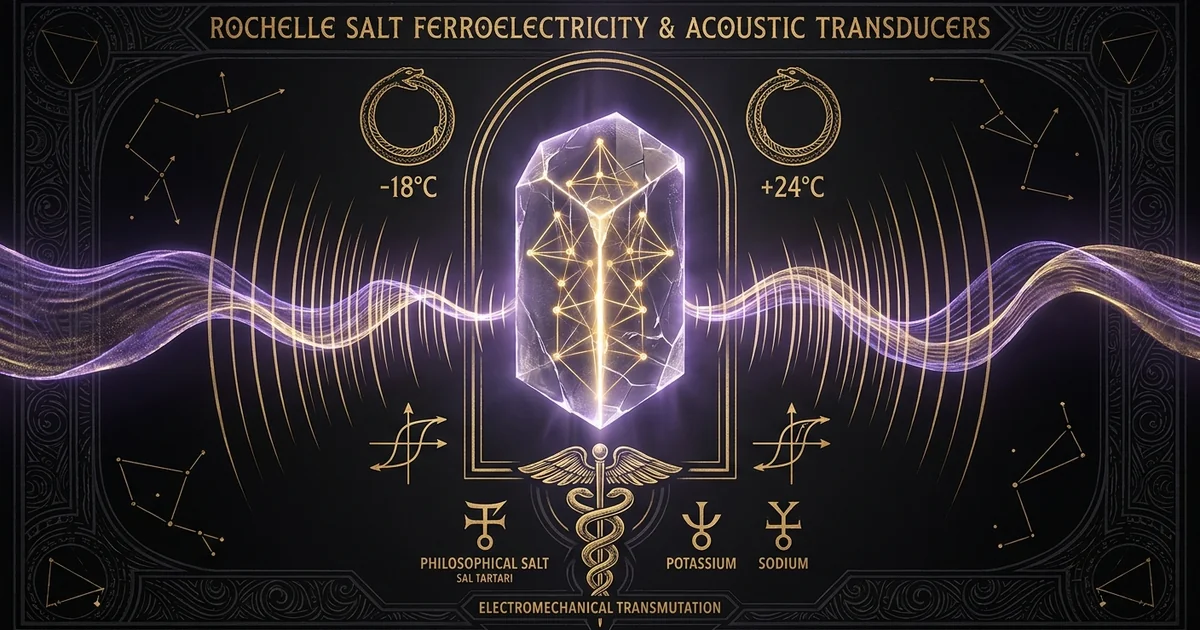
A study of Rochelle salt ferroelectric potassium sodium tartrate: examining spontaneous polarization, crystal hysteresis, and historical acoustic pickups.
Full categorical archive of all 91 authoritative treatises, historical decodings, and practical commentaries across this domain.
Over 52 minerals categorized by Mohs hardness, lattice geometry, chemical composition, and metaphysical resonance.
Curie electromechanics, dipole moments, AT-cut crystal resonators, and microelectronics.
Engineered dielectric structures, sub-wavelength optical manipulation, and acoustic cloaking.
Diamagnetism, hopper crystal geometry, scalar wave shielding, and anomalous metallurgical alloys.
Experience esoteric wisdom through digital simulation. Our specialized apps model traditional archetype distributions and energetic resonance calculations in real-time.
Advanced Meditation Audio Production Studio & Sonic Alchemical Workstation
Immersive Brainwave Entrainment, Solfeggio Harmonics & Meditative Soundscapes
How Crystals & Materials Knowledge Hub intersects with companion traditions across the four hermetic pillars.
Piezoelectric Transducers & Ultrasonic Resonators
Dielectric Metamaterials & Casimir Cavity Modulation
Sacred Geometry & The Five Platonic Solids
Authoritative answers to primary inquiries, historical controversies, and esoteric mechanics.
The piezoelectric effect, discovered by Jacques and Pierre Curie in 1880, occurs in materials that lack inversion symmetry in their crystal lattice. In alpha-quartz (silicon dioxide, SiO2), mechanical compression displaces positive silicon and negative oxygen ions, creating electrical dipoles and a measurable voltage across the crystal faces. Conversely, applying an alternating electric field causes the quartz to oscillate at an ultra-precise mechanical resonant frequency, making it the bedrock of modern microchips and digital clocks.
All crystalline minerals crystallize into one of seven geometric crystal systems based on their internal atomic symmetry: Isometric (Cubic), Tetragonal, Orthorhombic, Hexagonal, Trigonal (Rhombohedral), Monoclinic, and Triclinic. These systems govern the external cleavage angles, optical refractive indices, and electromagnetic conductive properties of every gemstone.
Marcel Vogel was an IBM research scientist who held over 100 patents in liquid crystal displays, phosphor coatings, and magnetic recording media. In his later years, Vogel investigated synthetic quartz crystallography, developing specific double-terminated quartz crystals cut precisely to 4-sided, 8-sided, or 12-sided geometries with a 51°51'14" pyramidal angle matching the Great Pyramid of Giza, intended to focus, amplify, and transduce subtle energetic frequencies.
Bismuth is an extraordinary post-transition metal possessing the strongest natural diamagnetism of any metal (repelling magnetic fields) and an extraordinarily low thermal conductivity. When cooled slowly from a molten state, it forms iridescent hopper crystals featuring stepped, spiral-staircase geometries due to faster growth rates on outside edges than interior faces, with surface oxidation creating vivid rainbow interference colors.
Developed by researchers at the University of Southampton's Optoelectronics Research Centre, 5D optical data storage uses femtosecond laser pulses to write nanoscale self-assembled nanostructures into fused quartz silica glass. The data is encoded across five dimensions: 3D spatial coordinates plus size and orientation of the nanostructures. A single quartz disc can hold 360 terabytes of data stable for billions of years at up to 1,000°C.