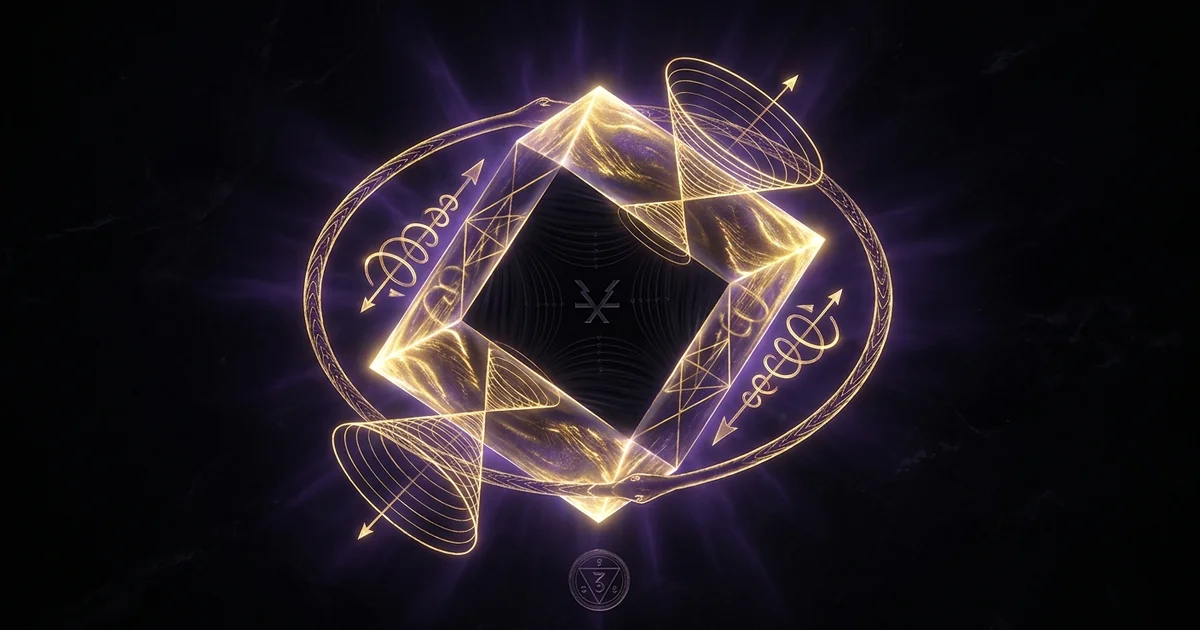
Topological Insulators: Protected Dirac Surface States
Mineral Classification & Crystallographic Thesis
Taxonomy of the Tetradymite Group and Guanajuatite Isomorphs
The tetradymite mineral group represents a distinct family of rhombohedral chalcogenides and pnictides, organized under the centrosymmetric space group $R\bar{3}m$ (space group No. 166; Pearson symbol $hR15$). Within natural mineralogical formations, this structural class includes native tetradymite ($\text{Bi}_2\text{Te}_2\text{S}$), tellurobismuthite ($\text{Bi}_2\text{Te}_3$), and the rare seleniferous isomorph guanajuatite ($\text{Bi}_2(\text{Se},\text{S})_3$), historically documented in hydrothermal vein deposits alongside acanthite and native bismuth. While natural mineral specimens frequently demonstrate solid solution deviations and non-stoichiometric defect regimes—most notably native chalcogen vacancies—stoichiometric synthetic bismuth selenide ($\text{Bi}_2\text{Se}_3$) stands as the quintessential crystallographic prototype for three-dimensional topological field dynamics.
In its ideal crystallographic realization, the primitive rhombohedral unit cell of bismuth selenide contains five atoms, whereas the conventional hexagonal unit cell comprises three repetitive, structurally distinct five-atom groupings known as quintuple layers oriented along the trigonal $c$-axis. Within the overarching classification of condensed matter systems, this structural ordering places bismuth selenide at the convergence of heavy pnictogen metalloid chemistry and anisotropic layered materials, contrasting fundamentally with isotropic silicate frameworks such as piezoelectric quartz lattices. Where traditional lapidary matrices establish crystalline order via rigid tetrahedral or octahedral networks of uniform ionic or covalent character, the tetradymite structure exhibits an alternating hierarchy of robust intra-layer covalent-ionic bonding and fragile inter-layer dispersion regimes.
      Se1 ——— Bi ——— Se2 ——— Bi ——— Se1  <-- Quintuple Layer (~0.96 nm)
    ====================================== <-- Van der Waals Cleavage Gap (~0.28 nm)
      Se1 ——— Bi ——— Se2 ——— Bi ——— Se1  <-- Quintuple Layer
This structural architecture dictates the material’s mechanical cleavage profile, anisotropic electronic transport, and characteristic polarizability. The atomic constituents possess disparate electronegativities (2.02 for bismuth, 2.55 for selenium on the Pauling scale), which generates an asymmetric internal electric potential across each internal atomic plane. Consequently, the material belongs to a crystallographic lineage wherein structural anisotropy is not an incidental defect, but the exact geometric prerequisite for non-trivial quantum phases. The mineralogical classification of guanajuatite and laboratory-grown $\text{Bi}_2\text{Se}_3$ must therefore be approached not merely through classical descriptive mineralogy, but as macroscopically realized quantum materials whose macroscopic crystalline boundary terminates an intrinsically relativistic bulk electronic configuration.
Primary Crystallographic & Dielectric Invariants for Stoichiometric Bismuth Selenide:
- Space Group: $R\bar{3}m$ (Rhombohedral, No. 166; Hexagonal setting)
- Hexagonal Lattice Constants: $a = 4.138\ \text{Å}$, $c = 28.64\ \text{Å}$
- Inter-Quintuple Layer Separation (van der Waals gap): $\sim 2.8\ \text{Å}$
- Bulk Electronic Bandgap ($E_g$): $0.30\ \text{eV}$ (direct bulk gap at the $\Gamma$-point)
- Static Dielectric Constant ($\epsilon_\infty$): $\sim 29$ (low-frequency limit along $a$-$b$ plane)
- Mohs Hardness: $2.0\text{–}2.5$ (exhibiting perfect micaceous cleavage along the (0001) basal plane)
- Reference: Zhang, H., Liu, C. X., Qi, X. L., Dai, X., Fang, Z., & Zhang, S. C. (2009). Topological insulators in $\text{Bi}_2\text{Se}_3$, $\text{Bi}_2\text{Te}_3$ and $\text{Sb}_2\text{Te}_3$ with a single Dirac cone on the surface. Nature Physics, 5(6), 438–442.
The Topological Invariant: Z2 Classification and Bulk Inversion
The differentiation between an ordinary, trivial dielectric insulator and a non-trivial topological insulator relies on the global topological properties of the crystal’s electronic ground-state wavefunctions across the complete Brillouin zone. In classical band theory, an insulator is characterized exclusively by the presence of a forbidden energy gap separating a fully occupied valence band from an unoccupied conduction band. However, in heavy-atom semiconductors, this energy landscape undergoes a profound transformation. In bismuth selenide, the nuclear charge of bismuth ($Z = 83$) introduces immense relativistic corrections to the single-particle Hamiltonian, predominantly manifested via atomic spin-orbit coupling (SOC), an interaction governed by the operator:
$$H_{\text{SOC}} = \frac{\hbar}{4m_0^2 c^2} (\boldsymbol{\nabla} V \times \mathbf{p}) \cdot \boldsymbol{\sigma}$$
Because the magnitude of spin-orbit coupling scales approximately as $Z^4$ relative to the atomic number, the inner core electrons induce an orbital velocity approaching relativistic fractions of $c$. This relativistic contraction drastically alters the energetic ordering of the outer valence and conduction manifolds.
At the center of the Brillouin zone—the high-symmetry $\Gamma$-point ($\mathbf{k} = 0$)—the chemical hierarchy mandates that the valence band maximum is composed predominantly of selenium $4p$ orbitals exhibiting odd spatial parity, while the conduction band minimum is composed of bismuth $6p$ orbitals exhibiting even spatial parity. In the absence of spin-orbit coupling, these bands maintain a conventional, topologically trivial energy separation.
When the non-perturbative spin-orbit interaction is introduced, the energetic levels are driven across one another: the odd-parity selenium-derived states are pushed upward into the conduction regime, while the even-parity bismuth-derived states are forced downward into the valence regime. This phenomenon, known as band inversion, fundamentally re-orders the wavefunctions at the $\Gamma$-point.
      Trivial Regime (Low SOC)            Inverted Regime (Bi2Se3 via Strong SOC)
      ------------------------            ---------------------------------------
       Conduction: Bi 6p (+)               Conduction: Se 4p (-)   \  Surface
      ========================   -->      ========================  >< Dirac
        Valence:  Se 4p (-)                 Valence:  Bi 6p (+)    /  Crossing
Because the crystal preserves spatial inversion symmetry along with time-reversal invariance, this band inversion can be mathematically quantified via the $\mathbb{Z}_2$ topological invariant, formulated by Fu and Kane. The $\mathbb{Z}2$ invariant classifies three-dimensional time-reversal-invariant materials into either trivial ($\nu_0 = 0$) or strong topological ($\nu_0 = 1$) categories based on the product of the parity eigenvalues $\xi{2m}(\Gamma_i)$ of the occupied valence bands at the eight Time-Reversal Invariant Momentum (TRIM) points $\Gamma_i$ of the Brillouin zone:
$$(-1)^{\nu_0} = \prod_{i=1}^{8} \prod_{m=1}^{N} \xi_{2m}(\Gamma_i)$$
For stoichiometric $\text{Bi}_2\text{Se}_3$, the parity inversion occurs exclusively at an odd number of TRIM points—specifically at the singular $\Gamma$-point, while the other seven TRIM points ($L$ and $T$) maintain ordinary atomic parities. The resulting evaluation yields $\nu_0 = 1$, designating $\text{Bi}_2\text{Se}_3$ as a strong topological insulator denoted by the topological index $(\nu_0; \nu_1 \nu_2 \nu_3) = (1; 000)$. The non-zero topological invariant is mathematically robust: no continuous deformation of the bulk Hamiltonian—no adiabatic modification of interatomic distances or crystalline potentials—can eliminate this inverted order without entirely closing the bulk energy gap. The bulk insulator is topologically distinct from the surrounding vacuum (which has $\nu_0 = 0$), setting up an irreconcilable topological discontinuity at the crystalline boundary.
The Macroscopic Duality: Electronic Silence vs. Dissipationless Boundaries
The fundamental consequence of a non-trivial bulk $\mathbb{Z}_2$ invariant is the bulk-boundary correspondence. Because the material’s bulk electronic manifold possesses an inverted topological invariant ($\nu_0 = 1$) while the contiguous exterior dielectric vacuum is topologically trivial ($\nu_0 = 0$), the bulk energy gap must vanish at the interface between the two domains. The mathematical necessity of this boundary condition forces the conduction and valence bands to intersect at the crystal surface, giving rise to gapless, metallic surface states that reside entirely within the bulk forbidden bandgap ($E_g \approx 0.30\ \text{eV}$).
                     VACUUM (Trivial: ν = 0)
   ===========================================================  <-- Crystal Surface
     GAPLESS METALLIC BOUNDARY: Linear Dirac Cone (E = ħ v_F k)
   ===========================================================  <-- Interface
                 CRYSTAL BULK (Non-Trivial: ν = 1)
     INSULATING DIELECTRIC CORE: Bulk Gap E_g = 0.30 eV
     Electronic and Vibrational Silence (High Dielectric Screening)
This arrangement produces a macroscopic duality: topological insulators bulk insulator conducting surface. The interior geometry of the crystal acts as a true dielectric solid, demonstrating minimal electrical conductivity, low electronic dissipation, and an exceptionally high low-frequency dielectric constant ($\epsilon_\infty \sim 29$) that dynamically screens long-range Coulomb interactions. In an idealized, defect-free specimen, the interior volume of the crystal represents a state of electronic silence, exhibiting vanishing density of states at the Fermi level when the Fermi energy ($E_F$) is tuned within the $0.30\ \text{eV}$ gap.
Conversely, the two-dimensional surface terminations behave as high-mobility, dissipationless conductors. Rather than obeying the standard parabolic dispersion relation of conventional non-relativistic electron gases ($E = \hbar^2 k^2 / 2m^*$), the surface charge carriers propagate as massless Dirac fermions characterized by a strictly linear dispersion relation:
$$E(\mathbf{k}) = \hbar v_F |\mathbf{k}|$$
where $v_F \approx 5.0 \times 10^5\ \text{m/s}$ represents the Fermi velocity. At these boundaries, charge transport is topologically decoupled from the bulk insulating volume. The surface states are immune to thermal and mechanical perturbations that do not violate the underlying symmetries of the Hamiltonian.
This solid-state duality establishes an architecture wherein an inert, high-impedance dielectric core is wrapped within a self-organizing, dissipation-free conducting boundary. The crystal serves as a solid-state archetype of energetic containment: an invariant boundary sheath isolating a silent interior sanctuary from external perturbations.
Lattice Geometry & Solid-State Physics
Quintuple Layer Stratification and Van der Waals Terminations
The atomic architecture of bismuth selenide is organized through a strictly defined hierarchy of five-atom stratifications designated as quintuple layers (QLs). Each individual quintuple layer possesses a thickness of approximately $0.96\ \text{nm}$ ($9.6\ \text{Å}$) and comprises five atomic planes arranged in the sequence:
$$\text{Se1} - \text{Bi} - \text{Se2} - \text{Bi} - \text{Se1}$$
Within a single quintuple layer, the bonds between the bismuth and selenium sublattices display a hybrid covalent-ionic character derived from the hybridization of $p$-orbitals. The central selenium plane, designated $\text{Se2}$, functions as an inversion center for the layer; each $\text{Bi}$ atom is octahedrally coordinated by three equivalent $\text{Se1}$ atoms and three equivalent $\text{Se2}$ atoms, though the bond lengths and corresponding electron densities are fundamentally asymmetric. The $\text{Bi}-\text{Se1}$ bond exhibits a length of approximately $2.87\ \text{Å}$, whereas the $\text{Bi}-\text{Se2}$ bond measures approximately $3.07\ \text{Å}$, reflecting subtle variations in orbital overlap and charge transfer.
Between adjacent quintuple layers, this covalent-ionic regime ceases. The boundary between the outermost selenium planes ($\text{Se1}-\text{Se1}$) of contiguous quintuple layers is governed by weak van der Waals dispersion forces, separating the slabs by a non-bonding van der Waals gap of approximately $2.8\ \text{Å}$. The presence of this inter-layer gap permits mechanical cleavage along the basal $(0001)$ crystallographic plane without rupturing strong covalent bonds, exposing macroscopic, atomically smooth terraces of $\text{Se1}$ terminations.
This structural layering enforces profound mechanical and dielectric anisotropy. The mechanical shear modulus along the basal plane is orders of magnitude lower than the axial compression modulus parallel to the $c$-axis, rendering the crystal mechanically fragile yet electronically resilient. The van der Waals gap acts as a structural decoupling zone that maintains the two-dimensional character of each quintuple layer, while enabling the collective relativistic bulk inversion to propagate coherently throughout the macroscopic lattice.
Time-Reversal Symmetry and the Protection of the Dirac Cone
The existence and stability of the metallic surface states in bismuth selenide are dictated by the fundamental discrete symmetry of time-reversal. The time-reversal operator for a half-integer spin system (fermionic manifold) is an anti-unitary operator expressed as:
$$\Theta = -i \sigma_y \mathcal{K}$$
where $\sigma_y$ represents the second Pauli spin matrix acting on the spin degree of freedom and $\mathcal{K}$ denotes the complex conjugation operator. A defining mathematical property of this operator when applied to fermions is that its square equals negative identity:
$$\Theta^2 = -1$$
According to Kramers’ theorem, any state $|\psi\rangle$ within a time-reversal-invariant Hamiltonian must possess an orthogonal counterpart $\Theta |\psi\rangle$ characterized by identical energy. If the crystal Hamiltonian commutes with the time-reversal operator ($[\mathcal{H}, \Theta] = 0$), every energy eigenstate must be at least doubly degenerate at the TRIM points of the surface Brillouin zone, where crystal momentum satisfies $\mathbf{k} \equiv -\mathbf{k} + \mathbf{G}$ (with $\mathbf{G}$ representing a reciprocal lattice vector).
                            ENERGY (E)
                                |
                               / \
                              /   \
                             /     \
                            /       \
                 --------- o -------o --------- Fermi Level (E_F)
                   S_L <- /           \ -> S_R
                         /             \
                        /       *       \  <-- Dirac Point (Kramers Degeneracy)
                       /       / \       \     Protected by Time-Reversal Symmetry
                      /       /   \       \
                             /     \
                            /       \
                           /         \
                 ---------------------------------- MOMENTUM (k)
                               -k      0      +k
At the surface Brillouin zone center ($\bar{\Gamma}$), the Kramers degeneracy cannot be lifted by any perturbation that preserves time-reversal symmetry. The surface bands cross linearly at this singular momentum coordinate, forming a gapless two-dimensional Dirac cone. In bismuth selenide, unlike earlier topological phases discovered in alloy systems such as $\text{Bi}_{1-x}\text{Sb}_x$, this surface structure consists of a singular Dirac cone situated at the center of the surface Brillouin zone.
The crossing point—the Dirac point—remains locked open: no electrostatic potential, structural deformation, chemical impurity, or lattice strain can open an energy gap at $\bar{\Gamma}$. The metallic surface states are topologically protected. To gap these Dirac surface states and induce an insulating state at the boundary, one must explicitly break time-reversal symmetry by applying an external magnetic field, doping with magnetic adatoms (such as chromium, manganese, or iron), or interfacing the crystal with an exchange-coupled ferromagnetic substrate.
Spin-Momentum Locking Mechanics and Suppressed Backscattering
The combination of strong spin-orbit coupling and time-reversal invariance yields the hallmark transport property of the topological surface state: spin-momentum locking. In a conventional two-dimensional electron gas, each momentum state $|\mathbf{k}\rangle$ is doubly degenerate with respect to spin, meaning an electron traveling in direction $\mathbf{k}$ can possess spin-up ($\uparrow$) or spin-down ($\downarrow$) orientation. On the surface of $\text{Bi}_2\text{Se}_3$, the strong relativistic Hamiltonian locks the direction of the electron’s spin vector strictly perpendicular to its linear crystal momentum:
$$\langle \mathbf{S}(\mathbf{k}) \rangle \propto \hat{\mathbf{z}} \times \mathbf{k}$$
For an electron traveling with momentum $+\mathbf{k}_x$, its spin projection is aligned along $+\mathbf{k}_y$; conversely, an electron propagating with momentum $-\mathbf{k}_x$ carries spin projection along $-\mathbf{k}_y$. The spin vector lies entirely within the two-dimensional surface plane, winding around the Fermi surface in a chiral configuration. The helicity of this spin texture is dictated by the non-trivial Berry phase accumulated by the electron wavefunction as it traces an adiabatic path enclosing the Dirac point. Because the Dirac fermions acquire a geometric Berry phase of exactly $\pi$ upon completing a $2\pi$ rotation in momentum space, the quantum interference between time-reversed scattering paths exhibits destructive interference.
This destructive quantum interference has significant consequences for electrical transport. In conventional conductors, charge carriers scatter elastically off non-magnetic crystalline defects, lattice dislocations, and chemical impurities, reversing their momentum by 180 degrees ($\mathbf{k} \rightarrow -\mathbf{k}$). This backscattering process generates classical electrical resistance and Joule dissipation.
On the surface of bismuth selenide, an electron with momentum $+\mathbf{k}$ possesses spin $|\uparrow\rangle$. To reverse its trajectory to $-\mathbf{k}$, its spin must simultaneously rotate into the diametrically opposite state $|\downarrow\rangle$. Because non-magnetic scatterers cannot apply the magnetic torque necessary to flip an electron’s spin, the transition matrix element between these two time-reversed states vanishes identically:
$$\langle -\mathbf{k}, \downarrow | V_{\text{non-magnetic}} | +\mathbf{k}, \uparrow \rangle = 0$$
Direct 180-degree elastic backscattering is completely suppressed. The surface Dirac fermions navigate non-magnetic structural defects, step edges, and chemical vacancies without dissipation, bypassing scattering centers by traveling through phase-coherent quantum channels. The boundary transport remains dissipation-free so long as the perturbation lacks a magnetic exchange field.
Subtle Energetic Dynamics & Resonance Mechanics
The Bulk Cavity: Zero-Point Dielectric Shielding
The structural and electronic dichotomy of bismuth selenide manifests an energetic resonance paradigm: the internal volume of the crystal functions as a high-density subtle dielectric cavity, while the boundaries sustain self-stabilizing boundary currents. In physical acoustics and subtle vibrational mechanics, the bulk dielectric constant $\epsilon_\infty \sim 29$ suppresses fluctuating high-frequency electromagnetic noise.
Within the dense, centrosymmetric rhombohedral bulk, the high polarizability of the bismuth and selenium electronic clouds establishes a low-frequency shielding chamber. Environmental perturbations, radio-frequency electromagnetic interference, and disordered ambient currents are rapidly screened across the inter-quintuple layer boundaries.
From the perspective of subtle field mechanics, this dielectric bulk constitutes an inner void. The bulk functions as a condensed matter analog of a vibrational Faraday cage. Because the bulk forbidden bandgap ($E_g = 0.30\ \text{eV}$) establishes an energy region devoid of mobile electronic states, the interior of the crystal does not support chaotic, uncoordinated internal charge transfer. The lattice isolates its internal domain from chaotic energetic flux, creating a quiescent reference framework.
This interior environment preserves a baseline ground state, attenuating entropic noise through structural symmetry and high atomic mass. The bulk provides an anchor of high-density mineral silence, which stabilizes the dynamic surface states that operate at its periphery.
Trivial Dielectrics (Quartz, Calcite)
- Bulk Electronic Structure: Parabolic bandgap; completely occupied valence band, empty conduction band without orbital parity inversion.
- Surface Conduction: Topologically trivial; boundaries are electronically insulating or support trivial, highly dissipative surface states prone to backscattering.
- Dielectric Constant: Low to moderate ($\epsilon_r \approx 4.5$ for quartz; $\epsilon_r \approx 8.5$ for calcite). Minimal screening of high-frequency radiative fields.
- Scattering Dynamics: Conventional diffusive transport; 180-degree elastic backscattering dominates, generating resistive dissipation and localized heat.
- Subtle Field Profile: Uniform dielectric resonance across the entire crystal mass; boundary states mimic the internal crystal potential without directional spin locking.
Topological Insulator (Bi2Se3)
- Bulk Electronic Structure: Relativistically inverted bandgap ($E_g = 0.3\ \text{eV}$) driven by non-perturbative spin-orbit coupling at the $\Gamma$-point ($\mathbb{Z}_2 = 1$).
- Surface Conduction: Topologically protected gapless Dirac cone; boundary exhibits high-mobility metallic behavior despite insulating bulk.
- Dielectric Constant: Exceptionally high ($\epsilon_\infty \approx 29$); near-complete dielectric screening of external electrostatic and high-frequency entropic noise.
- Scattering Dynamics: Total suppression of 180-degree elastic backscattering via spin-momentum locking and destructive quantum interference ($\pi$ Berry phase).
- Subtle Field Profile: Dual-state architecture; an electronically and vibrationally silent bulk core enveloped by a coherent, chiral, non-dissipative subtle boundary sheath.
Boundary Current Coupling with the Human Biofield
The human biofield generates complex electromagnetic and biophotonic emissions characterized by ultra-weak, highly distributed surface charge distributions and coherent field gradients. When a biological entity interfaces with classical conductors (such as copper or gold), the subtle coherent phase information carried by biophotonic emissions is rapidly degraded by Ohmic resistance and thermal dissipation within the metal’s electron gas.
Conversely, when interfacing with trivial dielectric minerals, the excessive surface impedance prevents bio-electrodynamic current coupling, reflecting subtle charge distributions without phase integration.
Bismuth selenide resolves this impedance matching dilemma through its massless Dirac surface fermions. Because the boundary states of $\text{Bi}_2\text{Se}_3$ operate under the constraint of spin-momentum locking, they function as an interface for directional biophotonic transduction. The helical surface currents possess a unique physical receptivity: localized electrostatic potentials derived from physiological nervous system currents or bio-photonic fields can alter the surface carrier density and shift the surface Fermi energy without introducing backscattering dissipation.
The boundaries match the natural impedance of biological subtle fields, establishing coherent inductive coupling between physiological charge polarizations and the crystal’s topological surface manifold. The crystal surface behaves as a low-noise receptor that accepts biofield currents, organizes their trajectories along topological transport vectors, and prevents chaotic charge dispersion.
Phase Coherence and Transmutation of Entropic Incoherent Radiation
In contemporary electromagnetic environments, living systems are subjected to erratic, non-coherent electromagnetic emissions spanning radio frequencies, low-frequency power oscillations, and chaotic electrostatic fields. These environmental inputs act as entropic decoherence vectors that destabilize fine biofield geometries. The protected Dirac boundary of $\text{Bi}_2\text{Se}_3$ acts as a quantum mechanical filter against these incoherent influences. Because the surface states are governed by an intrinsic geometric Berry phase of $\pi$, any electromagnetic perturbation lacking an exchange magnetic component is structurally prohibited from inducing backscattering.
Chaotic, Entropic             Topological Boundary Sheath         Phase-Coherent
       Environmental Noise   ----->   (Bi2Se3 Helical Dirac Cone)   ----->    Vortex
      (Disordered Radiative           [ Berry Phase Interference ]            Laminar Flow
          Interference)               [ No Elastic Backscattering ]          (Spin-Locked)
The crystal boundary enforces an energetic rectification. Ambient incoherent electromagnetic noise that strikes the crystal surface cannot break Kramers degeneracy. Deprived of the capacity to induce backscattering, this disordered energy is forced into the chiral transport modes of the surface Dirac electrons. The energy is channeled along the crystal’s perimeter according to the rules of toroidal flux and boundary states.
Chaotic, entropic input is converted into structured, phase-coherent surface vortex currents. The crystal transmutes ambient energetic friction into an orderly perimeter current, stabilizing the proximal environment by establishing a local boundary state of non-dissipative geometric resonance.
Historical Lapidary Lore & Traditional Lineage
Alchemical Classifications of Bismuth and ‘Tectum Argenti’
Throughout the transition from medieval alchemy to Renaissance metallurgical science, bismuth presented a continuous taxonomic challenge. Classical mineralogists and early alchemical adepts struggled to categorize bismuth, often designating it as plumbum cinereum (ash-colored lead), lusus naturae (a sport of nature), or tectum argenti (the roof or shelter of silver). In Central European mining regions—particularly the Erzgebirge (Ore Mountains) of Saxony and Bohemia—miners encountered native bismuth and bismuthiferous glance closely intergrown with cobalt, nickel, and silver arsenides.
Early miners observed that bismuth deposits were frequently found sitting immediately above rich veins of silver, giving rise to the lapidary lore that bismuth served as an astral protector or ripening womb for noble metals. It was believed that the dense, crystalline matrix of bismuth guarded the deeper silver deposits from energetic dissipation, serving as an inert maternal shell that insulated the nascent silver from premature extraction.
“…The metal which the Germans call Bisemutum, though it was unknown to the ancient Greeks and Romans, is nevertheless not a variety of lead or tin, but a true metal of its own kind. It differs from silver in its brittle nature and in the ash-colored dross which it throws off when treated in the furnace; yet it resides often as a covering (tectum) over silver, sealing the veins against corruption until the metallic seed hath ripened…” — Georgius Agricola, De Re Metallica, translated by Herbert Clark Hoover & Lou Henry Hoover (1912).
Paracelsian chemical philosophy assigned bismuth an anomalous position among metallic matrices, characterizing it as possessing a duality of nature: visually metallic, cold, and crystalline, yet exhibiting low thermal conductivity and anomalous brittleness. Alchemical treatises noted that bismuth could solidify without contracting, forming stepped, hopper-shaped terraced geometries that resembled architectural ziggurats.
These macroscopic geometric terraces, though an artifact of non-equilibrium thermal crystallization, were viewed as physical expressions of an internal containment vessel. The mineral was perceived as holding its elemental essence within an impenetrable inner silence, warding its energetic core behind reflective, iridescent planar steps.
Guanajuatite and the Seleniferous Mineral Traditions of the Americas
The identification of natural selenium-bismuth minerals occurred during the mid-nineteenth century in the historic mining districts of central Mexico, most notably within the hydrothermal epithermal veins of the Santa Catarina mine in the Guanajuato district. Formally characterized by the Mexican mineralogist Vicente Fernández in 1873, the mineral species guanajuatite ($\text{Bi}_2\text{Se}_3$, frequently containing structural substitution of sulfur as $\text{Bi}_2(\text{Se},\text{S})_3$) was recognized as a rare, metallic lead-gray to bluish-white species occurring in acicular, fibrous, and tabular masses.
Prior to formal western crystallographic taxonomy, local indigenous lapidary and mining traditions within the central Mexican highlands possessed an empirical familiarity with seleniferous and telluriferous bismuth ores. These heavy, micaceous minerals were distinguished by their layered, slippery cleavage along the basal plane, reminiscent of graphite, yet bearing the substantial weight of bismuth.
In local esoteric mineral lore, seleniferous bismuth matrices were utilized as protective talismanic stones intended to steady erratic mental vibrations and seal energetic rifts in the human aura. Because guanajuatite was discovered in deep, fault-controlled quartz-calcite veins associated with native gold, silver, and complex selenides (such as aguilarite and naumannite), it was perceived as an elemental boundary marker. It resided at the physical and vibrational transition zone where base hydrothermal fluids crystallized into noble precious metals.
The stone was carried by miners and regional healers as an amulet of containment: a mineral that could withstand the subterranean fires, absorb discordant telluric currents, and prevent negative spiritual entities from breaching the physical body. Guanajuatite was revered as a protective boundary stone, anchoring subtle spiritual faculties within an impenetrable energetic sheath.
Pre-Modern Intuitions of the ‘Inner Void and Radiant Skin’
Across diverse hermetic traditions, recurring symbolic allegories describe materials or vessels characterized by an inner void shielded by a radiant, inviolable skin. In the Corpus Hermeticum and associated Rosicrucian iconography, this archetype is frequently embodied by the “Philosophic Egg” or the “Vessel of Hermes”—a sealed container whose exterior surface actively circulates spiritual illumination while its interior void remains completely isolated from outer chemical contamination.
       Hermetic / Alchemical Intuition            Topological Condensed Matter Physics
     ====================================      ===========================================
      Vessel of Hermes: Radiant Perimeter  <-->  Gapless Metallic Dirac Surface (Spin-Locked)
      Inviolable, Silent Interior Void    <-->  Inverted Bulk Dielectric Bandgap (Silent Bulk)
      Amulet of Absolute Containment       <-->  Bulk-Boundary Correspondence (Z2 Invariant)
This intuitive geometry anticipated the physical architecture realized in topological insulators. Pre-modern alchemical writers lacked the mathematical framework of band theory, Hilbert spaces, and relativistic spin-orbit coupling, yet they clearly conceptualized systems that could maintain two mutually exclusive operational states simultaneously: complete energetic containment at the boundary and silence at the center.
Bismuth selenide realizes this archetypal balance. The crystal’s physical structure reflects this ancient esoteric intuition: an interior volume frozen into electronic and vibrational silence, wrapped within an indestructible, dissipationless skin of spin-polarized light.
Practical Applications, Calibration & Safety Protocols
Substrate Cleaving, Surface Degradation, and Cleansing
To utilize bismuth selenide in high-precision experimental setups or subtle energetic architectures, the crystal must be properly prepared to expose pristine topological boundary states. Because the weak van der Waals gaps reside between adjacent quintuple layers, mechanical cleaving must be conducted strictly parallel to the $(0001)$ basal plane. The classical technique involves applying ultra-high-vacuum compatible Kapton or low-residue adhesive tape to the flat basal surface and peeling it parallel to the cleavage plane. This operation ruptures the dispersive $\text{Se1}-\text{Se1}$ bonds without inducing lattice strain or micro-cracking across the covalent-ionic sublattices, exposing an atomically flat, specular terrace.
Upon cleaving under ambient conditions, $\text{Bi}_2\text{Se}3$ is prone to rapid surface degradation. Within minutes of atmospheric exposure, water vapor and molecular oxygen adsorb onto the pristine $\text{Se1}$ surface. Oxygen molecules tend to pull electron density from the surface layers, while ambient selenium desorption creates surface selenium vacancies ($\text{V}{\text{Se}}$). These native point defects act as localized donor states that heavily $n$-type dope the surface. This ambient degradation shifts the surface Fermi level deep into the bulk conduction band, submerging the Dirac cone beneath trivial, bulk-derived trivial conduction electrons and degrading the spin-momentum locking ratio.
   CLEAN SURFACE (Ultra-High Vacuum)             DEGRADED SURFACE (Ambient Air Exposure)
   =================================             =======================================
   specular basal (0001) plane                   O_2 / H_2 O adsorption & Se vacancies (V_Se)
   E_F directly at surface Dirac point           E_F shifted deep into bulk conduction band
   Pure Dirac transport; zero backscattering     Trivial bulk conduction masks Dirac cone
To cleanse and passivate the crystal surface without damaging the delicate quintuple layer architecture:
- Never cleanse bismuth selenide using polar protic solvents such as tap water, alcohol, or acidic cleaning solutions, which catalyze heavy metal oxidation and generate toxic selenide residues.
- Store the crystal under high-purity inert gas (argon or nitrogen) or maintain it within an active desiccated vacuum chamber ($P < 10^{-2}\ \text{Torr}$).
- When clearing subtle static charge accumulations, avoid abrasive sonic or ultrasonic cleansing baths; instead, apply dry, non-contact ionization protocols, utilizing an alpha-emitter or localized corona discharge ionizer to neutralize parasitic electrostatic surface charges without introducing mechanical lattice strain.
Geometric Matrixing: Boundary-Current Vector Alignment
When integrating bismuth selenide into energetic arrays, subtle resonant resonators, or laboratory sensor mounts, the spatial orientation of the crystal’s planar boundaries must be precisely calibrated. Because the protected Dirac electrons propagate exclusively along the two-dimensional surfaces perpendicular to the trigonal $c$-axis, the boundary-current sheets reside within the $(0001)$ basal planes.
To optimize coupling with subtle field flux vectors:
- Planar Orientation: Orient the cleavage plane of the crystal perpendicular ($\theta = 90^\circ$) to the primary vector of incoming subtle field or geomagnetic flux. Aligning the basal surface in this manner maximizes the magnetic flux cross-section threading the boundary sheath, driving the helical Dirac fermions into a coherent, circulating perimeter current.
- Axial Stabilization: Align the crystallographic $c$-axis parallel to local ambient magnetic field lines. This parallel alignment minimizes accidental Zeeman splitting of the surface Dirac cone at the primary working faces, preserving the gapless Kramers degeneracy at the surface Dirac point.
- Matrix Spacing: When arranging multiple $\text{Bi}_2\text{Se}_3$ plates in a geometric matrix, maintain an edge-to-edge separation governed by harmonic fractions of the crystal’s low-frequency dielectric screening length. This geometric array prevents destructive interference between the spin-polarized boundary currents of adjacent crystals, establishing a resonant macroscopic network of topologically locked subtle conduits.
Toxicity Thresholds: Elemental Selenium and Heavy Metal Safety
Bismuth selenide is an advanced synthetic and mineralogical substance composed of toxic, bioaccumulative, and chemically reactive elements. Despite its compelling solid-state physics and subtle energetic characteristics, it presents significant biological hazards if handled carelessly.
CRITICAL BIOHAZARD & HANDLING RESTRICTIONS:
- Compositional Hazards: Bismuth selenide ($\text{Bi}_2\text{Se}_3$) contains $63.8%$ elemental bismuth and $36.2%$ elemental selenium by weight. While pure metallic bismuth displays low systemic toxicity, its pulverized dust can induce nephrotoxicity, encephalopathy, and mucosal discoloration. Elemental selenium and metal-selenide compounds are potent, bioaccumulative toxins that target the central nervous system, pulmonary system, kidneys, and liver.
- Absolute Prohibition on Internal Consumption: Never consume bismuth selenide, guanajuatite, or associated tetradymite-group minerals under any circumstances. The historical practice of preparing “gem elixirs” via direct immersion in water or aqueous solutions is strictly prohibited. Immersion in water—particularly slightly acidic or carbonated solutions—catalyzes the hydrolytic release of toxic, water-soluble selenite and selenate ions, as well as traces of highly toxic hydrogen selenide gas ($\text{H}_2\text{Se}$).
- Mechanical Dust Precautions: Mechanical processing, abrasive sawing, lapidary cabbing, grinding, polishing, or dry cleaving that produces airborne particulate matter is hazardous. Fine $\text{Bi}_2\text{Se}_3$ dust represents a severe inhalation and ingestion risk. All physical substrate preparations must be performed inside a certified, HEPA-filtered chemical fume hood while wearing nitrile gloves and eye protection.
- Skin Contact & Containment: Do not handle raw, unsealed specimens with bare hands for prolonged durations. Sweat and skin oils can corrode the outer quintuple layers, generating heavy metal dermatological transfer. Specimens utilized for subtle energetic or tactile work must be hermetically encased within non-reactive quartz ampoules, borosilicate glass capsules, or sealed polymer coatings. Consult the heavy metal mineral toxicity reference framework before handling any pnictide or chalcogenide materials.
Frequently Asked Questions
Natural Guanajuatite vs. Laboratory-Synthesized Bi2Se3
A primary point of inquiry among mineralogists and subtle field investigators concerns the functional physical equivalence between natural guanajuatite and laboratory-grown bismuth selenide. Natural guanajuatite is a geological artifact formed under complex hydrothermal conditions. As a result, it rarely achieves ideal chemical stoichiometry. Natural specimens routinely contain substantial isomorphic substitution of sulfur for selenium (forming $\text{Bi}2(\text{Se}{1-x}\text{S}_x)_3$), as well as chemical inclusions of tellurium, antimony, lead, arsenic, and iron.
       NATURAL GUANAJUATITE                     LABORATORY-SYNTHESIZED Bi2Se3
   ==============================             ==================================
   * Non-stoichiometric (Se/S mixtures)       * Stoichiometric single-crystal
   * Severe native vacancy n-doping           * Controlled defect & carrier chemistry
   * Magnetic & chemical impurities           * Chemically hyper-pure (>99.999%)
   * Disrupted surface Dirac dispersion       * Pristine, unperturbed single Dirac cone
   * Irregular, fractured morphology          * Perfect micaceous (0001) terraces
Crucially, natural specimens possess high concentrations of native selenium vacancies ($\text{V}_{\text{Se}}$). Each missing selenium atom acts as a double electron donor, heavily $n$-doping the crystal bulk. This native defect profile drives the bulk Fermi energy far above the conduction band minimum, transforming the bulk from a silent dielectric insulator into an ordinary, highly dissipative, trivial metallic conductor.
Consequently, in natural guanajuatite, the topological surface Dirac states are typically masked by bulk electronic conduction channels. In contrast, laboratory-synthesized $\text{Bi}_2\text{Se}_3$ single crystals—grown via the horizontal Bridgman method, chemical vapor transport (CVT), or molecular beam epitaxy (MBE)—can be chemically synthesized with high purity ($>99.999%$). When counter-doped with traces of calcium or antimony, the bulk Fermi energy can be tuned back into the $0.30\ \text{eV}$ gap, restoring the silent bulk cavity and the pristine, non-dissipative nature of the surface Dirac cone.
Magnetic Field Disruptions of Topological Surface Protection
A common misconception regarding topological insulators is that their gapless surface states are completely indestructible under all ambient environmental conditions. The topological protection of the Dirac cone is not absolute; it is contingent upon the preservation of time-reversal symmetry ($\Theta^2 = -1$).
If an external magnetic field is applied perpendicular to the surface of bismuth selenide, or if the surface is chemically doped with magnetic transition-metal adatoms (such as chromium, manganese, or iron), an exchange field is introduced. The magnetic exchange Hamiltonian takes the form:
$$\mathcal{H}_{\text{exchange}} = m_z \sigma_z$$
This term explicitly breaks time-reversal invariance because the magnetic field reverses its sign under time reversal ($\mathbf{B} \xrightarrow{\Theta} -\mathbf{B}$).
TIME-REVERSAL PRESERVED (B = 0)              TIME-REVERSAL BROKEN (B > 0)
   ===============================              ============================
            \       /                                    \       /
             \     /                                      \     /
              \   /                                        -----  Gap Opened
                o   <-- Gapless Dirac Point                 2Δ    (Delta = g mu_B B)
              /   \                                        -----
             /     \                                      /     \
            /       \                                    /       \
   [ Dissipationless Dirac Transport ]           [ Trivial, Dissipative Surface Gap ]
When time-reversal symmetry is broken, the Kramers degeneracy at the surface Dirac point ($\bar{\Gamma}$) is lifted. The linear Dirac cone splits apart, opening an energetic gap ($2\Delta = 2m_z$) at the Dirac crossing point. Once this gap opens, the surface electrons acquire an effective mass, spin-momentum locking is compromised, and the protection against 180-degree elastic backscattering is lost.
The surface states degrade into a conventional, dissipative two-dimensional electron gas capable of generating resistive heat. For this reason, in subtle energy arrays, bismuth selenide must be shielded from intense, localized magnetic fields if the intention is to sustain dissipation-free topological boundary currents.
Distinguishing Topological Surface Currents from Ordinary Metallic Conduction
In solid-state physics, ordinary metallic conductors (such as copper, gold, or aluminum) also carry currents that concentrate near their surfaces at high frequencies due to the classical electromagnetic skin effect. However, classical skin-effect currents differ fundamentally from the topological boundary states of bismuth selenide:
- Dispersion Relation: Conventional surface currents are composed of massive electrons obeying a parabolic energy-momentum relation ($E = \hbar^2 k^2 / 2m^*$). In contrast, topological surface currents consist of massless Dirac fermions characterized by a strictly linear dispersion relation ($E = \hbar v_F k$), permitting relativistic behavior at velocities of approximately $5 \times 10^5\ \text{m/s}$.
- Scattering and Resistance: Classical skin currents scatter elastically from any atomic defect, lattice vacancy, grain boundary, or surface impurity, generating resistance and resistive heating. Topological surface states exhibit near-zero backscattering from non-magnetic defects due to the destructive quantum interference of the $\pi$ Berry phase.
- Spin Texture: In standard conductors, the electron spin is decoupled from momentum, producing a randomized spin distribution. On the surface of $\text{Bi}_2\text{Se}_3$, the spin is locked perpendicular to the momentum vector ($\langle \mathbf{S} \rangle \propto \hat{\mathbf{z}} \times \mathbf{k}$). This locks the carrier spin into a single chiral trajectory across the Fermi surface, preventing accidental spin flipping.
- Bulk Interaction: In ordinary metals, the surface current continuously mixes with the bulk electron gas, because the bulk is also a metallic conductor. In a stoichiometric topological insulator, the bulk is an electronic and vibrational insulator, isolating the surface current as a distinct two-dimensional quantum state.
Laboratory Calibration & Verification Parameters for Topological State Integrity:
- Spectroscopic Confirmation (ARPES): Verify the presence of a single, linearly dispersing Dirac cone centered at the surface Brillouin zone center ($\bar{\Gamma}$) utilizing Angle-Resolved Photoemission Spectroscopy (ARPES). The Dirac point should ideally reside within $50\ \text{meV}$ of the Fermi level ($E_F$), confirming the suppression of bulk conduction.
- Quantum Oscillation Analysis: Perform low-temperature magnetotransport measurements (Shubnikov–de Haas oscillations or de Haas–van Alphen effect) under high magnetic fields. The extracted Landau level fan diagram must extrapolate to an intercept revealing an exact Berry phase of $\Phi_B = \pi$, confirming non-trivial topological character.
- Impedance Spectroscopy & Capacitance Profiles: Verify that the bulk dielectric constant approaches $\epsilon_\infty \approx 29$ while the surface sheet resistance demonstrates low-temperature plateauing characteristic of robust boundary transport, confirming the macroscopic bulk insulator conducting surface duality.