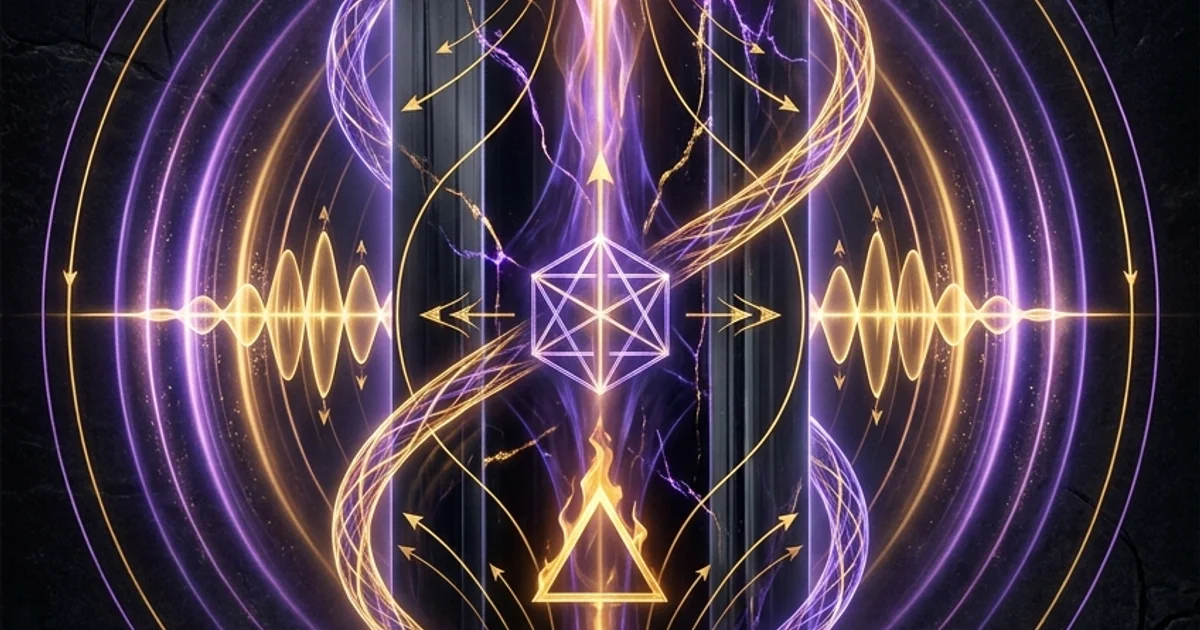
Tourmaline Pyroelectricity: Thermal Charge Dynamics Art
Mineral Classification & Crystallographic Thesis
Supergroup Crystallochemistry and General Stoichiometry
Tourmaline is not a solitary mineral species but a complex supergroup of borocyclosilicates characterized by intricate isomorphic substitution. The generalized stoichiometric formula is designated as $XY_3Z_6(T_6\text{O}_{18})(\text{BO}_3)_3V_3W$, where distinct crystallographic sites host varied cationic and anionic species. In this architecture, the $X$ site represents an expanded nine-coordinated polyhedral cavity typically occupied by large cations including $\text{Na}^+$, $\text{Ca}^{2+}$, $\text{K}^+$, or remaining vacant ($\square$), forming the basis for dividing the supergroup into alkali, calcic, and vacancy groups.
Directly linked to this framework are the octahedral sites: the $Y$ site accommodates divalent and trivalent transition metals such as $\text{Fe}^{2+}$, $\text{Mg}^{2+}$, $\text{Mn}^{2+}$, $\text{Al}^{3+}$, $\text{Li}^+$, $\text{Fe}^{3+}$, or $\text{Cr}^{3+}$, while the smaller, distorted octahedral $Z$ site is predominantly occupied by $\text{Al}^{3+}$, $\text{Fe}^{3+}$, $\text{Mg}^{2+}$, or $\text{Cr}^{3+}$. The tetrahedral $T$ site exclusively builds the six-membered cyclosilicate ring, occupied primarily by $\text{Si}^{4+}$, though susceptible to minor tetrahedral substitution by $\text{Al}^{3+}$ or $\text{B}^{3+}$. Triangular borate groups ($\text{BO}_3$) remain rigidly planar and isolated within the lattice, while the $V$ site ($\text{OH}^-$ or $\text{O}^{2-}$) and the $W$ site ($\text{OH}^-$, $\text{F}^-$, or $\text{O}^{2-}$) provide charge compensation along the central axis of symmetry.
This dense configuration directly dictates the optical and dielectric anisotropy of the mineral. The precise substitution patterns within these coordination polyhedra govern electron density distribution across the unit cell. When examined under continuous thermodynamic gradients, this complex solid solution orchestrates internal polarization phenomena. The mineral does not behave as an isotropic dielectric; rather, its compositional stratification establishes directional corridors for dielectric displacement, directly modulating the behavior of piezoelectric tensors in condensed matter.
The Non-Centrosymmetric Trigonal Space Group R3m
The fundamental structural origin of tourmaline pyroelectricity thermal charge displacement resides in its space group assignment. Tourmaline crystallizes strictly within the trigonal crystal system, belonging to the ditrigonal pyramidal class with point group $3m$ and space group $R3m$. The absence of an inversion center (non-centrosymmetric lattice) is the mandatory symmetry condition for the existence of both longitudinal piezoelectricity and vector-directed pyroelectricity.
In centrosymmetric space groups (such as those containing an inversion center $\bar{1}$), any polarization vector $\mathbf{P}$ generated by localized atomic displacement is canceled out by an equivalent, opposite displacement across the center of symmetry ($-\mathbf{P}$). In $R3m$, the structural framework lacks this opposing center. The threefold rotation axis is aligned parallel to the crystallographic $c$-axis, intersected by three vertical mirror planes ($m$) oriented at $120^\circ$ angles relative to one another. Because these mirror planes intersect along the threefold axis, symmetry permits the development of a unique, uncompensated electric vector along this single axis. The non-centrosymmetric lattice fixes an intrinsic permanent dipole moment that cannot be extinguished without altering the structural topology of the crystal itself, establishing a foundational baseline analyzed in trigonal lattice dynamics.
The Polar c-Axis as a Vector of Macroscopic Asymmetry
Macroscopic asymmetry in tourmaline is geometrically expressed along the polar $c$-axis, conventionally indexed as $[0001]$ in hexagonal Miller-Bravais notation. The crystal displays hemimorphism, terminating in geometrically disparate crystallographic forms at opposite ends of the prism. The antilogous pole (frequently manifesting as acute pyramidal faces such as ${10\bar{1}1}$ or ${02\bar{2}1}$) develops a net positive charge during cooling, whereas the analogous pole (often characterized by broader, lower-angle pedion or base forms such as ${000\bar{1}}$) becomes positive during heating.
(+) Antilogous Pole [0001]
             /        \
            /  Pyramid \        <-- Hydrothermal growth apex
           |            |
           |   Hexagon  |
           |  Prismatic |       <-- Cyclosilicate rings aligned
           |    Body    |
           |            |
            \  Pedion  /        <-- Substrate attachment base
             \________/
       (-) Analogous Pole [000-1]
This structural polarity is not an artifact of triboelectric surface contact or superficial friction, but an intrinsic thermodynamic property. The polar $c$-axis functions as an internal electrical axis along which the cumulative vector sum of all microscopic dipoles of the cyclosilicate-ring architecture and asymmetric coordination polyhedra coalesce into a coherent macroscopic polarity. The differential ionic radii across the opposing boundaries prevent structural inversion under standard thermodynamic conditions, anchoring the unit cell’s primary vector of dielectric displacement.
Primary reference data for the dravite-schorl-elbaite series: Space Group: $R3m$ (Trigonal, ditrigonal pyramidal) Lattice Parameters: $a = 15.84\text{ \AA}$ to $16.03\text{ \AA}$, $c = 7.10\text{ \AA}$ to $7.25\text{ \AA}$; $Z = 3$ Mohs Hardness: $7.0 - 7.5$ Refractive Indices: $n_o = 1.635 - 1.675$, $n_e = 1.610 - 1.650$ Birefringence ($\Delta n$): $-0.015\text{ to } -0.035$ (Optically Uniaxial Negative) Primary Pyroelectric Coefficient ($p_3^\sigma$): $\sim 4.0 \times 10^{-6}\text{ C}/(\text{m}^2\cdot\text{K})$ at $298\text{ K}$ Dielectric Constant ($\kappa_{33}$): $\sim 7.5 - 8.2$ parallel to $[0001]$ Sources: Donnay & Buerger (1950); Dietrich (1985); Nye (1985).
Lattice Geometry & Solid-State Physics
Silicon-Oxygen Hexagonal Ring Torsion and Dipole Genesis
The atomic architecture of tourmaline relies on six-membered cyclosilicate-ring units composed of corner-sharing silicon-oxygen tetrahedra ($\text{Si}6\text{O}{18})^{12-}$. Unlike the planar, highly symmetric rings observed in beryl ($\text{Be}_3\text{Al}_2\text{Si}6\text{O}{18}$), the silicate rings within tourmaline are strongly puckered and systematically distorted. The apical oxygens of all six tetrahedra point uniformly in the negative $[000\bar{1}]$ direction along the $c$-axis, anchoring the structural directionality of the unit cell.
[c-axis direction: (0001)]
                  ^
                  |    (BO3)3 Planar Triangles
                  |         [Boron at z ~ 0.45]
                  |
                  |    Si6O18 Puckered Ring
                  |    Apical Oxygens tilt towards [000-1]
                  |         [Silicon at z ~ 0.19]
                  |
                  |    Y-Octahedra (Fe, Mg, Li)
                  |         [Cations at z ~ 0.55]
                  |
     -------------+----------------------------
Under thermodynamic equilibrium, the positive charge centroids of the dynamic $\text{Si}^{4+}$, $\text{B}^{3+}$, and octahedral cations ($Y$ and $Z$ sites) do not geometrically coincide with the negative centroids of the coordinating $\text{O}^{2-}$ and $(\text{OH})^-$ networks. When temperature fluctuates, differential thermal expansion across anisotropic bonds occurs. The silicon-oxygen tetrahedra rotate slightly along their shared apical vertices, altering the torsion angles within the ring. This alters the internal z-coordinates of the sublattices. The resulting ionic displacement generates a measurable shift in internal electric polarization, driving spontaneous thermal polarization along the polar $c$-axis.
Primary Versus Secondary Pyroelectric Equations of State
The thermodynamic description of tourmaline pyroelectricity requires separating the primary and secondary contributions. Primary pyroelectricity represents the charge displacement that occurs at constant mechanical strain (the clamped-crystal state, wherein the physical dimensions of the lattice are held strictly invariant). Secondary pyroelectricity describes the charge displacement induced by thermal expansion, wherein volumetric strain couples to the crystal’s intrinsic piezoelectric properties.
The complete tensor formulation for the total pyroelectric coefficient vector at constant mechanical stress ($p_i^\sigma$) is expressed mathematically through the constitutive relation:
$$p_i^\sigma = \left( \frac{\partial D_i}{\partial T} \right)\sigma = p_i^\epsilon + d{ijk} c_{jklm}^E \alpha_{lm}$$
Here, $p_i^\epsilon$ designates the primary pyroelectric coefficient under zero-strain (clamped) boundary conditions; $d_{ijk}$ represents the third-rank piezoelectric tensor relating electric displacement to mechanical stress; $c_{jklm}^E$ denotes the fourth-rank elastic stiffness tensor under constant electric field; and $\alpha_{lm}$ represents the second-rank thermal expansion tensor.
In tourmaline, because symmetry point group $3m$ enforces $i = 3$ along the polar axis, the transverse coefficients $p_1$ and $p_2$ evaluate strictly to zero. The entire pyroelectric effect concentrates along the $c$-axis ($p_3^\sigma$). Experimental evidence demonstrates that the secondary contribution accounts for roughly $70%$ to $85%$ of the total observed pyroelectric response at ambient temperatures. The thermal expansion along the $a$-axis ($\alpha_{11}$) and $c$-axis ($\alpha_{33}$) exerts elastic stress that deforms the non-centrosymmetric unit cell, activating its high piezoelectric coefficients. This mechanism parallels the electro-elastic coupling documented in quartz piezoelectric resonance.
Dielectric Permittivity and Anisotropic Polar Tensors
The dielectric constant tensor ($\kappa_{ij}$) of tourmaline reflects its structural trigonal symmetry. The tensor possesses two independent principal components: $\kappa_{11} = \kappa_{22}$ perpendicular to the $c$-axis, and $\kappa_{33}$ parallel to the $c$-axis. In typical schorl-dravite series minerals, $\kappa_{11}$ ranges between $6.0$ and $6.8$, while $\kappa_{33}$ exhibits higher permittivity, consistently measured between $7.5$ and $8.5$ at frequencies of $1\text{ kHz}$.
This anisotropic dielectric tensor means that electric fields applied parallel to the polar $c$-axis encounter lower capacitive reactance and support higher displacement current densities than fields aligned perpendicular to the prism faces. The polar vector $p_3$ is intrinsically stabilized by these dielectric limits. Thermal excitation alters the relative permittivity via the temperature coefficient of capacitance:
$$\gamma_k = \frac{1}{\kappa_{33}} \frac{\partial \kappa_{33}}{\partial T}$$
This thermal-dielectric coupling modulates the depth of the electrostatic potential well at the crystal boundaries, dictating how long the mineral can support a localized field before surface leakage and atmospheric charge neutralization equilibrate the system.
Piezo-Pyroelectric Coupling & Charge Dissipation Dynamics
Dynamic Equilibrium Between Free and Bound Surface Charges
The manifestation of pyroelectric charge accumulation on tourmaline surfaces operates as a dynamic, non-equilibrium phenomenon governed by the rate of temperature change ($\frac{dT}{dt}$), rather than absolute temperature. When a crystal is maintained at an isothermal steady state ($\frac{dT}{dt} = 0$), no macroscopic potential is externally observable.
Under static conditions, the bound surface charge density ($\sigma_b = \mathbf{P} \cdot \hat{\mathbf{n}}$) established by the internal polarization vector $\mathbf{P}$ is compensated by two shielding mechanisms: intrinsic free-charge migration within the crystal volume (electronic and ionic hopping) and external counter-ion adsorption from the surrounding atmosphere. Dust particles, hydroxyl radicals ($\text{OH}^-$), and ionized atmospheric gases migrate toward the terminating pedion and pyramid faces until an electrical double layer forms. When the crystal undergoes positive or negative thermal flux ($\frac{dT}{dt} \neq 0$), the rapid modification of the internal dipole moment disrupts this screening layer. Bound charge density shifts faster than the shielding charge can replenish, producing transient macroscopic electric potentials that can reach thousands of volts.
Primary Pyroelectric Response (Clamped)
- Lattice Condition: Structurally clamped ($\epsilon = 0$); internal dimensional invariance.
- Physical Mechanism: Microscopic shifts in central coordination positions of $\text{Si}^{4+}$, $\text{B}^{3+}$, and $Y/Z$ cations relative to coordinating oxygen/hydroxyl networks.
- Relative Magnitude: Minor component; contributes approximately $15%$ to $30%$ of total ambient polarization.
- Dynamic Speed: Ultrafast; tracks instantaneous phonon excitation and thermal vibration alterations.
Secondary Pyroelectric Response (Unclamped)
- Lattice Condition: Mechanically free ($\sigma = 0$); unrestricted thermal expansion.
- Physical Mechanism: Anisotropic thermal strain ($\alpha_{lm}$) coupled through piezoelectric tensors ($d_{3jk}$) via elastic stiffness constants ($c_{jklm}$).
- Relative Magnitude: Major component; constitutes $70%$ to $85%$ of measurable charge density at room temperature.
- Dynamic Speed: Governed by speed-of-sound elastic wave propagation and bulk acoustic strain limits.
Dielectric Relaxation Times and Ambient Atmospheric Neutralization
The decay kinetics of this uncompensated surface charge depend on the dielectric relaxation time ($\tau$) of the crystal-atmosphere interface. The internal relaxation time is determined by the material’s bulk resistivity ($\rho$) and absolute dielectric permittivity ($\varepsilon = \kappa \varepsilon_0$):
$$\tau_{\text{int}} = \rho \varepsilon$$
In low-conductivity mineral specimens such as elbaite, bulk electrical resistivity can exceed $10^{12}\ \Omega\cdot\text{m}$, yielding internal dielectric relaxation times stretching across hundreds of seconds or several hours. In contrast, charge dissipation into the ambient gas phase is governed by external relative humidity and atmospheric conductivity. At humidities exceeding $60%$, water adlayers condense onto the tourmaline surface, elevating lateral surface conductivity and collapsing the unshielded relaxation time ($\tau_{\text{ext}}$) to sub-second regimes. Conversely, in dry, low-humidity air ($<20%$), the external discharge path is restricted to dielectric air breakdown or passive ion scavenging. This allows surface electric field strengths to exceed the breakdown threshold of air ($\sim 3 \times 10^6\text{ V/m}$), triggering localized Townsend micro-discharges and continuous atmospheric neutralization cascades.
(+) Antilogous Termination (Heating)
==================================== <-- Uncompensated Bound Charge (+sigma)
[ - - - - - - - - - - - - - - - - -] <-- Adsorbed OH- / Water Dipoles
------------------------------------
Bulk Crystal
Dipole Field Vector [0001]
------------------------------------
[ + + + + + + + + + + + + + + + + +] <-- Adsorbed H3O+ / Gas Cations
==================================== <-- Uncompensated Bound Charge (-sigma)
(-) Analogous Termination (Heating)</code></pre>
Comparative Manifestations Across Tourmaline Endmembers (Schorl vs. Elbaite vs. Dravite)
The chemical diversity across the tourmaline supergroup alters electrical transport properties and charge dissipation behavior:
- Schorl ($\text{NaFe}^{2+}_3\text{Al}_6(\text{Si}6\text{O}{18})(\text{BO}_3)_3(\text{OH})_3\text{OH}$): Displays marked electrical conductivity relative to other endmembers due to intervalence charge transfer mechanisms between adjacent iron centers ($\text{Fe}^{2+} + \text{Fe}^{3+} \rightleftharpoons \text{Fe}^{3+} + \text{Fe}^{2+}$) situated within edge-sharing $Y$ and $Z$ octahedral clusters. This thermally activated polaron-hopping mechanism reduces bulk electrical resistivity to roughly $10^2$ to $10^6\ \Omega\cdot\text{m}$. As a consequence, schorl exhibits rapid internal charge relaxation, mitigating static high-voltage potentials while sustaining continuous, low-impedance displacement currents under fluctuating thermal regimes.
- Elbaite ($\text{Na}(\text{Li}{1.5}\text{Al}{1.5})\text{Al}_6(\text{Si}6\text{O}{18})(\text{BO}_3)_3(\text{OH})_3\text{F}$): Contains virtually no transition metals with mixed oxidation states when gem-grade and optically transparent. Its bulk resistivity frequently exceeds $10^{13}\ \Omega\cdot\text{m}$. Free-carrier screening is negligible, allowing elbaite to build higher, longer-lasting open-circuit electrostatic surface potentials under identical $\Delta T$ conditions.
- Dravite ($\text{NaMg}_3\text{Al}_6(\text{Si}6\text{O}{18})(\text{BO}_3)_3(\text{OH})_3\text{OH}$): Demonstrates intermediate dielectric characteristics. The absence of intervalence hopping preserves an insulating bulk state ($\rho \approx 10^{10}\ \Omega\cdot\text{m}$), yet structural defects and ubiquitous minor trace iron substitutions provide steady charge release dynamics without the high dielectric breakdown vulnerabilities observed in pure elbaite.
Subtle Energetic Dynamics & Biofield Resonance Mechanics
Far-Infrared (FIR) Blackbody Resonance in the 4–14 Micrometer Band
Beyond purely static electrostatics, the asymmetric atomic arrangement of tourmaline generates steady electromagnetic wave emissions in the far-infrared (FIR) spectral domain. The fundamental vibrational modes (phonons) of the six-membered $(\text{Si}6\text{O}{18})$ cyclosilicate rings and the interstitial planar $(\text{BO}_3)$ triangles possess eigenfrequencies that match the $4\text{ to }14\ \mu\text{m}$ wavelength band ($700\text{ to }2500\text{ cm}^{-1}$).
At room temperature ($298\text{ K}$), the blackbody spectral radiance of a physical object peaks near $9.7\ \mu\text{m}$, as defined by Wien’s displacement law:
$$\lambda_{\text{max}} = \frac{b}{T} = \frac{2898\ \mu\text{m}\cdot\text{K}}{298.15\text{ K}} \approx 9.72\ \mu\text{m}$$
Tourmaline functions as a selective thermal emitter within this atmospheric transmission window. Due to its continuous polar displacement, the crystal absorbs broadband ambient thermal energy from its immediate surroundings and re-radiates it via narrow-band infrared lattice vibrations, maintaining an emissivity coefficient exceeding $0.90$ across the $8\text{ to }14\ \mu\text{m}$ spectrum. This wavelength profile matches the vibrational and rotational bands of aqueous solutions and human biological tissues, facilitating resonant energy absorption that modulates interfacial water architectures and microvascular thermal circulation, establishing energetic continuity with biofield dielectric boundaries.
Key spectroscopic and biophysical indices documented in tourmaline characterizations: Infrared Spectral Emissivity: $\epsilon > 0.90 - 0.94$ in the $4.0 - 14.0\ \mu\text{m}$ band Primary Infrared Resonances: $\sim 9.6\ \mu\text{m}$ (Si-O-Si asymmetric stretch), $\sim 10.1\ \mu\text{m}$ (B-O stretch) Surface Electric Field Gradient: $E \sim 10^4 - 10^5\text{ V/m}$ sustained across micro-scale crystal boundaries Negative Air Ion Generation Capacity: $800 - 2500\text{ ions}/(\text{cm}^3\cdot\text{s})$ under atmospheric thermal cycling ($\Delta T \approx 10\text{ K}$) Sources: Whatmore (1986); Dietrich (1985).
Negative Air Ion (NAI) Generation and Micro-Electric Interfacial Fields
The high localized electric field gradients ($E \approx 10^4 - 10^6\text{ V/m}$) generated at the micro-terminations of tourmaline particles hydrolyze ambient water molecules adsorbed onto the crystal surface:
$$\text{H}_2\text{O} \xrightarrow{\text{micro-field}} \text{H}^+ + \text{OH}^-$$
The transient electrostatic field accelerates the dissociated ions. Hydronium ions ($\text{H}_3\text{O}^+$) capture electrons or adsorb onto negative surface sites, while hydroxyl radicals react with ambient atmospheric moisture to produce stabilized negative air ions, predominantly hydrated hydroxyl clusters such as $\text{OH}^-(\text{H}_2\text{O})_n$ and superoxide clusters $\text{O}_2^-(\text{H}_2\text{O})_n$:
$$\text{OH}^- + n\text{H}_2\text{O} \longrightarrow \text{OH}^-(\text{H}_2\text{O})_n$$
Tourmaline Surface [E > 10^5 V/m]
               |
               v
   H2O Adlayer Hydrolysis ---> [H+]  ==> Trapped by Surface / Neutralized
                          ---> [OH-]
                                 |
                                 + O2 + n(H2O) (Ambient Atmosphere)
                                 |
                                 v
   Negative Air Ion Clusters: [O2-(H2O)n] & [OH-(H2O)n]
   Result: Biofield Charge Density Shift & Air Purification
This field-assisted chemical pathway operates continuously whenever ambient micro-thermal fluctuations drive uncompensated pyroelectric currents. The steady generation of negative air ions reduces ambient aerosol particulates and influences the surrounding biological field by increasing the local negative charge density, directly altering cellular transmembrane potentials and interfacial exclusion zone (EZ) water layers.
Toroidal Subtle Field Structuring via Asymmetric Hemimorphic Flux
From the perspective of subtle field mechanics, tourmaline acts as a directional energetic transducer. Centrosymmetric materials diffuse etheric and thermodynamic energy symmetrically, whereas tourmaline’s hemimorphic point group ($3m$) enforces non-reciprocal subtle energy propagation. The polar $c$-axis functions as an etheric diode, creating a coherent directional path for energetic flow.
Subtle energy (prana, chi, or zero-point scalar components) enters preferentially through the analogous pole (the structural pedion base) and accelerates along the $[0001]$ vector of dielectric displacement, exiting through the antilogous pole (the pyramidal termination). The electrostatic differential between the crystal terminations curls the adjacent scalar field, forming an asymmetric subtle-energy-vortex that manifests macroscopically as a self-sustaining toroidal flow field.
/         \
                      |     ^     |
                      |     |     |
               +------+-----+-----+------+
               |  (+) Antilogous Pole    |
               |      /     |     \      |
               |     |  c-  |  c-  |     |
               |     |  a   |  a   |     |
               |     |  x   |  x   |     |
               |     |  i   |  i   |     |
               |     |  s   |  s   |     |
               |      \     |     /      |
               |  (-) Analogous Pole     |
               +------+-----+-----+------+
                      |     |     |
                      |     |     |
                       \    |    /
                            v
This toroidal geometry is stabilized by the continuous piezo-pyroelectric coupling of the crystal. By converting thermal ambient noise into an ordered vector field, the mineral serves as an entropy-reducing node that structures the subtle biofield of spaces and biological systems exposed to its immediate vicinity.
Historical Lapidary Lore & Traditional Lineage
The Classical ‘Lyngourion’ of Theophrastus and Plinian Amber Confusions
The earliest documentation of pyroelectricity appears in classical antiquity, cloaked in mythological and mineralogical conflation. In his treatise De Lapidibus (c. 315 BCE), the Greek philosopher and natural scientist Theophrastus documented an extraordinary stone termed lyngourion ($\lambda\upsilon\gamma\kappa\text{o}\acute{\upsilon}\rho\iota\text{o}\nu$), reputed to possess the power to attract straws, wooden shavings, and small fragments of copper and iron. Theophrastus distinguished this stone by its hardness, cold touch, and extreme resistance to carving, noting that its attractive force was activated through friction or gentle heat.
Centuries later, Pliny the Elder perpetuated this account in his Naturalis Historia (c. 77 CE), though he merged the attributes of lyngourion with those of succinite (Baltic amber). This created two millennia of mineralogical confusion. Classical scholars assumed the phenomenon was entirely triboelectric (frictional electricity), failing to observe that the mineral required no mechanical friction—only heating—to manifest attractive forces. Physical re-evaluation of Theophrastus’s specific mineral descriptions (hardness sufficient to engrave signet rings, dark golden to deep reddish-brown coloration, resistance to chemical weathering) points directly to magnesium-rich dravite or tourmaline specimens transported from the ancient metamorphic belts of Sri Lanka or Egypt via Mediterranean trade routes.
From Theophrastus, De Lapidibus (On Stones), section 28–29 (c. 315 BCE):
“The lyngourion also attracts objects, just like amber; some say it attracts not only straws and bits of wood, but even thin pieces of copper and iron… It is cold to the touch and exceedingly transparent; it is dug out of the earth, and requires great labor to grind and polish.”
From Johann Georg Schmidt, Curieuse Speculationes bey Schlaflosen Nächten (1707):
“The Dutch have brought from Ceylon a stone called ‘Turamali’ or ‘Aschentrekker’ [Ash-puller]. When placed into hot coals or heated ashes, it does not crack, but after a short time begins to draw the ashes toward itself; and when cooled, it casts them off again, revealing within its small body an extraordinary, hidden virtue of nature.”
The 18th-Century Dutch ‘Aschentrekker’ Phenomenon and European Gem Markets
The formal introduction of tourmaline’s electrostatic properties to European natural philosophy began in 1703, when merchant vessels of the Dutch East India Company (Vereenigde Oostindische Compagnie) brought parcels of gem-quality alluvial stones from the gem-gravels (illam) of Ceylon (modern-day Sri Lanka). Dutch lapidaries and pipe-smokers observed that these elongated, striated crystals, when exposed to the radiant heat of glowing tobacco coals, attracted and subsequently repelled meerschaum tobacco ashes. The Dutch labeled the stone Aschentrekker (literally “ash-puller”).
This phenomenon prompted rigorous empirical investigation by European natural philosophers. In 1756, the German-Russian physicist Franz Ulrich Theodor Aepinus presented the first scientific paper directly identifying this behavior as an electrodynamic manifestation rather than magnetic attraction. Aepinus demonstrated that a heated tourmaline crystal developed opposing electrostatic polarities on opposite crystal faces, identifying the dipolar nature of the effect. This foundational observation was later expanded by John Canton (1759) and René Just Haüy (1801), who formally coined the terminology électricité pyrométrique (pyroelectricity), confirming that the electrical charge generated was proportional to the temperature differential and occurred entirely in the absence of mechanical friction.
Alluvial Extraction (Ceylon Gem Gravels)
                         |
                         v
       VOC Maritime Transit to Amsterdam (c. 1703)
                         |
                         v
       "Aschentrekker" Domestic Utility (Meerschaum Pipe Cleaning)
                         |
                         v
       F.U.T. Aepinus's Royal Academy Paper (1756):
       Formal Identification of Pyroelectric Dipole
                         |
                         v
       Modern Solid-State Crystallography & Dielectric Physics
Vaikranta Classifications in Ayurvedic Rasashastra Metallurgy
In ancient Indian mineralogy and iatrochemistry (Rasashastra), tourmaline occupies an ambiguous classification within the Uparasa or Maharasa categories, primarily designated under the Sanskrit terminology Vaikranta (though this term occasionally encompassed fluorite and certain spinels). Vaikranta was celebrated for possessing eight facets (ashtashra), eight cutting edges, and distinct color varieties (shweta, rakta, peeta, neela, krishna), matching the morphological diversity of the tourmaline supergroup.
Rasashastra metallurgical treaties (such as the Rasaratna Samuccaya, c. 13th century CE) classified tourmaline among the non-fusible, structurally complex stones requiring rigorous detoxification and calcination (shodhana and marana) before alchemical use. Traditional metallurgists recognized that raw, unprocessed tourmaline harbored intense energetic volatility. To safely assimilate its subtle properties, the mineral underwent cyclic heating and quenching in specialized liquid media (bhavana)—including cow’s urine, triphala decoctions, and kulattha leaf extract—for twenty-one consecutive cycles. This thermal cycling altered the surface states of the lattice, neutralizing destructive elemental toxicity while preparing the mineral for transformation into an energetic therapeutic ashes (bhasma) designed to balance metabolic fire (agni) and cellular vitality (ojas).
Practical Applications, Calibration & Safety Protocols
Thermal Oscillation Protocols for Biofield Clearing Arrays
To operationalize tourmaline’s pyroelectric potential for biofield stabilization and spatial purification, the crystal cannot remain in an isothermal environment. Because the pyroelectric displacement current density is directly proportional to the time derivative of temperature ($J = \frac{dP}{dt} = p_3 \frac{dT}{dt}$), static placement renders the mineral electrostatically inactive once surface screening charges accumulate.
Practitioners must deploy structured thermal oscillation protocols:
- Infrared Induction Phase: Expose the crystal array to an indirect, radiant thermal source—such as a ceramic far-infrared emitter, moxibustion stick, or direct, filtered solar radiation—at an elevation rate not exceeding $0.5^\circ\text{C}$ to $1.5^\circ\text{C per minute}$. This slow increase activates the secondary pyroelectric strain response without inducing structural thermal shock.
- Electrostatic Field Stabilization: Maintain peak temperature ($40^\circ\text{C to }45^\circ\text{C}$) for five to ten minutes. At this plateau, bound surface charges reach maximum magnitude, establishing localized electric fields that hydrolyze air moisture and saturate the target area with negative air ions.
- Active Cooling Discharge: Remove the thermal source and introduce cool, ambient laminar airflow. As $\frac{dT}{dt}$ switches to a negative value, the polarity of the surface charge inverts: the antilogous pole becomes a high-density electron sink, absorbing free positive counter-ions, environmental static buildup, and disordered electromagnetic residue from the localized biofield.
       Thermal Waveform:
       Temp (C)
        ^
     45 |         /-----------------\
        |        /   Max Charge      \
        |       /    E-Field Peak     \
     20 |------/                       \-------
        +----------------------------------------> Time (min)
               Heating                Cooling
             (NAI Release)         (Ion Scavenging)
             dT/dt > 0             dT/dt < 0
Geometric Orientation and Alignment with Terrestrial Gradients
The hemimorphic orientation of the crystal dictates its interaction with terrestrial energetic and geomagnetic coordinates. Because the earth’s natural telluric field contains an ambient vertical potential gradient ($\sim 100\text{ to }150\text{ V/m}$ under fair-weather conditions directed toward the earth’s surface), orienting the crystal matrix relative to this gradient modulates the extraction and dispersal of charge.
[ Northern Geomagnetic Flux ]
                             ^
                             |
                   (+) Antilogous [0001]
                   =====================
                   |                   |
                   |    Tourmaline     |
                   |      Vector       |
                   |                   |
                   =====================
                   (-) Analogous [000-1]
                             |
                             v
               [ Terrestrial Telluric Ground ]
When structuring an intentional energetic grid, the crystallographic polar $c$-axis $[0001]$ should be oriented vertically or aligned parallel to local geomagnetic field lines:
- Dispersal & Vitalization Vectors: Orient the antilogous pole (pyramidal termination) upward or toward the target biological entity. This projects far-infrared emission corridors and negative air ion clouds outward, strengthening peripheral subtle field boundaries.
- Grounding & Extraction Vectors: Orient the antilogous pole downward toward the earth, with the analogous pole directed toward the biological subject. This configuration acts as an electrostatic ground, using the negative thermal derivative to draw down dense, chaotic biofield signatures and ground them into terrestrial sinks.
Material Vulnerabilities: Cleavage Brittleness, Thermal Shock, and Mineral Water Hazards
Tourmaline lacks distinct crystallographic cleavage, fracturing instead with an uneven, subconchoidal to conchoidal habit. However, it exhibits pronounced basal parting parallel to ${0001}$, which acts as a primary mechanical vulnerability. Abrupt temperature changes can induce destructive thermo-mechanical stress along these parting planes.
- Critical Thermal Shock Threshold: Never expose crystalline tourmaline to a thermal differential exceeding $2.0^\circ\text{C per second}$ ($\frac{dT}{dt} > 2.0\text{ K/s}$). Sudden exposure to boiling water, open flames, or rapid cryogenic immersion will induce internal fracturing along the ${0001}$ basal parting planes, permanently de-bonding the lattice, triggering catastrophic internal acoustic cavitation, and destroying the continuity of the macroscopic polar $c$-axis.
- Heavy Metal & Boron Leaching Hazards: Completely forbid the preparation of direct gemstone elixirs (placing raw mineral specimens directly into water meant for ingestion). All members of the tourmaline group contain high weight-percentages of aluminum ($\text{Al}_2\text{O}_3 \approx 30-44%$), silicon, and mobile boron ($\text{B}_2\text{O}_3 \approx 10%$). Furthermore, schorl contains substantial iron, while dravite and elbaite can host toxic trace quantities of manganese, chromium, vanadium, and fluorine. Submersion in water, particularly under warm or acidic conditions, accelerates trace dissolution through micro-cavities. Always employ the indirect method (hermetically sealed glass inner container) for all gem-essence preparations.
Frequently Asked Questions
Crystallographic Authenticity and Testing Methods
The definitive verification of an authentic tourmaline specimen requires identifying its structural and optical anisotropy. Because glass and synthetic resin imitations lack long-range crystalline order, they remain completely isotropic between crossed polarizers in an optical petrographic microscope.
Under a polarized light microscope, authentic tourmaline exhibits strong pleochroism: the ordinary ray ($\omega$) is strongly absorbed compared to the extraordinary ray ($\epsilon$), causing dramatic shifts in color intensity as the stage rotates through $90^\circ$. Tourmaline is optically uniaxial negative, yielding an optic axis interference figure characterized by a distinct black cross surrounded by concentric interference rings (isochromes) when viewed along the polar $c$-axis in convergent polarized light. Additionally, its refractive index ($n_o = 1.635 - 1.675$, $n_e = 1.610 - 1.650$) and specific gravity ($3.00 - 3.26\text{ g/cm}^3$) reliably separate it from synthetic simulants, obsidian, or tinted quartz.
To verify the unshielded pyroelectric response of an unmounted, rough or cut specimen in a field or laboratory setting without damaging the crystal:
- Submerge the stone in a warm water bath maintained at $45^\circ\text{C}$ for three minutes to achieve complete internal thermal equilibrium.
- Quickly extract the stone and wipe the surface dry with an insulating microfiber cloth.
- Suspend the specimen immediately over finely pulverized ash, ground black pepper, or small polystyrene microspheres (approximate distance: $5\text{ to }10\text{ mm}$).
- An authentic, structurally intact tourmaline crystal will display vigorous mechanical pickup, drawing particles across the air gap and holding them firmly against its polar terminations ($[0001]$ and $[000\bar{1}]$). Non-pyroelectric simulants (such as dyed quartz, glass, or plastic) will display zero physical attraction.
Operational Distinctions Between Piezoelectric and Pyroelectric Outputs
Although both behaviors depend on the non-centrosymmetric space group $R3m$, the physical driving forces and operational outputs are fundamentally distinct:
- Piezoelectricity: Converts dynamic mechanical stress ($\sigma_{jk}$) into an electrical polarization ($P_i = d_{ijk}\sigma_{jk}$). The output requires physical strain, dynamic pressure waves, or acoustic vibration. Piezoelectricity operates instantaneously, tracking high-frequency acoustic oscillations into the megahertz regime without thermodynamic heat exchange.
- Pyroelectricity: Converts dynamic temperature fluctuations ($\frac{dT}{dt}$) into electrical polarization ($P_i = p_i \Delta T$). The driving force is thermodynamic entropy flux. The frequency of pyroelectric charge generation is fundamentally limited by thermal diffusion rates across the mineral’s bulk volume, operating in the infrasonic to low-frequency regime ($10^{-3}\text{ to }10^1\text{ Hz}$).
While a pyroelectric material is structurally required to be piezoelectric, the converse is not true; quartz, for example, is piezoelectric (point group $32$), but its symmetry prohibits pyroelectricity because it possesses no unique polar axis.
Thermodynamic Longevity and Energetic Depletion Risks
Tourmaline does not undergo intrinsic energetic “depletion” through continuous pyroelectric and piezoelectric cycling. The polarization mechanism is not driven by a finite chemical reactant or an enclosed electrochemical cell, but by the physical displacement of atomic sublattices within a stable silicate skeleton. The primary pyroelectric response reflects reversible elastic movements within the non-centrosymmetric lattice.
The only mechanisms that can permanently degrade or exhaust tourmaline’s polar properties are:
- Thermal Metamorphism Beyond the Breakdown Temperature: Heating tourmaline above its thermal decomposition threshold (typically $750^\circ\text{C to }900^\circ\text{C}$, depending on chemical species and ambient volatile pressure) drives off structural $(\text{OH})^-$ and $\text{F}^-$ groups, collapsing the puckered $(\text{Si}6\text{O}{18})$ cyclosilicate rings and transforming the mineral into an amorphous glass alongside mullite, cordierite, and borate oxides. This irreversible breakdown destroys its non-centrosymmetric geometry.
- Structural Parting and Mechanical Micro-fracturing: Continuous thermal shocks ($\frac{dT}{dt} > 2.0\text{ K/s}$) generate microscopic cleavage breaks along the basal ${0001}$ plane. These micro-cracks form internal dielectric barriers, fragmenting the cohesive macroscopic dipole moment into isolated, internally canceling domains.
When handled within structural thermal boundaries (temperatures below $150^\circ\text{C}$ and moderate cycling rates), the lattice retains its polarization indefinitely, converting ambient thermal entropy into coherent electrical fields across geological timescales.