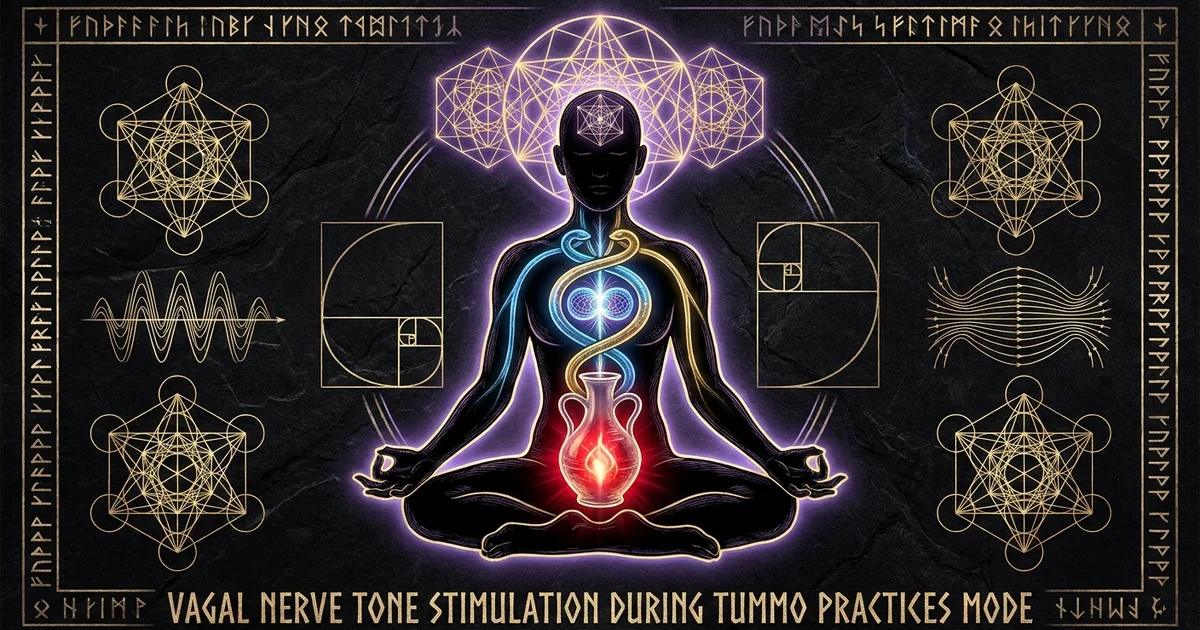
Vagal Nerve Tone Stimulation During Tummo Practices Mode
Protocol Overview & Neurophysiological Thesis
The Paradoxical Autonomic State: Simultaneous Ergotropic and Trophotropic Activation
Classical neurophysiology historically situated the sympathetic and parasympathetic branches of the autonomic nervous system in strict reciprocal opposition. Under standard homeostatic models, ergotropic energy mobilization precludes trophotropic rest-and-digest conservation; an elevation in sympathetic outflow directly suppresses vagal efferent activity.
Tantric inner fire practice (gTum-mo, or Tummo) fundamentally invalidates this binary paradigm. Advanced Tibetan practitioners execute an orchestrated physiological maneuvers that induces simultaneous, maximal activation of both autonomic branches. This dual-activation state couples massive catecholaminergic discharge—driving non-shivering brown adipose tissue thermogenesis—with high-amplitude parasympathetic deceleration mediated by myelinated vagal fibers.
The physiological architecture of Tummo demonstrates that high ergotropic arousal does not require the collapse of trophotropic regulation. The practitioner consciously commands neurogenic heart control, stabilizing mean arterial pressure and cardiac output even as somatic core temperatures breach clinical hyperthermic thresholds.
This counter-intuitive state represents a functional dual-activation mode where vagus nerve stimulation tummo parasympathetic sympathetic balance operates as an active, homeostatic clamp. The myelinated vagal brake modulates downstream cardiovascular acceleration, preventing unchecked tachyarrhythmia, ventricular fibrillation, and excessive baroreceptor shear stress during surges of intense sympathetic drive.
Classical Sympathetic Dominance
- Cardiovascular Mechanics: Unchecked sinoatrial tachycardia, marked reduction in beat-to-beat variability, elevated peripheral vascular resistance.
- Endocrine Profile: Systemic elevation of cortisol and adrenocorticotropic hormone alongside continuous catecholaminergic release.
- Microvascular Perfusion: Profound peripheral vasoconstriction shunting blood solely to skeletal muscle and vital organs; digital hypothermia.
- Psychophysiological State: Heightened cognitive vigilance, perceptual narrowing, existential threat reactivity, and subjective psychological distress.
Tummo Paradoxical Co-Activation
- Cardiovascular Mechanics: Neurogenic heart rate stabilization via nucleus ambiguus outflow; elevated high-frequency heart-rate-variability despite metabolic surges.
- Endocrine Profile: Selective noradrenergic spikes coupled with rapid post-stress homeostatic reset and sustained low basal cortisol.
- Microvascular Perfusion: Controlled peripheral vasodilation paired with brown adipose tissue thermogenesis; significant digital and core hyperthermia.
- Psychophysiological State: Lucid, non-dual equanimity; open-field awareness synchronized with high-amplitude cortical gamma oscillations.
Vagal Modulation in High-Arousal Contemplative Lineages
Vagal engagement within the Tummo mode operates differently than in low-arousal contemplative states, such as Theravada samatha or passive mindfulness. While quietist meditation activates unmyelinated, primitive vegetative pathways that downregulate all somatic processes, Tummo recruits the mammalian smart vagus—the phylogenetically advanced, myelinated branch originating in the nucleus ambiguus, as detailed by Stephen Porges in the Polyvagal Theory.
This branch directly innervates the sinoatrial node, bronchial tissue, and pharyngeal structures, establishing rapid, beat-to-beat chronotropic tuning without systemic hypotension or metabolic torpor.
By coupling the myelinated vagal circuit to forceful somatic maneuvers, the practitioner achieves extraordinary autonomic nervous resilience. The nervous system is inoculated against severe physiological perturbations, including freezing ambient temperatures, extreme altitude hypoxia, and pathogenic systemic inflammation.
Rather than withdrawing from sympathetic engagement, Tummo channels ergotropic activation through trophotropic gates. This deliberate synthesis provides access to deeper energetic dynamics within the subtle-body without compromising hemodynamic stability or cognitive clarity, a phenomenon also observed in high-level somatic releases detailed in the analysis of polyvagal kundalini awakening.
[ Somatosensory Cortex / Insula ]
              │
              ▼
   [ Hypothalamus (DMH/PVN) ] ──────────────┐
              │                             │
    (Sympathetic Outflow)          (Vagal Parasympathetic)
              │                             │
              ▼                             ▼
   [ Intermediolateral Cell ]     [ Nucleus Ambiguus / NTS ]
   [ Columns (Spinal Cord)  ]               │
              │                             │
              ├──────────────┬──────────────┤
              ▼              ▼              ▼
     [ Brown Adipose ] [ Heart Rate ] [ Baroreflex ]
      Thermogenesis      Stabilization   Calibration
Target Correlates: Heart Rate Variability, Core Thermogenesis, and Gamma Synchrony
The operational success of this practice is quantified through three convergent physiological biomarkers: heart-rate-variability, core and peripheral thermogenesis, and synchronized cortical gamma oscillations. Heart-rate-variability does not collapse during the breath retention (kumbhaka); instead, spectral analyses reveal marked power increases in both the Low-Frequency (LF: 0.04–0.15 Hz) and High-Frequency (HF: 0.15–0.40 Hz) domains.
The sustained HF power directly indexes continuous vagal efferent traffic through the cardiac branches of the tenth cranial nerve, maintaining physiological coherence despite high sympathetic output.
Simultaneously, the practitioner directs localized and systemic thermal elevation. Targeted core hyperthermia elevates visceral metabolic rates, while peripheral cutaneous vasodilation raises digit temperatures by several degrees Celsius.
This somatic activation corresponds with distinct electroencephalographic signatures: high-frequency, long-range gamma oscillations (30–100 Hz), centered over the bilateral dorsolateral prefrontal cortex, insular cortex, and parietal integration hubs. This gamma synchrony reflects deliberate top-down modulation of brainstem autonomic nuclei, demonstrating conscious executive control over ancient survival circuits.
Biophysical Mechanisms & Brainwave Dynamics
Respiratory Sinus Arrhythmia (RSA) and Intercostal-Phrenic Mechanical Transduction
The mechanical foundation of vagal nerve tone stimulation in Tummo rests upon Respiratory Sinus Arrhythmia (RSA) amplified to its physiological limits. Under ordinary respiration, inhalation temporarily inhibits vagal cardiac motor neurons via pulmonary stretch-receptor afferents terminating in the nucleus tractus solitarius (NTS), causing transient tachycardia. Exhalation removes this inhibition, reinstating the vagal brake and inducing immediate bradycardia. Tummo exploits this mechanical axis through forceful diaphragmatic excursions followed by sustained isometric breath retentions.
During the initiation of the vase retention (kumbhaka), the sudden descent and isometric flattening of the diaphragm generate immense downward displacement against the abdominal viscera. This mechanical vector stretches the intercostal and phrenic nerve afferents, sending tonic mechanoreceptive feedback directly to the cervical and high-thoracic spinal cord.
Simultaneously, the elevation of intra-abdominal and intrathoracic pressures compresses the inferior vena cava and aortic reservoir, rapidly triggering vascular baroreceptors. The carotid sinus and aortic arch baroreceptors register this sudden transmural tension, firing rapid afferent volleys along the glossopharyngeal (CN IX) and vagus (CN X) nerves to the NTS.
$$P_{\text{transmural}} = P_{\text{intravascular}} - P_{\text{intrathoracic}}$$
The brainstem interprets this sustained mechanical pressure not as simple respiratory arrest, but as an impending hypertensive crisis. The NTS responds by projecting excitatory glutamatergic signals to the caudal ventrolateral medulla (CVLM), which in turn inhibits the rostral ventrolateral medulla (RVLM)—the primary engine of basal sympathetic vasoconstriction. Concurrently, the NTS directly stimulates the nucleus ambiguus to unleash intense cholinergic efferent discharges. Acetylcholine binds rapidly to muscarinic $M_2$ receptors on the sinoatrial node, actively suppressing the heart rate and offsetting the tachycardic drive triggered by co-occurring noradrenergic mobilization.
Noradrenergic Outflow, Uncoupling Protein 1 (UCP1), and BAT Activation
While the myelinated vagal network maintains cardiac stabilization, an independent sympathetic cascade is deliberately triggered through somatic motor imagery and neuro-muscular locking (bandha). Somatosensory focus concentrated at the hypogastric region triggers localized autonomic signaling through descending hypothalamic pathways.
The paraventricular and dorsomedial hypothalamic nuclei project directly to the intermediolateral cell column (IML) of the thoracic spinal cord. This efferent pathway innervates sympathetic postganglionic neurons that project to brown-adipose-tissue deposits distributed within the supraclavicular, axillary, and paravertebral regions.
Postganglionic sympathetic terminals release norepinephrine directly onto brown adipocyte $\beta_3$-adrenergic receptors. This binding cascade stimulates adenylate cyclase via $G_s$ protein coupling, catalyzing the conversion of adenosine triphosphate (ATP) to cyclic adenosine monophosphate (cAMP).
The downstream activation of protein kinase A (PKA) phosphorylates hormone-sensitive lipase (HSL), initiating intracellular lipolysis of stored triglycerides into free fatty acids.
       [ $\beta_3$-Adrenergic Receptor Binding ]
                          │
                          ▼
            [ Adenylate Cyclase Activation ]
                          │
                          ▼
               [ cAMP Accumulation ]
                          │
                          ▼
             [ Protein Kinase A (PKA) ]
                          │
                          ▼
            [ Lipolysis via Active HSL ]
                          │
                          ▼
        [ Free Fatty Acids (FFA) Released ]
                          │
                          ▼
   [ Allosteric Activation of UCP1 / Thermogenin ]
                          │
                          ▼
      [ Proton Motive Force Disrupted via Pore ]
                          │
                          ▼
    [ Dissipation of Chemiosmotic Potential as Heat ]
These free fatty acids act as direct allosteric activators of Uncoupling Protein 1 (UCP1, or thermogenin), an integral transport protein residing in the inner mitochondrial membrane.
Under normal cellular respiration, the proton gradient generated by complexes I–IV drives the rotary motor of ATP synthase to generate chemical energy.
UCP1 bypasses this coupling mechanism entirely; it opens a proton leak channel that allows hydrogen ions ($H^+$) to flow from the intermembrane space directly back into the mitochondrial matrix without traversing ATP synthase. The potential energy of the mitochondrial membrane potential is dissipated purely as thermal energy.
This biochemical fire produces rapid, non-shivering extreme temperature adaptation, allowing practitioners to survive severe sub-zero exposure without peripheral tissue necrosis or metabolic collapse.
Oscillatory Neural Signatures: Frontoparietal Gamma (30-100 Hz) and SMR Coupling
The conscious ignition and ongoing regulation of this dual autonomic loop requires precise cortical coordination. Quantitative electroencephalography (qEEG) and magnetoencephalography (MEG) during genuine Tummo states reveal distinct oscillatory neurosignatures.
Prior to breath retention, during the hyperventilation and clearing phase, the brain exhibits high-amplitude Sensorimotor Rhythm (SMR: 12–15 Hz) across the central sulcus, reflecting systematic inhibition of motor reflex arcs and focused somatosensory readiness.
Once the vase retention is engaged and the visualization of the vertical central channel (avadhuti) stabilizes, the neural architecture shifts into high-frequency, phase-locked Gamma synchrony (40–80 Hz). This Gamma activity does not manifest as diffuse, unorganized hyper-arousal. Instead, it forms a coherent frontoparietal oscillatory network that links the bilateral dorsolateral prefrontal cortex (dlPFC), the anterior cingulate cortex (ACC), and the anterior insular cortex.
The insula acts as the central interoceptive clearinghouse of the brain, continuously mapping autonomic state changes against internal visceral conditions.
This localized frontoparietal Gamma phase-synchrony mirrors the high-frequency integration states documented in Gateway trance modes, as explored in the analysis of Monroe Gateway gamma synchrony.
Through this synchronized neural corridor, executive intentions modulate subcortical, limbic, and brainstem nuclei. The top-down Gamma coupling recruits the periaqueductal gray (PAG) and the parabrachial complex, directly coordinating the locus coeruleus’s noradrenergic output alongside the trophotropic pacing of the vagal motor nuclei.
Step-by-Step Experiential Protocol
Phase I: The Clearing Respiration and Somatosensory Locus (rlung ro dgu bsal)
The protocol begins with the Ninefold Cleansing Breaths (rlung ro dgu bsal), an essential preliminary practice designed to stabilize baseline vagal tone, correct autonomic asymmetries, and establish an optimal low-frequency to high-frequency (LF/HF) HRV ratio before initiating forceful respiratory holds.
- Somatic Posture: Sit in the seven-point posture of Vairochana. The spine must remain straight, the chin slightly tucked to lengthen the cervical spine, the knees secured in full or half lotus (padmasana), and the hands resting palms-up in the lap.
- Channel Imagery: Close the eyes and establish the internal somatic representation of the three primary subtle channels (tsa): the white lunar channel (rasana) on the right, the red solar channel (lalana) on the left, and the luminous, blue central channel (avadhuti) ascending linearly from four finger-widths below the navel to the crown fontanelle.
- Alternating Nostril Clearing: Depress the left nostril with the right ring finger. Inhale smoothly over 6 seconds through the right nostril, drawing clear, pristine atmospheric prana into the solar pathway.
- Exhalation of Impurity: Occlude the right nostril, release the left, and exhale slowly over 8 seconds. Visualize expelling all past attachment, excess metabolic waste, and erratic autonomic currents as red-black smoke.
- Inversion and Central Union: Repeat the process in reverse: inhale through the left nostril (clearing aggression and sympathetic irritability), then exhale through the right. Complete the sequence by breathing deeply through both nostrils simultaneously, drawing prana directly down both lateral pathways to converge at the epigastric basin, purging residual torpor (tamas) as neutral gray vapor. Execute three complete cycles (nine breaths total).
Phase II: The Vase Retention (bum pa can) and Isometric Compression
The heart of the physiological activation occurs during the sustained vase retention (bum pa can), which generates the mechanical pressure that drives both baroreflex vagal stimulation and metabolic heat production.
- Preparatory Oxygenation: Execute 3 rapid, deep diaphragmatic bellows (1.5 seconds in, 1.5 seconds out) through both nostrils, fully expanding the lower ribcage to prime oxygen reserves and induce mild respiratory hypocapnia.
- The Inhalation Injection: Inhale deeply through both nostrils over 4 seconds, filling 85% of total pulmonary capacity. Do not maximize inhalation to absolute vital capacity, which causes glottic tension and elevates unnecessary vagal strain.
- The Visceral Swallow: Swallow saliva smoothly while tilting the chin slightly down into the sternal notch (partial Jalandhara Bandha). This mechanically locks the superior pole of the central airway, sealing the air column within the thoracic cage.
- The Downward Compression: Compress the diaphragm downward with sustained muscular control, bearing down into the abdominal cavity as if packing the breath into a stable, pressurized vase (bum pa) centered four finger-widths beneath the navel.
- The Upward Root Lock: Simultaneously contract the perineal musculature, levator ani, and lower rectus abdominis (Mula Bandha), elevating the pelvic floor with 30–40% of maximal voluntary contraction. This creates counter-pressure against the descending diaphragm.
- Isometric Retention: Hold this pressurized visceral lock for exactly 16 seconds. Direct total interoceptive focus to the naval center, visualizing an upright, needle-thin seed of crimson flame—the half-letter A (a-shad)—glowing with white-hot luminescence.
- Repetition Architecture: Execute this 4-in / 16-hold / 8-out cycle for 21 consecutive iterations per session. Daily regimens should span 45 to 60 minutes, practiced exclusively in a fasted state before morning metabolic activation.
During this 16-second isometric retention, the physical compression of the mesenteric and aortic vessels triggers the baroreceptor reflex, stimulating vagal efferent signaling via the nucleus ambiguus to keep the heart rate stable despite rising somatic tension.
The practitioner must resist releasing the breath upwards into the pharynx. The breath must remain anchored in the epigastric basin to prevent cerebral overpressurization and avoid triggering lightheadedness or syncope.
Phase III: Dissolution, Peripheral Heat Radiation, and Parasympathetic Restoration
The transition out of the vase hold must be managed with neurochemical precision to prevent rebound headaches, barotrauma, or severe sympathetic over-activation.
- Slow Laminar Exhalation: Release the pelvic lock (Mula Bandha) slightly, raise the chin from the sternum, and exhale smoothly through the nostrils over 8 seconds. The exhalation must be laminar and laminar-quiet—do not allow explosive release through the mouth.
- Thermal Distribution: As the air escapes, mentally guide the localized visceral heat generated at the navel outward through the arterial tree. Direct this thermal wave along the fascial planes, out to the extremities, down to the soles of the feet, and up to the crown of the head.
- The Dissolution Phase: Sit in motionless retention on the empty breath for 3 to 4 seconds (bahir-kumbhaka). Rest in the luminous void nature of the mind (rigpa), decoupling intentional effort from somatic awareness.
- Vagal Tone Rebound: This empty pause triggers a profound parasympathetic rebound, flooding the vascular bed with nitric oxide, reducing peripheral resistance, and elevating high-frequency heart-rate-variability while cutaneous microcirculation continues to radiate heat.
This thermal transfer is grounded in universal biofield dynamics, mirroring energy distribution patterns analyzed in the biofield thermodynamics of human energy.
Operational Safety, Contraindications & Biofield Grounding
Cardiovascular, Baroreceptive, and Hypocapnic Risks
Forceful vase-breathing significantly alters intrathoracic and intracardiac pressure dynamics. Practitioners who attempt advanced Tummo mechanics without foundational conditioning risk several acute pathological conditions.
During the initial phase of the Valsalva-like compression in bum pa can, intrathoracic pressure can exceed 40 to 60 mmHg. This sustained pressure acutely impedes venous return to the right atrium, driving a transient drop in cardiac stroke volume and an initial compensatory tachycardia.
       [ Forceful Glottic Closure + Abdominal Bearing Down ]
                                  │
                                  ▼
         [ Sharp Elevation in Intrathoracic Pressure (>50 mmHg) ]
                                  │
                                  ▼
           [ Occlusion / Compression of Inferior Vena Cava ]
                                  │
                                  ▼
            [ Abrupt Reduction in Right Atrial Venous Return ]
                                  │
                                  ▼
            [ Transient Drop in Stroke Volume & Pulse Pressure ]
                                  │
                                  ▼
               [ Carotid Sinus Hypoperfusion & Ischemia ]
                                  │
                                  ▼
                [ Vasovagal Syncope / Loss of Consciousness ]
If the practitioner’s baroreceptors fail to compensate rapidly upon releasing the breath, cerebral perfusion pressure drops precipitously, inducing immediate vasovagal syncope.
Furthermore, rapid pre-retention hyperventilation significantly drives down the arterial partial pressure of carbon dioxide ($PaCO_2$), inducing acute respiratory alkalosis:
$$\text{CO}_2 + \text{H}_2\text{O} \rightleftharpoons \text{H}_2\text{CO}_3 \rightleftharpoons \text{H}^+ + \text{HCO}_3^-$$
As systemic hydrogen ions ($H^+$) are depleted, blood pH rises above 7.45. This biochemical shift induces widespread cerebral vasoconstriction via hyperventilation-induced arterial narrowing.
In this hypocapnic state, the affinity of hemoglobin for oxygen increases dramatically via the Bohr effect, preventing oxygen from releasing into brain tissue.
Practitioners who push retentions too far into deep hypocapnia can induce cerebral hypoxia, spontaneous carpopedal spasms, latent tetany, or non-epileptic seizures.
The practices detailed in this monograph alter autonomic, cardiovascular, and intracranial pressures. Absolute contraindications include:
- Diagnosed arterial hypertension (stage 1 or higher) or histories of ischemic heart disease.
- Known cerebral aneurysms, arteriovenous malformations, or a history of vascular stroke.
- Ocular pathology, particularly open- or closed-angle glaucoma and retinal detachment vulnerabilities, which are exacerbated by high intra-abdominal and intra-ocular pressures.
- Early or late-stage pregnancy (uterine contractions induced by sustained mula bandha and oxytocinergic cascades).
- Active structural epilepsy or latent seizure vulnerabilities, which can be triggered by sudden hypocapnic shifts.
If visual field sparkles (scintillating scotoma), intense occipital throbbing, unilateral ear ringing, or acute dizziness manifest during retention, terminate the hold immediately. Resume slow, unforced diaphragmatic respiration with exhalations twice the length of inhalations.
Kundalini/Lung Syndromes: Neurosis, Central Airway Spasms, and Energetic Deviation
In traditional Tibetan medicine (gso ba rig pa), the primary pathological complication of Tummo is termed a rlung (wind/prana) disorder, specifically the upward-moving wind entering the life-bearing channel (srog 'dzin rlung).
Biophysically, this corresponds to autonomic dysregulation characterized by chronic sympathetic hyper-arousal, vagal withdrawal, and persistent neurovascular hyper-reactivity. It manifests when a practitioner forcefully drives breath and attention into the thoracic cage and head without maintaining a grounded root lock or open pelvic floor.
Somatic symptoms of this energetic deviation include persistent tightness in the mid-sternal chest, intercostal neuralgia, globus pharyngis (a chronic sensation of a lump in the throat), erratic heart palpitations, sleep-onset insomnia, and intractable anxiety.
Neurobiologically, the persistent elevation of central noradrenergic tone, uncoupled from reciprocal vagal modulation, sensitizes the amygdala and hyperexcites the locus coeruleus.
Left unchecked, this can destabilize emotional regulation, inducing depersonalization, derealization, and psychological distress.
Grounding Somatic Counter-Measures and Biofield Recalibration
When signs of autonomic over-arousal or upward rlung emergence appear, forceful retention protocols must be suspended immediately. Grounding interventions should be deployed systematically to restore vagal parasympathetic dominance and re-anchor somatic energy:
- Down-Regulation Respiration: Shift from vase-breathing to low-amplitude, non-retentive ocean breathing (Ujjayi), utilizing an extended 4-second inhalation and 8-second exhalation cadence. The lengthened exhalation engages pulmonary stretch receptors and stimulates cardiac vagal efferents, downregulating heart rate and resetting central baroreceptor sensitivity.
- Interoceptive Somatic Anchoring: Shift interoceptive awareness entirely away from the head, throat, and chest, anchoring it into the perineum, the soles of the feet (yongquan point, Kidney 1), and direct contact with the floor.
- Nutritional and Tactile Grounding: Ingest calorie-dense, warm, heavy foods containing healthy lipids and sea salt, which mechanically stimulate gastrointestinal vagal afferents via cholecystokinin release and promote trophotropic shift. Massage the soles of the feet, vertex of the skull, and ears with warm black sesame oil to calm peripheral nerve endings.
Phenomenological Correlates & Veridical Evidence
Laboratory Thermometry: Empirical Proof of Peripheral and Core Temperature Spikes
The physiological reality of Tummo first gained rigorous clinical validation through the pioneering work of Herbert Benson and his research team from Harvard Medical School in the early 1980s.
Investigating Tibetan Buddhist monks in Upper Dharamsala, India, Benson et al. (1982) affixed calibrated skin thermistors across peripheral extremities—specifically the fingers and toes—while monitoring rectally recorded core temperatures and environmental parameters in unheated monastic chambers.
Time Post-Initiation (Minutes)
  0 min      5 min     10 min     15 min     20 min
 ┌──────────┬──────────┬──────────┬──────────┬──────────┐
 │ 28.5°C   │ 31.2°C   │ 34.0°C   │ 36.8°C   │ 36.5°C   │  <-- Digit Temperature
 ├──────────┼──────────┼──────────┼──────────┼──────────┤
 │ 37.0°C   │ 37.1°C   │ 37.4°C   │ 38.3°C   │ 38.5°C   │  <-- Core Rectal Temp
 └──────────┴──────────┴──────────┴──────────┴──────────┘
      ▲
      │ (Kumbhaka Initiated + BAT Mobilization)
The empirical findings documented unprecedented somatic thermogenesis. The researchers measured dramatic peripheral temperature increases of up to 8.3°C (15°F) in the digits of practitioners, all while environmental temperatures hovered near freezing.
Critically, this was not mere blood-pooling or artifactual redistribution: baseline core rectal temperatures, typically held within narrow homeostatic limits (37.0°C ± 0.5°C), rose significantly into low-grade hyperthermic ranges, exceeding 38.5°C (101.3°F).
This proved that Tummo generates new thermal energy via non-shivering brown adipose tissue thermogenesis, rather than simply shunting existing heat from the core to the periphery.
Primary Investigators: Kozhevnikov, M., Elliott, J., Shephard, J., & Dhond, R. (2013). Neurocognitive and somatic components of temperature increases during Buddhist g-Tum-mo meditation. PLOS ONE, 8(3), e58244.
Laboratory Methodology: High-resolution multi-channel EEG continuous spectral decomposition was cross-correlated against wireless auricular thermistors, continuous core rectal temperature probes, and multi-lead dynamic electrocardiography. The study tracked both expert meditators from the World Trans-Himalayan Lineages (practicing vase-breathing alongside somatic visualization) and control cohorts practicing visualization alone.
Primary Findings:
- Somatic visualization alone produced modest peripheral temperature increases via mild sympathetic vasodilation, but failed to elevate core body temperature.
- The combination of forceful vase-breathing (bum pa can) and intense interoceptive visualization drove significant, sustained elevations in core body temperature, reaching sustained hyperthermic plateaus above 38.5°C.
- EEG power spectral analysis revealed significant correlations between core temperature spikes and localized frontoparietal Gamma (30–80 Hz) phase-locking, confirming that higher-order executive networks directly modulate brainstem autonomic nuclei.
Biochemical Assays: Endotoxin Attenuation, Leukocytosis, and Epinephrine Surge
The biochemical mechanisms of extreme autonomic control were brought into sharp focus by Matthijs Kox, Peter Pickkers, and colleagues (2014) at Radboud University Medical Center.
They evaluated subjects trained in a standardized adaptation of Tummo techniques (the Wim Hof Method, integrating cyclical hyperventilation, cold immersion, and sustained retentions).
Subjects underwent an experimental endotoxemia challenge: an intravenous administration of Escherichia coli endotoxin (lipopolysaccharide, LPS), which reliably triggers systemic inflammatory cascades characterized by severe fever, violent shivering, and massive pro-inflammatory cytokine release in ordinary subjects.
Circulating Levels
   ▲
   │         [ Endotoxin Administered ]
   │                     │
   │                     ▼
   │        /---\ (Tummo Group: Massive Epinephrine Spike >1000 pg/mL)
   │       /     \
   │      /       \
   │     /         \
   │    /           \--------- (Suppressed TNF-α, IL-6, IL-8 via Beta-2/Cholinergic Signaling)
   │   /
   │  /  (Control Group: Normal Epinephrine, Massive Cytokine Storm)
   │ /------------------------------------------------------
   └─────────────────────────────────────────────────────────► Time
The findings were striking. Trained practitioners consciously generated an immediate, massive surge in circulating plasma epinephrine levels—reaching concentrations higher than those recorded in first-time bungee jumpers—driven directly by voluntary descending sympathetic outflow.
This profound catecholaminergic spike did not induce subjective anxiety, cognitive panic, or sustained tachycardia. Instead, it was held in balanced equilibrium by strong, myelinated vagal tone.
This surge stimulated $\beta_2$-adrenergic and cholinergic anti-inflammatory pathways across splenic and lymphatic macrophages.
Consequently, the production of key pro-inflammatory cytokines (TNF-$\alpha$, IL-6, and IL-8) was almost entirely attenuated, while circulating levels of the anti-inflammatory cytokine IL-10 increased dramatically.
Trained subjects experienced minimal to no clinical symptoms of endotoxemia: fever was averted, systemic shivering was prevented, and autonomic equilibrium was maintained throughout.
This study provided definitive clinical proof that conscious breathwork and interoceptive focus can directly regulate the human innate immune system and autonomic function.
Veridical Field Studies: Wet Sheet Drying (Snang-ba) in Sub-Zero Himalayan Climates
Beyond clinical laboratory setups, the historical and ethnographic validity of Tummo is anchored in the traditional Himalayan field exam: the ritual of drying wet sheets (snang-ba).
Conducted at high altitudes (frequently exceeding 4,000 meters / 13,000 feet) in winter temperatures dipping well below -15°C (5°F), practitioners sit naked or draped in thin white cotton cloths on open snow banks.
Bed sheets are submerged in ice water and draped directly over the practitioners’ bare skin. An untrained individual in this scenario faces rapid hypothermia, uncontrolled shivering, and fatal cardiac arrhythmias within minutes.
Under these extreme conditions, expert Tummo practitioners demonstrate extraordinary non-shivering extreme temperature adaptation. Instead of succumbing to hypothermia, practitioners activate their inner fire, generating massive cutaneous steam.
A soaking-wet, freezing sheet is typically dried by body heat alone within 40 to 60 minutes. Once dry, a second and often a third wet sheet is applied, all of which are dried sequentially across an uninterrupted, multi-hour vigil.
This field phenomenon confirms that the dual activation of brown adipose tissue thermogenesis and neurogenic heart control operates as a sustainable, non-depleting metabolic engine.
The practitioner does not draw upon fragile somatic reserves; rather, they tap into direct autonomic modulation to sustain core and peripheral temperatures under conditions that would otherwise cause fatal hypothermia.
Historical Contemplative Lineages & Esoteric Records
The Six Yogas of Naropa (Naro Chos Drug) and the Subtle Vajra Body
The contemporary neurophysiology of Tummo rests upon a contemplative lineage tracing back over a thousand years to the Indian Mahasiddhas and codified within the Kagyu and Gelug traditions of Tibetan Buddhism as the foundation of the Six Yogas of Naropa (Naro Chos Drug).
Within this esoteric system, physical anatomy is understood as an external expression of the internal subtle-body architecture (rtsa rlung thig le): the energetic channels (rtsa or nadis), the subtle winds (rlung or prana), and the quintessential creative essences (thig le or bindus).
Source Text: rGyal-ba Yang-dgon-pa (1217–1258 CE), Secret Map of the Subtle Body (rDo rje lus kyi sbas bshad), alongside Naropa’s Vajra Verses (gDams ngag mdzod).
“At the navel center, four finger-widths beneath the junction where the three channels unite, resides the short-A (a-shad), fine as a hair, burning with fierce brilliance. When struck by the descending and ascending winds compressed within the sealed vase (bum pa can), it flares into white-hot fire. Ascending through the central avenue of the avadhuti, this blazing needle touches the inverted syllable HAM at the crown, causing the ambrosial moon-fluid (bodhichitta) to melt and cascade downward, extinguishing all dualistic neuroses and flooding the seventy-two thousand conduits with unoriginated bliss-void awareness.”
In this traditional framework, Tummo is not merely a survival protocol for enduring Himalayan winters; physical heat is explicitly regarded as a collateral epiphenomenon.
The primary esoteric objective is spiritual awakening: driving the dispersed, karmic subtle winds out of the lateral channels—which govern conceptual grasping and autonomic reactivity—and forcing them into the central channel (avadhuti).
When these winds dissolve into the central channel at the level of the heart, the dualistic mind collapses, giving rise to the Clear Light ('od gsal) of non-dual consciousness.
[ Sahasrara / Crown (Inverted HAM Syllable / White Thigle) ]
                                    │
                                    ▲
                         (Ascending Inner Fire)
                                    │
                         [ Avadhuti / Sushumna ]
                          (The Central Canal)
                                    │
                                    ▲
      [ Manipura / Navel (The Crimson A-Shad / Kundalini Core) ]
                                    │
               ┌────────────────────┴────────────────────┐
               │                                         │
        [ Prana Vayu ]                            [ Apana Vayu ]
     (Ascending Inhalation)                    (Descending Upward-Lock)
Prana-Apana Union in the Hatha Yoga Pradipika
This esoteric physiology runs directly parallel to the Indian classical Hatha Yoga traditions codified by Swami Svatmarama in the Hatha Yoga Pradipika.
Svatmarama outlines the exact mechanical integration of the two primary opposing somatic energies: Prana Vayu (the thoracic, ascending energetic current) and Apana Vayu (the pelvic, descending excretory current).
Under ordinary conditions, Prana flows naturally upward and disperses through the senses, while Apana drains downward into the earth.
By applying Jalandhara Bandha (the throat lock), the practitioner prevents the upward escape of Prana; by simultaneously engaging Mula Bandha (the pelvic root lock), Apana is forcefully drawn upward.
The two winds collide at the navel center (Manipura Chakra), generating friction that ignites the gastric and metaphysical fire (jathara agni).
This union forces the combined winds into the central conduit, the Sushumna Nadi, awakening the dormant Kundalini Shakti. The underlying somatic mechanics are identical to Tummo: using intercostal-phrenic compression to force autonomic convergence at the solar plexus.
Transmutation of Ojas and Amrita via Solar-Chrono Modulation
The ultimate phase of the practice involves an internal alchemical transmutation. The intense solar heat (Surya) generated at the navel ascends the vertical axis to the lunar center (Chandra) positioned at the third ventricle and crown fontanelle.
This lunar center contains the condensed white essence (thig le dkar po, or amrita/ojas), which represents subtle neuroendocrine vitality.
When heated by the ascending flame, this essence dissolves and cascades downward as a warm, cooling nectar, coating the interior walls of the subtle channels and bathing the central nervous system.
Neurobiologically, this represents the conscious induction of an intense parasympathetic-endorphinergic rebound following a period of sustained sympathetic-catecholaminergic hyper-arousal.
The practitioner experiences a profound release of endogenous opioids, neurotensin, and dopamine, generating a sustained state of oceanic bliss (ananda) grounded in physiological coherence.
Frequently Asked Questions
Can Tummo-Induced Autonomic Control Be Replicated Without Forceful Breath Retention?
Gentle, unforced somatic visualization—often termed “gentle Tummo” ('jam rlung)—can produce mild elevations in cutaneous peripheral temperature via localized autonomic vasodilation, but it cannot duplicate the robust autonomic adaptations of full Tummo.
Rigorous laboratory testing demonstrates that the pronounced spike in core body temperature and the potent co-activation of sympathetic brown adipose thermogenesis alongside vagal parasympathetic modulation strictly depend on the mechanical forces of the vase hold (bum pa can).
The physical retention of the breath, coupled with the dual engagement of the pelvic floor and diaphragmatic compression, generates the transmural vascular pressures necessary to activate carotid and aortic baroreceptors.
Without this mechanical strain, the nucleus ambiguus is not recruited to deliver its high-amplitude vagal efferent brake, nor is the hypothalamic-spinal axis sufficiently stimulated to drive systemic $\beta_3$-adrenergic brown adipose tissue activation.
Forceful breath retention is the essential biophysical engine that distinguishes authentic Tummo from passive meditation.
How Does One Differentiate Between Pathological Hyperthermia and Controlled Tummo Heat?
Pathological hyperthermia (such as a septic fever or heatstroke) and Tummo-induced thermogenesis are neurobiologically and phenomenologically distinct, despite sharing elevated core temperatures:
- Somatic and Cognitive Integrity: Pathological fever is driven by circulating pyrogens that reset the hypothalamic thermostatic set-point, accompanied by systemic cognitive confusion, delirium, extreme subjective distress, muscular tremors, and rapid tachycardia. In contrast, Tummo hyperthermia is consciously initiated and terminated at will. The practitioner maintains crystal-clear cognitive lucidity, low perceived distress, and high-frequency frontal Gamma coherence.
- Hemodynamic Equilibrium: While septic fever or heatstroke triggers runaway peripheral vasodilation, precipitous drops in systemic vascular resistance, and dangerous cardiovascular strain, Tummo thermogenesis is regulated by neurogenic heart control. Vagal efferents maintain hemodynamic stability and appropriate stroke volume throughout the heat production cycle.
- Recovery Kinetics: Pathological hyperthermia can take hours or days to resolve, requiring antipyretic pharmacological intervention. Tummo heat can be dissipated in minutes through voluntary release of the vase lock and deployment of the cooling dissolution visualization.
What Biomarkers Quantify Authentic Vagus Nerve Stimulation During Practice?
To verify genuine myelinated vagal recruitment during Tummo, clinicians track specific quantitative biomarkers rather than relying on subjective sensations of warmth:
- Heart Rate Variability Metrics: The primary metric is the Root Mean Square of Successive Differences (RMSSD) between adjacent normal heartbeats, alongside spectral High-Frequency (HF) power density (0.15–0.40 Hz). Authentic Tummo preserves or elevates these metrics during the retention phase, proving that the vagal brake remains actively engaged despite massive catecholaminergic output.
- Dual-Probe Continuous Thermography: Real-time logging of both core (esophageal or rectal) and peripheral (index finger pulp) temperatures. Authentic Tummo demonstrates concurrent rises across both sensors, rather than simple peripheral warming caused by shunting core heat outward.
- Serum Cytokine Profiles: Blood assays taken before and after practice should reveal an elevated anti-inflammatory balance, marked by significant increases in Interleukin-10 (IL-10) and the suppression of baseline Tumor Necrosis Factor-alpha (TNF-$\alpha$) following an immune or somatic challenge.
Is Acoustic Entrainment Safe to Combine with Kumbhaka Protocols?
Acoustic brainwave entrainment—such as binaural beating, isochronic pulses, or vibroacoustic tables—can be paired with Tummo practices, provided strict parameter controls are maintained.
Entrainment frequencies configured within the high-Gamma band (40–80 Hz) can accelerate phase-synchrony across frontoparietal networks, reinforcing the top-down cognitive control required to manage brainstem autonomic centers.
Acoustic entrainment mechanisms can be explored further in the study of binaural beats and brainwave entrainment.
However, sound design parameters require careful calibration. Carrier frequencies must remain strictly conservative—ideally below 200 Hz—to prevent auditory cortex fatigue and avoid overstimulating the sympathetic branch.
Auditory volume should remain low to moderate (under 65 dB). High-volume or harsh acoustic inputs, combined with the extreme intrathoracic pressures of bum pa can, can over-activate the startle reflex (hyperekplexia), triggering an uncontrolled sympathetic surge that overrides the vagal brake and induces acute neurovascular dizziness.
When applied judiciously, sub-bass Gamma-entraining binaural beats provide a stable acoustic anchor that supports the practitioner in holding the paradoxical autonomic state of Tummo. :::