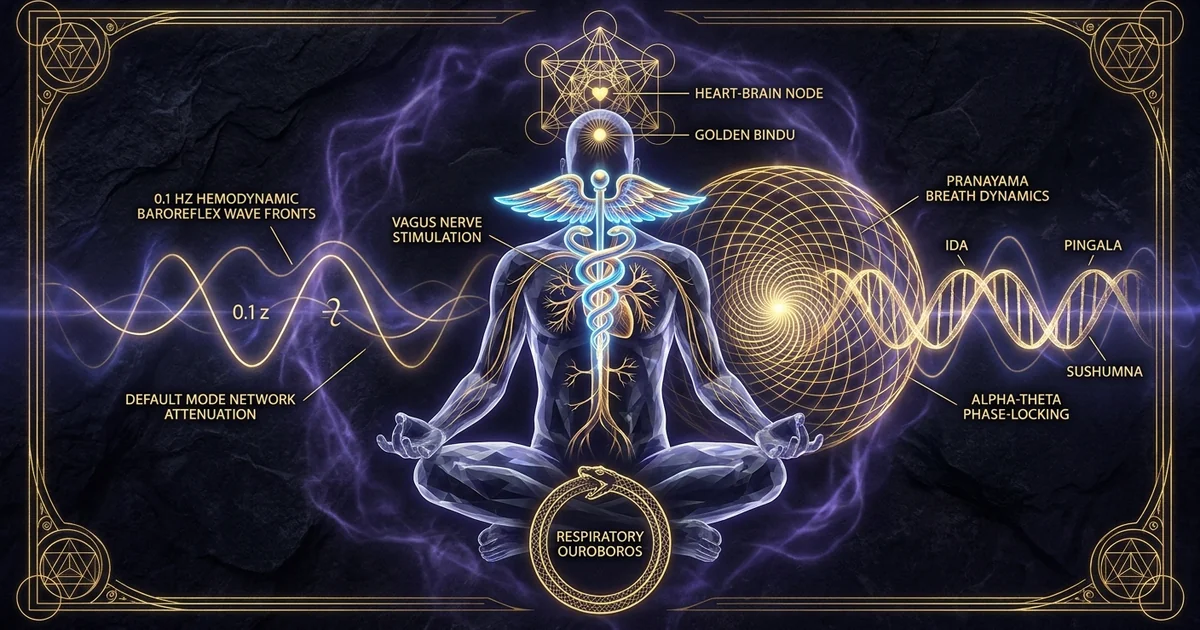
Vagus Nerve Stimulation: Pranayama Breath Dynamics
Protocol Overview & Neurophysiological Thesis: The Vagal-Somatic Bridge
The human autonomic nervous system operates not as a static binary switch, but as an oscillating, bidirectional communications network governed primarily by the tenth cranial nerve. The vagus nerve (nervus vagus) acts as the primary neuroanatomical superhighway between the viscera and the central nervous system, with sensory afferents comprising roughly eighty percent of its total axonal composition. These primary sensory fibers convey instantaneous somatic, mechanical, and biochemical feedback from the pulmonary parenchyma, aortic baroreceptors, and gastrointestinal structures directly to the nucleus tractus solitarius (NTS) situated within the dorsal medulla oblongata. From this central medullary relay, vagal afferent information directly modulates higher-order subcortical and cortical architecture, reshaping baseline autonomic arousal, emotional salience, and cognitive processing.
Conscious respiratory modulation functions as a direct physiological mechanism for endogenous neuromodulation. While clinical interventions increasingly rely on surgical implants or transcutaneous vagus nerve stimulation (tVNS) targeting the auricular branch to treat refractory epilepsy and major depressive disorder, the biomechanical dynamics of targeted slow-rate pranayama achieve an identical physiological objective non-invasively. Systematic deceleration of the respiratory cycle alters pulmonary kinematics, engaging mechanoreceptors that initiate cholinergic outflow through the dorsal motor nucleus and the nucleus ambiguus. Through sustained, rhythmic alteration of respiratory frequency and depth, an individual can intentionally downregulate hyper-adrenergic sympathetic drive, blunt systemic inflammatory signaling, and cultivate profound parasympathetic vagal tone.
The historical lineages of yogic contemplative architecture conceptualized this somatic transformation through the metaphysics of prana—the fundamental animating current of the somatic organism—and apana, its grounding, descending vector. Within the paradigm of modern neurobiology, this dynamic reflects the conscious balance between ergotropic (sympatho-excitatory, energy-mobilizing) and trophotropic (parasympatho-inhibitory, rest-and-digest) operational modes. The voluntary manipulation of tidal volume, combined with selective engagement of the diaphragmatic piston, shifts the somatic operating state away from defensive vigilance toward deep homeostatic quiescence. This shift establishes the biophysical baseline required to sustain advanced contemplative absorption, transpersonal integration, and unified states of consciousness.
Vagal Afference: The Somatosensory Conduit to Central Arousal
The functional topography of vagal afference reveals how peripheral biomechanics govern central cognitive-affective states. Visceral signals transmitted along unmyelinated C-fibers and thinly myelinated A-delta fibers converge onto the NTS, which acts as an integration hub for homeostatic status reports. Rather than functioning solely as an autonomic reflex loop, the NTS distributes ascending collateral projections directly to the parabrachial area, the periaqueductal gray, the locus coeruleus, the hypothalamus, and the central nucleus of the amygdala.
Through these ascending pathways, mechanical perturbations within the thoracic cavity exert real-time influence over central neurochemistry. When the pulmonary apparatus undergoes deliberate, protracted elongation, the influx of vagal sensory impulses directly suppresses the firing rate of the locus coeruleus—the principal noradrenergic nucleus of the brainstem. This dampening of central norepinephrine tone terminates the downstream cascade of hyper-arousal, anxiety, and task-irrelevant vigilance. Simultaneously, afferent projections innervating the thalamus adjust sensory gating thresholds, effectively muting baseline somatosensory distraction while heightening interoceptive acuity.
Gerritsen and Band (2018) demonstrate that mechanical lung inflation during protracted exhalations directly excites slowly adapting stretch receptors (SARs), transmitting rhythmic trains of action potentials along vagal afferents to the nucleus tractus solitarius. This afferent cascade inhibits sympathetic outflow while simultaneously activating the cholinergic anti-inflammatory pathway via the dorsal motor nucleus of the vagus nerve, systematically driving systemic downregulation of pro-inflammatory cytokines (such as TNF-alpha and IL-6) and shifting the central nervous system into an unperturbed trophotropic baseline.
Respiratory Pacing as Endogenous Neuromodulation
Modulating the respiratory rate acts as an internal tuning dial for the autonomic nervous system. Typical unmonitored human breathing oscillates between 12 and 20 breaths per minute (0.20 to 0.33 Hz), a baseline characterized by shallow thoracic excursions and intermittent sympathetic dominance. When breathing patterns are consciously restructured into slow, coherent trajectories beneath 10 breaths per minute—specifically targeting the 0.1 Hz frequency (6 breaths per minute)—the neurobiological state fundamentally reorganizes. This targeted slow-rate cadence constitutes endogenous vagus nerve stimulation pranayama breathing.
By deliberately prolonging the expiratory phase relative to inspiration, practitioners systematically harness the mechanical forces of lung inflation and deflation. Protracted exhalations increase the duration of pulmonary mechanoreceptor firing, which directly facilitates acetylcholine release at the cardiac sinoatrial node via efferent postganglionic pathways. This parasympathetic braking mechanism counters the neuroendocrine exhaustion associated with chronic allostatic load. The somatic shift from high-frequency, fragmented breathing to low-frequency, continuous respiratory pacing initiates an autonomic transition that lowers baseline metabolic demand while fortifying emotional stability and cognitive reserves.
Transpersonal Archetypes: Prana as Bioelectric Dynamic
The contemplative taxonomy of pranayama (literally the expansion and regulation of the vital biofield current) closely mirrors our modern understanding of bioelectrodynamics. Classical texts conceptualize prana not merely as atmospheric air, but as an oscillating, systemic charge distributed along subtle energetic channels (nadis), which parallel the neurovascular bundles and autonomic plexuses recognized by contemporary anatomy. Within this somatic framework, chaotic, irregular breath dynamics directly correlate with fragmented psychic activity, characterized by hyperactive thought loops and systemic somatic tension.
Conversely, the rhythmic pacing and deliberate deceleration of the breath unify these dispersed energetic currents. By channeling somatic tension through the diaphragmatic axis, the practitioner transmutes erratic, defensive sympathetic impulses into coherent, grounded parasympathetic charge. This biological reorganization forms the somatic bedrock for non-ordinary and mystical experiences. When the nervous system is freed from maintaining perpetual hyper-vigilance, underlying neuroelectric networks can settle into self-transcendent states, bridging the gap between somatic physiology and transpersonal consciousness.
Biophysical Mechanisms: Baroreflex Resonance, RSA, and Brainwave Dynamics
The biophysical efficacy of slow pranayama rests upon the coupled relationship between the cardiovascular and respiratory systems. Under basal physiological conditions, these systems continuously interact to maintain hemodynamic equilibrium through rapid, micro-adjustments in heart rate, blood pressure, and vascular resistance. When conscious breathing aligns with the endogenous frequencies of these cardiovascular feedback loops, the body transitions from physiological drift into an entrained, highly organized state characterized by systemic baroreflex-resonance.
Central to this shift is the maximization of heart rate variability (HRV)—specifically the amplification of the high-frequency (HF) and low-frequency (LF) components of the heart’s inter-beat intervals. Far from being a pathology, healthy cardiac mechanics demand constant variation between successive heartbeats, mirroring a highly flexible, responsive autonomic nervous system capable of adapting dynamically to environmental and internal demands. Slow yogic breathing leverages this fundamental dynamic to convert the cardiopulmonary axis into an amplifier of restorative parasympathetic tone.
Mechanics of Respiratory Sinus Arrhythmia (RSA)
Respiratory sinus arrhythmia denotes the cyclical oscillation of heart rate in direct temporal coordination with the breath: heart rate accelerates during inspiration and decelerates during expiration. This phenomenon is mediated directly by the brainstem’s autonomic circuitry. During inhalation, expansion of the chest wall and diaphragm draws venous blood into the right atrium, while simultaneously transiently suppressing cardiac vagal efferent activity emerging from the nucleus ambiguus. This temporary lifting of the “vagal brake” allows the intrinsic pacemaker of the sinoatrial node to drift toward its higher baseline rate, elevating heart rate.
During exhalation, the physiological dynamic reverses entirely. As intrathoracic pressure stabilizes, central vagal outflow to the heart abruptly resumes with heightened amplitude. Acetylcholine binds rapidly to muscarinic M2 receptors on the sinoatrial node, opening inward-rectifying potassium channels ($I_{K,ACh}$) and hyperpolarizing nodal tissue, which significantly slows cardiac depolarization. This rapid deceleration during exhalation generates high-amplitude respiratory-sinus-arrhythmia. By extending the duration of each exhalation, pranayama maximizes the duration of this vagally mediated deceleratory phase, structurally strengthening parasympathetic vagal tone and elevating inter-beat interval variability to exceptional degrees.
0.1 Hz Mayer Wave Entrainment and Baroreceptor Coupling
When respiratory pacing is deliberately sustained at approximately 0.1 Hz—equivalent to exactly six breaths per minute—a profound systemic phenomenon occurs: the breath locks into phase with the Mayer wave rhythm. Mayer waves are natural oscillations in arterial blood pressure that occur at approximately 0.1 Hz, driven by the intrinsic response latency of the sympathetically mediated baroreceptor reflex loop. Under ordinary, unregulated breathing, respiratory sinus arrhythmia and Mayer waves drift out of phase, creating overlapping, interfering wave patterns within the cardiovascular signal.
Breathing at 0.1 Hz aligns these two discrete physiological oscillations into complete phase synchrony. During this resonant state, inhalation aligns precisely with the drop in arterial pressure, while exhalation matches the baroreflex-induced pressure upsurge. This phase-locked coherence maximizes the dynamic swings in heart rate variability, producing large, unified waves in both cardiac rhythm and peripheral vascular tone. Mechanically, this coherent motion maximally stimulates the carotid sinus and aortic arch baroreceptors, triggering sustained afferent volleys along the glossopharyngeal and vagus nerves into the NTS, reinforcing parasympathetic dominance throughout the central nervous system.
Thalamocortical Gating: Alpha-Theta Transitions and Gamma Bursts
The downstream neuroelectrical consequences of high-amplitude baroreflex stimulation directly reorganize the neocortex. Vagal afferent inputs ascending from the NTS project to the reticular nucleus of the thalamus—the primary inhibitory gatekeeper of sensory flow to the cerebral cortex. As rhythmic vagal afference stabilizes, the thalamic reticular nucleus initiates burst-firing modes, selectively gating and dampening unneeded environmental sensory input. This process de-escalates the desynchronized, high-frequency Beta wave activity (20–30 Hz) that typically characterizes stress, rumination, and chronic outward-focused vigilance.
       Beta Desynchrony (20-30 Hz) [Executive Hyper-Vigilance]
                                │
                 (Vagal Afference to Thalamus)
                                ▼
         Alpha Synchronization (8-12 Hz) [Calm Alertness]
                                │
            (Prolonged 0.1 Hz Resonant Kumbhaka)
                                ▼
         Theta Emergence (4-8 Hz) [Hypnagogic/Deep Absorptive]
                                │
        (Phase-Locked Cross-Frequency Coupling / Binding)
                                ▼
         Parieto-Occipital Gamma Bursts (40 Hz) [Non-Dual Unity]
As hyper-vigilant Beta activity recedes, the brain shifts into widespread, bilateral Alpha band coherence (8–12 Hz), originating over parieto-occipital regions before spreading frontalward. With continued slow-rate respiration and light post-expiratory retention, this synchrony deepens into the slow-wave Theta spectrum (4–8 Hz), a neurological state associated with lucid reverie, somatic release, and deep contemplative absorption. Notably, during profound samadhic stillness induced by advanced breath retention, this Alpha-Theta platform serves as a stable base for transient bursts of phase-locked Gamma oscillations (40 Hz). This emergent alpha-theta-cross-frequency-coupling facilitates rapid, long-range neural communication, mirroring the neuroelectrical signatures observed during sustained self-transcendent mystical states.
Neuromodulatory Typologies: Comparative Analysis of Pranayama Breath Dynamics
The classical canon of pranayama provides a sophisticated taxonomy of breathing techniques, each generating divergent autonomic, hemodynamic, and neurochemical profiles. Far from being a monolithic practice, these dynamics are divided into two primary physiological classes: inhibitory-parasympathetic drivers and sympatho-excitatory oscillators. Understanding the functional divergence between these operational modes allows practitioners to wield breath dynamic protocols with pharmacological precision.
Parasympathetic Stabilizing (Slow/Resonant)
- Target Cadence: 0.05 – 0.1 Hz (3 – 6 breaths per minute)
- Primary Methodologies: Ujjayi, Bhramari, Nadi Shodhana, extended Exhalation
- Primary Vagal Trajectory: Maximized vagal efference; robust activation of the cardio-inhibitory center in the nucleus ambiguus
- Primary Neurotransmitters: Acetylcholine, Gamma-Aminobutyric Acid (GABA), Serotonin
- Hemodynamics: Decreased systemic vascular resistance, stabilized arterial blood pressure, marked elevation in RMSSD/HF-HRV
- Electrocortical Profile: Frontal-midline Theta (4–8 Hz) and global Alpha (8–12 Hz) coherence; marked deactivation of the anterior insula and amygdala
Sympathetic Activating (Fast/Hyperventilatory)
- Target Cadence: 1.0 – 2.5 Hz (60 – 150 breaths per minute)
- Primary Methodologies: Kapalabhati, Bhastrika, rapid bellows breathing
- Primary Vagal Trajectory: Acute transient withdrawal of parasympathetic tone; intense sympathetic excitation via rostral ventrolateral medulla
- Primary Neurotransmitters: Epinephrine, Norepinephrine, Dopamine, Corticotropin-releasing factor
- Hemodynamics: Transient vasoconstriction, elevated heart rate, rapid hypocapnic alkalosis followed by deep parasympathetic rebound during Kumbhaka
- Electrocortical Profile: Fast desynchronized Beta-Gamma patterns; acute cortical arousal priming the brain for subsequent deep inhibitory resets
Inhibitory Parasympathetic Drivers: Ujjayi, Bhramari, and Nadi Shodhana
Slow, regulatory pranayamas systematically lower the body’s metabolic baseline. Central to this category is Ujjayi (the psychic or victorious breath), a technique characterized by a slight, voluntary contraction of the laryngeal muscles around the glottis during both inhalation and exhalation. This laryngeal narrowing introduces steady acoustic resistance to the passage of air, naturally elongating respiratory cycles and augmenting intrathoracic pressure. This subtle pressure shift gently compresses the carotid sheath, directly stimulating the carotid sinus baroreceptors and amplifying the vagal sensory discharge to the brainstem.
Bhramari (humming bee breath) takes this mechanical modulation further by incorporating continuous, vocalized humming during a protracted expiratory phase. The continuous low-frequency sound creates an endonasal acoustic resonance that dramatically increases internal production of endogenous nitric oxide (NO) within the paranasal sinuses. Nitric oxide, a potent vasodilator, lowers pulmonary vascular resistance and improves gas exchange efficiency across the alveolar-capillary membrane. When paired with Nadi Shodhana (alternate nostril breathing), which balances hemispheric autonomic tone by alternating nasal resistance and modifying unilateral sympathetic outflow, these inhibitory techniques consistently elicit profound parasympathetic dominance.
Sympatho-Excitatory Oscillators: Kapalabhati and Bhastrika
In sharp contrast to the slow, inhibitory practices, techniques such as Kapalabhati (frontal skull cleansing) and Bhastrika (bellows breath) function as high-frequency oscillatory systems, operating between 1.0 and 2.5 Hz (60 to 150 breaths per minute). Kapalabhati relies on active, forced abdominal contractions to drive rapid exhalations, while allowing inhalation to occur passively through elastic tissue recoil. Bhastrika, conversely, demands equal, forceful muscular drive across both inhalation and exhalation, generating massive, rapid oscillations in intrathoracic and intra-abdominal pressures.
These high-frequency protocols deliberately disengage the parasympathetic vagal brake, triggering acute, controlled sympathetic activation via the rostral ventrolateral medulla (RVLM). The rapid ventilatory turnover drives excessive clearance of arterial carbon dioxide, resulting in sudden, temporary hypocapnic respiratory alkalosis. Far from being counterproductive, this brief, intense burst of sympathetic arousal primes the nervous system. When followed immediately by an unforced breath retention (kumbhaka), the sympathetic surge drops away, precipitating a dramatic, deep parasympathetic rebound that drives vagal tone to levels rarely achieved through slow breathing alone.
Neurochemical Profiles: Acetylcholine/GABA Elevation versus Catecholamine Surges
The diverging physiological states induced by these distinct pranayama styles manifest clear neurochemical signatures within the central nervous system:
Slow Resonant Pranayama (0.1 Hz) ──────> ↑ Acetylcholine (SA Node/ACh Pathways)
                                 ──────> ↑ GABA (Thalamic/Cortical Inhibition)
                                 ──────> ↓ Cortisol / ↓ Norepinephrine

Fast Bellows Pranayama (1-2 Hz)  ──────> ↑ Epinephrine / Norepinephrine Surge
                                 ──────> ↑ Central Dopamine Release
  └─► Followed by Kumbhaka:      ──────> Rapid Parasympathetic Neurochemical Rebound
Slow-rate, resonant pranayama systematically elevates central and peripheral concentrations of acetylcholine, the primary neurotransmitter of the parasympathetic system. Increased acetylcholine release slows heart rate, calms peripheral smooth muscle tone, and dampens systemic inflammatory signaling. Simultaneously, the persistent vagal sensory input into the thalamus stimulates the synthesis and release of gamma-aminobutyric acid (GABA)—the central nervous system’s chief inhibitory neurotransmitter. Magnetic resonance spectroscopy has confirmed that slow contemplative breathing practices produce acute increases in thalamic GABA levels, counteracting cortical hyperexcitability and quieting ruminative, anxiety-driven thought patterns.
Fast, oscillatory pranayamas trigger an entirely different neurochemical cascade. Rapid bellows breathing stimulates the adrenal medulla to release a controlled pulse of catecholamines—epinephrine and norepinephrine—into the bloodstream, accompanied by heightened dopaminergic transmission in the prefrontal cortex and ascending activating networks. This acute catecholaminergic surge heightens alertness, boosts alertness, and temporarily mobilizes cellular energy reserves. When this practice transitions into subsequent breath retention, the rapid clearance of catecholamines against a backdrop of rising arterial carbon dioxide creates a unique neurochemical state: alert, lucid stillness, completely free from autonomic agitation.
Step-by-Step Experiential Protocol: The 0.083–0.1 Hz Resonant Vagal Entrainment Matrix
The following protocol translates the biophysical principles of baroreflex resonance, respiratory sinus arrhythmia, and neurovisceral integration into an actionable contemplative practice. By combining precise mechanical postures, exact respiratory pacing, and structured breath holds, practitioners can consistently elicit deep parasympathetic dominance and sustained brainwave entrainment.
- Primary Posture: Siddhasana (Accomplished Pose) or Padmasana (Lotus Pose), with the spine axially elongated, shoulders dropped down and back, chest broad, and pelvis slightly anteriorly tilted to allow unimpeded diaphragmatic excursion.
- Tongue Lock (Nabho Mudra): Press the broad tip of the tongue gently against the hard palate just behind the superior incisors, or curve it backward along the soft palate (Khechari light), sealing the upper energetic and neural circuit.
- Laryngeal Constriction: Subtle, continuous narrowing of the glottis (Ujjayi), generating an oceanic whispering acoustic resonance audible internally at approximately 40–50 dB.
- Phase I (0–5 Min): Somatic Calibration. Diaphragmatic excursion only; 4-second inhalation, 6-second exhalation (0.1 Hz transition).
- Phase II (5–20 Min): Coherent Resonance. Absolute adherence to the 0.083–0.09 Hz matrix (either 5.5s Inhale / 5.5s Exhale, or 4s Inhale / 8s Exhale).
- Phase III (20–30 Min): Hypercapnic Kumbhaka. Introduction of 12-to-16-second post-exhalation cessation (Bahir Kumbhaka) coupled with Mula Bandha and Jalandhara Bandha.
- Internal Attentional Anchor: Continuous somatic focus anchored simultaneously in the retro-sternal space (sinoatrial node) and the sub-occipital medullary axis (NTS region).
Phase I: Postural Calibration and Visceral Grounding (0–5 Minutes)
The practitioner begins by establishing a stable, grounded seated posture. Somatic alignment is essential: slumping or anterior head carriage compresses the carotid sheath along the sternocleidomastoid muscle, restricting the free passage of neural and blood flow through the vagus nerve and carotid arteries. By drawing the crown of the head upward and gently tucking the chin, the practitioner elongates the cervical spine, removing mechanical tension from the vagal trunk as it exits the jugular foramen.
       [Crown Drawn Upward / Chin Tucked]
                       │
       [Cervical Spine Axial Elongation]
                       │
                       ▼
       [Decompression of Carotid Sheath]
                       │
                       ▼
   [Unrestricted Vago-Vascular Fluidic Dynamics]
During this opening five-minute window, the practitioner shifts awareness entirely to diaphragmatic excursion, releasing tension in the rectus abdominis. Respiration transitions from unconscious, shallow chest expansion to deep, horizontal movements centered around the lower ribs and belly. The cadence is set to an accessible, calming rhythm: a smooth 4-second nasal inhalation followed by a relaxed, unhurried 6-second nasal exhalation. This 10-second breath cycle establishes an initial 0.1 Hz baseline, settling acute somatic restlessness and preparing the cardiovascular system for deeper entrainment.
Phase II: The Resonant Coherence Sequence (5–20 Minutes)
With the physical posture stabilized and the mind anchored in the body, the protocol transitions into its active entrainment phase. The practitioner adopts either the symmetrical 5.5-second inhalation to 5.5-second exhalation rhythm (0.09 Hz), or the asymmetrically biased 4-second inhalation to 8-second exhalation trajectory (0.083 Hz). The 4:8 cadence is particularly potent for cultivating parasympathetic tone, as it extends the expiratory phase to double the duration of inspiration, maximizing acetylcholine release at the sinoatrial node.
Throughout this sequence, the practitioner maintains gentle Ujjayi laryngeal resistance, producing a soft, ocean-like sound that provides steady acoustic feedback. The airflow remains uninterrupted, smooth, and circular, with no abrupt stops or starts between breaths. As heart rate variability pranayama metrics climb toward their peak, the practitioner focuses their attention internally on the retro-sternal space—the physical location of the heart and the cardiac nervous system. Within several minutes, the physical body typically experiences distinct signs of deep autonomic settling: warm extremities from peripheral vasodilation, a release of tension in the jaw and eyes, and a steady, rhythmic pulsing throughout the torso, signaling that the baroreceptors and respiratory rhythms have locked into full resonance.
Phase III: Kumbhaka Retention and Thalamic Integration (20–30 Minutes)
In the final ten minutes, the protocol deepens by incorporating systematic post-expiratory breath retention (Bahir Kumbhaka). At the end of a slow, controlled 8-second exhalation, rather than immediately drawing air back in, the practitioner gently suspends all respiratory movement for 12 to 16 seconds, comfortably resting in the empty space between breaths. This cessation is accompanied by the application of Jalandhara Bandha (a gentle throat lock formed by dropping the chin toward the sternum) and Mula Bandha (the engagement of the pelvic floor muscles).
Slow Exhalation (8s)
           │
           ▼
   Post-Exhalation Cessation (12-16s) [Bahir Kumbhaka]
           │
           ├─► Application of Jalandhara Bandha (Throat Lock)
           ├─► Application of Mula Bandha (Pelvic Floor Engagement)
           │
           ▼
   Controlled Rise in Arterial PaCO2 (Mild Hypercapnia)
           │
           ▼
   Cerebral Vasodilation & Increased Microvascular Perfusion
           │
           ▼
   Thalamic De-Afferentation & Profound Theta-Gamma Quiescence
This post-expiratory pause causes a controlled, mild rise in arterial carbon dioxide ($PaCO_2$), inducing hypercapnic vasodilation throughout the microvasculature of the brain. The temporary suspension of mechanical movement removes incoming somatosensory inputs, allowing the thalamic reticular nucleus to disengage from active processing. In this deep, unmoving stillness, cortical activity quiets dramatically into slow-wave Theta rhythms, punctuated by coherent bursts of Gamma synchrony. The mind rests in a state of alert, lucid presence, free from internal chatter or somatic agitation—the classic physiological signature of deep yogic absorption (samadhi).
Operational Safety, Contraindications & Biofield Grounding Architecture
While slow-rate, resonant pranayama offers substantial restorative benefits, advanced breathwork and breath retention place distinct mechanical and biochemical demands on the human body. Radically shifting autonomic balance and altering intrathoracic pressures requires sensible precautions. These practices should be approached systematically, with clear respect for personal physiological thresholds, rather than forced prematurely.
- Clinical Contraindications: Individuals with a history of intracranial aneurysms, uncontrolled Stage II hypertension ($>160/100$ mmHg), severe carotid artery stenosis, unmanaged cardiac arrhythmias, detached retina, or active epilepsy must strictly avoid both extended breath retention (kumbhaka) and rapid hyperventilatory practices (Kapalabhati/Bhastrika).
- Psychiatric Precautions: Those navigating active bipolar mania, dissociative disorders, or acute post-traumatic stress episodes should avoid intense breath suspension, as sudden shifts in blood chemistry and interoceptive awareness can occasionally trigger depersonalization or panic.
- Immediate Somatosensory Reset Directive: If acute lightheadedness, tunnel vision, vasovagal pre-syncope, or disorienting panic occurs at any point during practice:
- Immediately release all bandhas and breathe naturally through both nostrils.
- Drop the center of gravity by folding forward from the hips, resting the forehead on the floor or a supportive bolster (Balasana / Child’s Pose).
- Firmly press both hands and feet into the ground to stimulate cutaneous proprioceptors, providing the brain with clear, grounding physical sensory input.
- Allow the gaze to soften and defocalize on a fixed point on the floor, restoring balanced blood flow and central autonomic equilibrium.
Hemodynamic and Cerebrovascular Risk Vectors
The mechanical maneuvers inherent to advanced pranayama—especially forceful breath retention coupled with sustained muscular locks (bandhas)—alter internal pressure balances. Applying a sustained Valsalva maneuver during pressurized breath-holding dramatically spikes intrathoracic pressure, which initially impedes venous blood return to the heart. This transient drop in cardiac output temporarily lowers mean arterial pressure, which can trigger an over-reactive baroreceptor response, leading to vasovagal pre-syncope or fainting in susceptible individuals.
Furthermore, these shifts in thoracic pressure cause corresponding fluctuations in intracranial pressure and cerebrovascular blood velocity. For practitioners with undiagnosed vascular vulnerabilities, such as cerebral aneurysms or advanced atherosclerosis, these pressure spikes can stress delicate vessel walls. It is essential that post-inhalation and post-exhalation retentions remain entirely free of strained muscular force. Retentions should be maintained through subtle, relaxed neurological stillness rather than forceful muscular compression.
Hyperventilation-Induced Hypocapnia and Latent Epileptogenesis
Rapid, forceful practices like Kapalabhati and Bhastrika demand careful monitoring to avoid hyperventilation-induced hypocapnia. Forceful, rapid exhalations quickly drive arterial carbon dioxide levels down to low concentrations. Because carbon dioxide plays a critical role in maintaining normal blood pH and cerebrovascular dilation, its sudden depletion causes immediate vasoconstriction of cerebral arterioles, significantly reducing blood flow and oxygen delivery to the brain (the Bohr effect).
   Rapid Hyperventilation (Kapalabhati / Bhastrika)
                          │
                          ▼
        Acute Depletion of Arterial PaCO2 (Hypocapnia)
                          │
                          ▼
            Systemic Respiratory Alkalosis
                          │
                          ▼
            Cerebral Arteriolar Vasoconstriction
                          │
                          ▼
    Reduced Cerebral Perfusion & Calcium Ion Fluctuation
                          │
                          ▼
       Subclinical Paroxysmal Spike-Wave Discharges
                (Latent Epileptogenesis Risk)
This sudden drop in cerebral perfusion can cause peripheral tingling, lightheadedness, and muscle cramping (tetany) as extracellular ionized calcium shifts. In individuals with latent or unmapped seizure vulnerabilities, particularly within the temporal lobes, respiratory alkalosis combined with high cortical excitability can trigger paroxysmal spike-wave discharges. Practitioners should approach these activating practices with measured moderation, ensuring they are always followed by stabilizing, slow-rate breathing to safely restore normal blood gas chemistry.
Biofield Grounding and Somatosensory Reset Methodologies
Navigating the deeper physiological states accessed through extended vagal entrainment requires reliable methods for stabilizing the body afterward. Deep parasympathetic absorption significantly lowers sympathetic tone, blood pressure, and core temperature. Moving abruptly from this state back into ordinary, outward-focused daily tasks without proper grounding can leave an individual feeling unmoored, spacey, or physically unsteady.
To smoothly re-integrate ordinary awareness, practitioners should dedicate the final three to five minutes of practice to conscious grounding. This transition involves gently deepening the breath, softly moving the fingers and toes, and applying gentle tactile pressure to the thighs and arms. Gently opening the eyes into a wide, soft gaze helps the visual system adjust without sensory overwhelm. These straightforward physical actions provide the nervous system with clear somatosensory feedback, grounding the benefits of the practice within a balanced, fully functional waking state.
Phenomenological Correlates & Veridical Evidence: Mapping Mystical Topology
The profound neurophysiological reorganization produced by vagal entrainment directly parallels the phenomenological descriptions of mystical states found across contemplative literature. As ascending vagal afference stabilizes Medullary-thalamic pathways, the brain’s internal dynamics shift away from daily narrative processing toward non-dual, transpersonal awareness. This somatic shift reveals the experiential bridge between quantifiable human physiology and classical contemplative realization.
Rather than viewing mystical states as purely subjective anomalies, contemporary neuroscience increasingly recognizes them as the natural neurofunctional result of systematic cardiorespiratory entrainment. When the body’s internal oscillations—cardiac rhythms, Mayer waves, and the breath—lock into resonance, the brain’s baseline sensory-filtering mechanisms temporarily step aside. This allows awareness to perceive reality without its ordinary layer of conceptual separation, providing a grounded neurobiological explanation for the deep feelings of unity and boundless presence reported by long-term practitioners.
Deactivation of the Default Mode Network and Boundary Dissolution
One of the clearer neuroimaging correlates of slow, resonant pranayama is the down-regulation of the Default Mode Network (DMN), particularly within the posterior cingulate cortex (PCC) and the precuneus. The DMN serves as the neural substrate for self-referential narrative processing, autobiographical memory, mind-wandering, and the continuous maintenance of the psychological “I-boundary.” Hyperactivity within this network is closely associated with depressive rumination, anxious anticipation, and an exaggerated sense of personal separation.
       Ascending Vagal Afference to Nucleus Tractus Solitarius
                                 │
                                 ▼
         Thalamic Reticular Gating of Cortical Rhythms
                                 │
                                 ▼
             Suppression of Locus Coeruleus Drive
                                 │
                                 ▼
       DMN BOLD Signal Attenuation (PCC, mPFC, Precuneus)
                                 │
                                 ▼
     Dissolution of Egoic Boundaries & Narrative Identification
                                 │
                                 ▼
             Unified Transpersonal / Mystical Awareness
As resonant breathing elevates high-amplitude parasympathetic tone, functional MRI studies reveal an acute reduction in blood-oxygen-level-dependent (BOLD) signals throughout the core nodes of the DMN. The continuous stream of self-referential thoughts quiets, replaced by open, non-judgmental present-moment awareness. The practitioner’s subjective sense of being an isolated observer trapped behind the eyes softens and expands into a unified, unbroken field of interoceptive awareness. This physiological shift forms the biological foundation for classical contemplative boundary dissolution (laya).
Veridical Perception and Monroe Gateway Correlates
The biophysical mechanisms of slow pranayama also share striking parallels with the foundational research conducted at the Monroe Institute, documented within declassified military and intelligence assessments of human consciousness potential. Central to the Gateway Experience analysis is the realization that resonant cardiopulmonary activity functions as a mechanical oscillator, transforming the heart-aorta system into an acoustic amplifier that pulses rhythmically throughout the human body.
During slow, coherent respiration, the rhythmic contraction of the heart generates a standing pressure wave that reflects back up the aortic arch, creating an acoustic frequency that reverberates throughout the body at approximately 7 Hz. This gentle, rhythmic pressure wave travels along the vascular tree into the ventricular cavities of the brain, encouraging entrainment of the cerebral spinal fluid and the surrounding neural architecture. The resulting neuroelectrical coherence across both cerebral hemispheres mirrors the balanced brainwave states observed during out-of-body experiences (OBE) and deep meditative trances, providing a physical mechanism for forms of expanded, non-local awareness.
“Chale vate chalam chittam nischale nischalam bhavet, yogi sthanutvam apnoti tato vayum nirodhayet.”
— Hatha Yoga Pradipika (II:1-2)
Translation: “When the breath wavers, the mind is unsteady; when the breath is stilled, the mind achieves profound stillness, and the yogi attains complete stability. Therefore, one should learn to restrain the breath.”
This classical insight mirrors the biophysical conclusions documented in the declassified CIA Gateway Analysis (1983). The intelligence assessments observed that deep cardiorespiratory entrainment creates a standing acoustic frequency (approximately 7 Hz) that phase-locks the ventricular micro-oscillations of the human brain with the aortic pulse, fundamentally dampening the subjective boundaries of somatic confinement and facilitating non-local consciousness.
Historical Canon: The Hatha Yoga Pradipika and Vijnana Bhairava Tantra
The classical literature of traditional yoga demonstrates an empirical understanding of these neurovisceral dynamics. Long before the anatomical mapping of the vagus nerve or the formulation of the polyvagal theory, systems like the Hatha Yoga Pradipika and the Vijnana Bhairava Tantra treated the breath as the primary tool for settling mental activity. They recognized that the fluctuating movements of mind (chitta vritti) were inextricably linked to the physical movement of the breath (prana).
In the Vijnana Bhairava Tantra, several core contemplative methods (dharanas) focus on the brief, natural pauses that occur at the turning points of the breath—the moments of stillness at the top of inhalation and the bottom of exhalation. Classical practitioners discovered through direct observation that resting awareness in these natural spaces between breaths could quiet internal chatter, revealing a clear, unbroken background of consciousness. Modern neuroscience confirms this ancient observation: consciously settling into the natural pauses of the breath reduces sensory noise in the brain, facilitating the shift into sustained, restorative states of mental clarity.
Frequently Asked Questions: Quantitative Diagnostics & Protocol Troubleshooting
Biometric Quantification: How can practitioners objectively verify vagal tone saturation using consumer HRV monitors?
Objective verification of parasympathetic vagal tone saturation is straightforward to measure using modern consumer biometric tools, provided the hardware uses an accurate electrocardiography (ECG) chest strap or high-fidelity optical photoplethysmography (PPG) system. Practitioners should focus on two primary metrics: the Root Mean Square of Successive Differences (RMSSD) and High-Frequency (HF) spectral power, which spans the 0.15 to 0.40 Hz band under normal breathing conditions.
During the resonant 0.1 Hz breathing sequence, the power spectrum of heart rate variability shifts dramatically:
Normal Breathing (12-16 bpm)         Resonant Pranayama (0.1 Hz / 6 bpm)
  HF Power: Dispersed Across           Power Shifts: Concentrated Spike
  0.15 - 0.40 Hz Range                 Directly at the 0.10 Hz Resonance Peak
  [RMSSD Baseline: e.g., 35 ms]        [RMSSD Surge: Often Exceeds 100+ ms]
When breathing decelerates to exactly 0.1 Hz, spectral power concentrates into a tall, sharp peak directly over the 0.10 Hz low-frequency marker, reflecting complete alignment between Mayer waves and respiratory rhythms. Concurrently, overall RMSSD values often double or triple compared to the practitioner’s waking baseline, providing a clear, real-time readout of robust vagal activation.
Hypercapnic Air-Hunger: How to distinguish normative carbon dioxide acclimation from physiological distress during Kumbhaka?
The sensation of air-hunger experienced during breath retention (kumbhaka), particularly after exhalation, is commonly misunderstood as an urgent sign of oxygen deprivation. In healthy individuals, arterial oxygen saturation ($SpO_2$) remains well within safe margins (consistently above 95%) during brief retentions lasting 15 to 30 seconds. The sudden impulse to breathe is not triggered by lack of oxygen, but by the body’s medullary chemoreceptors reacting to a mild, normal increase in arterial carbon dioxide ($PaCO_2$).
Distinguishing healthy acclimation from genuine physiological distress comes down to specific somatic markers:
- Normative Carbon Dioxide Acclimation: Manifests as a warm, heavy sensation in the lower belly, a mild urge to swallow, or light, rhythmic twitches of the diaphragm, while the mind remains calm, clear, and relaxed.
- Genuine Physiological Distress: Marked by sudden cold sweats, genuine dizziness, graying or tunneling peripheral vision, rapid or irregular heart palpitations, and an involuntary surge of panic.
If any symptoms of genuine distress appear, the practitioner should immediately conclude the breath retention and return to smooth, unhurried 0.1 Hz breathing. Healthy carbon dioxide tolerance develops gradually through consistent, unforced practice, steadily training the brainstem’s chemoreceptors to remain comfortable with natural shifts in blood chemistry.
Acoustic Synchronization: Can external binaural or isochronic frequencies enhance resonant pranayama protocols?
Pairing external acoustic pacing with conscious breathing protocols can deepen neural entrainment. The auditory pathways process acoustic pulses through the brainstem’s superior olivary complex, providing an independent neural route into central brainwave modulation. When an acoustic entrainment tone matches the intended physiological rhythm, it reinforces the autonomic shift initiated by the breath.
For optimal integration, practitioners can layer a 0.1 Hz amplitude-modulated carrier tone (or a 4 to 7 Hz Theta binaural differential) beneath their chosen resonant breathing rhythm. This creates a synchronized dual-stimulation loop: while the slow respiratory cadence engages ascending vagal pathways to calm the thalamus, the external auditory rhythms guide neocortical brainwaves into complementary Theta coherence. This combined sensory approach helps quiet wandering thoughts and stabilizes the contemplative state more quickly than practicing breathwork or sound entrainment in isolation.
Through consistent, educated application of these principles, the practitioner bridges the gap between traditional contemplative art and quantitative modern physiology. The voluntary mastery of the breath ceases to be an abstract exercise; it becomes a precise, predictable key for regulating the nervous system, anchoring transpersonal awareness within a stable, highly coherent biology.