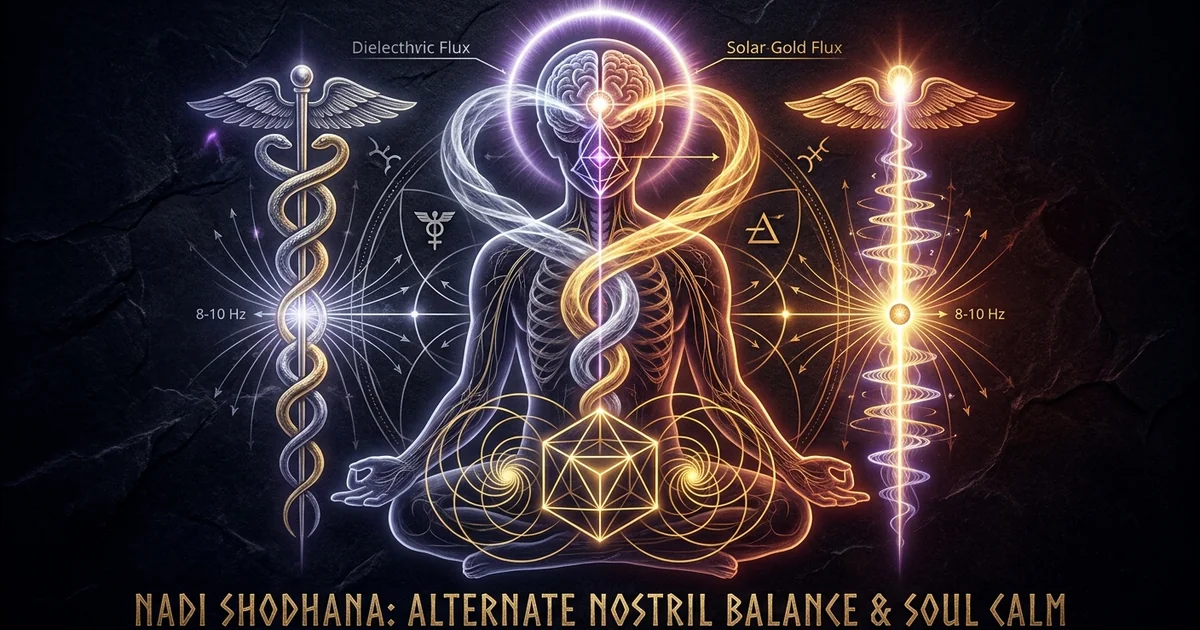
Nadi Shodhana: Alternate Nostril Balance & Soul Calm
Protocol Overview & Neurophysiological Thesis
Nadi Shodhana Pranayama operates as a mechanical and autonomic regulator that couples the biological ultradian nasal cycle to hemispheric cerebral dominance via vagal reflex arcs and sympathetic-parasympathetic homeostatic shifts. Classical yogic traditions assert that rhythmic, alternating respiration through the left and right nostrils purifies the subtle energy channels (nadis), neutralizing internal friction to reveal an unperturbed state of conscious witness capacity. Neurobiologically, this ancient contemplative praxis constitutes a targeted intervention into the autonomic nervous system. By systematically alternating airflow through unilateral nasal resistance, the protocol modulates contralateral prefrontal electroencephalographic (EEG) coherence, balancing Ida (parasympathetic-trophotropic) and Pingala (sympathetic-ergotropic) channels to induce Sushumna—a central state of autonomic equilibrium, Alpha-Theta neural synchronization (8–10 Hz), and sustained transpersonal calm. The deliberate disruption of autonomic asymmetry through rhythmic, non-forced alternate nostril breathing provides an empirical physiological bridge between ancient yogic subtle-body cartography and modern neurovisceral integration models, foundational to advancing pranayama breathwork foundations.
The Ultradian Nasal Cycle and Contralateral Cortical Dominance
The human nasal cycle is an endogenous ultradian rhythm characterized by the alternating congestion and decongestion of the venous erectile tissue lining the nasal turbinates. Regulated by the central autonomic regulatory network located within the hypothalamus and brainstem, this cycle oscillates on a periodicity typically ranging from 90 minutes to several hours. Unilateral tumescence is dictated by ipsilateral sympathetic vasoconstriction and parasympathetic vasodilation. When the sympathetic branch dominates one nasal cavity, vasoconstriction shrinks the mucosal lining, increasing the cross-sectional area and facilitating low-resistance laminar airflow; simultaneously, relative parasympathetic tone in the contralateral cavity induces venous engorgement, dramatically elevating airway resistance.
Crucially, this peripheral nasal oscillation mirrors an underlying neurochemical rhythm in the central nervous system. The mechanical friction of ambient air moving across mucosal mechanoreceptors activates the anterior ethmoidal branch of the nasociliary nerve and broader trigeminal sensory afferents. These signals project via the trigeminal sensory nuclear complex to the ipsilateral locus coeruleus and the contralateral cerebral hemisphere. Consequently, open airflow through the right nostril correlates with enhanced left-hemispheric cerebral metabolism, accelerated verbal processing, and systemic ergotropic activation. Conversely, left-nostril patent airflow correlates with right-hemispheric metabolic dominance, visuospatial processing advantages, and trophotropic, energy-conserving down-regulation.
+-----------------------------------------------------------------------------------+
|                          THE NASAL-CORTICAL DUAL AXIS                             |
+-------------------------+---------------------------------------------------------+
| Left Nostril Patent     | -> Right Cortical Dominance -> Parasympathetic / Vagal  |
| Right Nostril Patent    | -> Left Cortical Dominance  -> Sympathetic Adrenergic   |
| Alternate Equilibrium   | -> Bilateral Coherence      -> Central Autonomic Rest   |
+-------------------------+---------------------------------------------------------+
Ida, Pingala, and Autonomic Dual-Axis Modulation
In traditional yogic anatomy, Ida Nadi terminates in the left nostril, representing lunar, cooling, and inward-oriented current, while Pingala Nadi terminates in the right nostril, embodying solar, heating, and outward-directed kinetic force. Modern neurophysiology transposes these subtle constructs onto the functional dynamics of the autonomic nervous system. Unilateral airflow selectively stimulates the autonomic nervous system, demonstrating that breathing exclusively through the right nostril elevates resting heart rate, increases systemic systolic and diastolic blood pressure, and mobilizes free fatty acids through adrenergic activation. In contrast, exclusive left-nostril ventilation dampens metabolic rate, decreases peripheral vascular resistance, and stimulates vagal efferent outflow, directly enhancing heart rate variability (HRV) coherence and vagal tone.
Ida Nadi (Left Nostril / Parasympathetic Axis)
- Autonomic Drive: Craniosacral parasympathetic-trophotropic activation.
- Cerebral Lateralization: Contralateral right-hemisphere metabolic dominance, facilitating visual-spatial, somatic-intuitive, and non-linear cognition.
- Cardiovascular Parameters: Reductions in resting heart rate, decreased mean arterial blood pressure, enhanced low-frequency to high-frequency HRV shift toward high-frequency vagal dominance (0.15–0.40 Hz).
- Metabolic Profile: Core cooling, metabolic conservation, reduced oxygen consumption, systemic anabolism.
Pingala Nadi (Right Nostril / Sympathetic Axis)
- Autonomic Drive: Thoracolumbar sympathetic-ergotropic mobilization.
- Cerebral Lateralization: Contralateral left-hemisphere metabolic dominance, prioritizing verbal, linear-analytical, and metric processing.
- Cardiovascular Parameters: Elevation of cardiac output, transient elevations in systolic arterial pressure, suppression of vagal efference, elevation of the low-frequency/high-frequency HRV ratio.
- Metabolic Profile: Thermogenesis, increased systemic basal metabolic rate, heightened lipolysis, ergotropic readiness for external action.
Sushumna as Neurovisceral Integration
When alternate nostril breathing is systematically maintained at slow, resonant frequencies, the natural peripheral bias of the ultradian nasal cycle is artificially flattened. This forced balance suppresses the continuous oscillation between sympathetic and parasympathetic extremes. The result is the opening of Sushumna Nadi—the central channel situated along the cerebrospinal axis. From a biophysical standpoint, Sushumna represents the state of central autonomic balance: a rare physiological baseline where sympathetic and parasympathetic branches exist in a dynamic, high-amplitude equilibrium rather than antagonistic reciprocal inhibition.
This neurovisceral integration is characterized by symmetrical prefrontal cortical oxygenation, bilateral synchrony within the fronto-parietal attention networks, and marked mitigation of systemic stress responses. By artificially balancing the airflow resistances across the ethmoidal nerves, the brainstem autonomic centers receive identical bilateral inputs. The reticular activating system drops its vigilance-driven sensory filtering, permitting the nervous system to enter a profound state of somatic equilibrium—a physiological prerequisite for transpersonal absorption, deep contemplative stability, and what ancient texts designate as unconditioned soul calm.
Biophysical Mechanisms & Brainwave Dynamics
Trigeminal-Vagal Reflex Arcs and Baroreflex Modulation
The primary mechanical driver of Nadi Shodhana lies in the transduction of airflow velocity and thermal fluctuation by mechanoreceptors and thermoreceptors (specifically TRPM8 cold-sensitive ion channels) embedded within the nasal mucosa. Afferent impulses travel through the maxillary and ophthalmic branches of the trigeminal nerve (Cranial Nerve V) to the principal sensory nucleus and the spinal trigeminal nucleus. From these brainstem relays, dense monosynaptic and polysynaptic axonal projections interface directly with the nucleus tractus solitarius (NTS)—the primary visceral sensory integration center of the medulla oblongata.
The NTS coordinates arterial baroreflex sensitivity by modulating the efferent signaling of the vagus nerve (Cranial Nerve X) emanating from the nucleus ambiguus and the dorsal motor nucleus. When airflow is deliberately restricted, smoothed, and prolonged via alternate nostril manipulation, the laminar shear stress on nasal epithelial mechanoreceptors stimulates a downstream increase in cardiac vagal efferent activity. This mechanism dramatically elevates high-frequency (HF: 0.15–0.40 Hz) power within the heart rate variability spectrum. The respiratory sinus arrhythmia (RSA) deepens, coupling instantaneous cardiac inter-beat intervals (RR intervals) directly to respiratory cycles, effectively optimizing baroreflex gain and enhancing end-organ perfusion while minimizing energetic expenditure.
Afferent Airflow (Nasal Mucosa)
  │
  ▼
Trigeminal Afferents (CN V: Ethmoidal & Maxillary Branches)
  │
  ▼
Nucleus Tractus Solitarius (NTS)
  │
  ├────────────────────────────────────────┐
  ▼                                        ▼
Nucleus Ambiguus (Vagus / CN X)      Rostral Ventrolateral Medulla (RVLM)
  │                                        │
  ▼                                        ▼
Cardiovagal Efferent Activation       Sympathetic Inhibition
(Enhanced High-Frequency HRV)        (Arterial Vasodilation & Calm)
Hemispheric EEG Synchronization and Alpha Band Entrainment
Alternating nasal resistance generates specific modifications in electrocortical activity, particularly across the electroencephalographic Alpha spectrum (8–12 Hz). In an unsynchronized baseline state, healthy adults exhibit functional hemispheric asymmetry corresponding to their phase in the ultradian nasal cycle. As alternate nostril breathing is introduced at slow ventilatory rates (~0.05 to 0.1 Hz, corresponding to 3 to 6 breaths per minute), sensory gating within the thalamus changes fundamentally. The thalamic reticular nucleus, driven by cross-modal trigeminal, olfactory bulb, and vagal afferents, begins to pace thalamocortical relay neurons in a globally unified cadence.
This synchronizing drive suppresses local Beta rhythms (15–30 Hz)—often associated with active analytical processing, sensory scanning, and cognitive rumination—and replaces them with broad, phase-locked Alpha-1 oscillations (8–10 Hz) across the bilateral prefrontal and fronto-parietal cortices. As the practice deepens, coherent Alpha transitions into frontomedial Theta activity (4–7 Hz), signifying deep internalized attention and a pronounced attenuation of the Default Mode Network (DMN). The hemispheric asymmetry index approaches zero, establishing an identical, high-amplitude voltage profile across both the left and right hemispheres.
Shannahoff-Khalsa, D., et al. (1993) / Stancák, A., & Kuna, M. (1994). EEG changes during alternate nostril breathing: An empirical verification of hemispheric coherence.
In rigorous quantitative laboratory trials investigating the neurophysiological sequelae of Nadi Shodhana, subjects practicing 15 to 30 minutes of unforced alternate nostril ventilation exhibited statistically significant increases in interhemispheric EEG coherence within the Alpha band (8.0–10.5 Hz) across frontoparietal electrode configurations (F3-F4, P3-P4; $p < 0.01$). Concurrently, spectral analysis of cardiovascular variables demonstrated a normalization of the low-frequency to high-frequency (LF/HF) autonomic ratio, driven by a marked increase in high-frequency power, indicating rapid restoration of autonomic equilibrium without cognitive performance decrements.
Neuroendocrine Cascades and GABAergic Upregulation
The neurochemical environment induced by Nadi Shodhana is characterized by the inhibition of the hypothalamic-pituitary-adrenal (HPA) axis and the rapid up-regulation of central inhibitory neurotransmission. Slow, alternating nasal respiration directly influences the activity of the locus coeruleus, the primary noradrenergic center in the brainstem. The physical resistance provided by partial nostril occlusion demands precise, conscious motor control, which dampens the rhythmic, burst-firing mode of the locus coeruleus. This leads to an immediate reduction in the release of norepinephrine across the neocortex and amygdala.
Simultaneously, the synchronization between olfactory-bulb oscillatory activity and the piriform cortex, entorhinal cortex, and ventral hippocampus triggers increased synthesis and release of gamma-aminobutyric acid (GABA). Magnetic resonance spectroscopy (MRS) studies on related pranayamic interventions reveal elevated levels of thalamic and cortical GABA concentrations following alternate nostril breathwork. This elevation acts as a neurochemical brake, inhibiting the amygdalar central nucleus, blunting the release of corticotropin-releasing hormone (CRH) from the paraventricular nucleus of the hypothalamus, and driving down systemic concentrations of adrenocorticotropic hormone (ACTH) and cortisol. The practitioner experiences this physiological transition as a rapid dissolution of psychological agitation and a grounding into somatic neutrality.
Subtle Anatomy and Biophysical Transduction
Nadi Network as Biofield Conductive Channels
Within the traditional paradigm of subtle body cartography, nadis are described as 72,000 distinct pathways along which prana (the vital subtle biofield current) circulates throughout the gross and subtle vessels. Classical literature explicitly distinguishes these channels from the gross blood vessels (siras) and nerves (dhamanis). Viewed through modern biophysics, this network correlates strongly with the low-resistance pathways of the liquid-crystalline extracellular matrix (ECM) and the perineural connective tissue sheaths that surround the central and peripheral nervous systems.
The ECM is composed of an uncalcified, highly organized structural mesh of collagen, elastin, glycosaminoglycans, and hydration shells capable of supporting rapid, protonic semiconductor conductivity (Grotthuss mechanism). When ancient treatises describe Ida, Pingala, and Sushumna, they describe macro-scale conduits of this endogenous biofield and piezoelectric architecture. The alternating airflow of Nadi Shodhana establishes fluctuating ionic concentrations in the upper respiratory tract. This continuous ionic redistribution introduces micro-voltage differentials across the cribriform plate, inducing subtle biological current flows along the perineural sheaths that migrate down the neuroaxis to balance the organism’s overarching electromagnetic field profile.
Pranic Pressure and Cerebrospinal Fluid (CSF) Pulsatility
The mechanical interface between subtle pranic dynamics and dense somatic architecture is mediated, in part, by the hydrostatic and hydrodynamic behavior of cerebrospinal fluid (CSF). During ordinary respiration, CSF gently ascends and descends within the spinal subarachnoid space and ventricular compartments, paced by low-amplitude intrathoracic pressure shifts. During Nadi Shodhana, the controlled imposition of unilateral resistance lengthens inhalation (Puraka) and exhalation (Rechaka), generating sustained, smooth intra-thoracic and intra-abdominal pressure gradients.
When advanced practitioners implement breath retention (Kumbhaka), these hydrostatic pressure differentials undergo a phase shift. Internal breath retention increases intrathoracic pressure, which impedes venous return through the epidural venous plexus. This transitory vascular congestion displaces CSF upward into the cranial vault through the foramen magnum. The subsequent prolonged, controlled exhalation rapidly unloads the venous system, accelerating the downward flow of CSF. This rhythmic, high-amplitude pumping of CSF amplifies the mechanical shear stress on the ependymal cells lining the cerebral ventricles, stimulating the release of signaling peptides into the ventricular fluid and facilitating neurochemical clearance throughout the brain’s glymphatic system.
Piezoelectric Action Along the Axial Spine
The human spinal column, comprised of mineralized vertebrae, intervertebral fibrocartilaginous discs, and collagenous longitudinal ligaments, is an electroactive structure. Collagen type I, which forms the dense extracellular fibers of the spinal dura mater, exhibits distinct piezoelectric properties: mechanical deformation, compression, or stretching produces proportional electrical charge distributions.
       [ Axial Spine Elongation ]
                   │
                   ▼
  [ Tensile Stress on Spinal Dura Mater ]
                   │
                   ▼
[ Piezoelectric Strain Polarization (Micro-Volts) ]
                   │
                   ▼
[ Micro-Current Migration Through Central Canal ]
                   │
                   ▼
[ Activation of Sushumna / Primary Biofield Balance ]
During seated Nadi Shodhana, continuous axial elongation stabilizes the spinal curves. The rhythmic, deep diaphragmatic descent and deliberate thoracic adjustments generate cyclical tensile forces along the entire craniosacral axis. The dura mater—firmly attached to the foramen magnum, the upper cervical vertebrae, and the sacrum—is repeatedly subjected to fine, sustained mechanical strain. This cyclic deformation induces low-frequency piezoelectric potentials along the spinal axis, generating an endogenous micro-current that flows within the fluid electrolyte medium of the central canal. This biophysical dynamic directly correlates with the classical description of awakening prana-shakti within the central Sushumna Nadi, transforming the structural spine into an active, coherent bioelectric waveguide.
Step-by-Step Experiential Protocol
Phase I: Nasal Permeability Assessment & Postural Base
The practitioner must first establish an unyielding somatic foundation. Sit in an erect, symmetrical meditation posture—preferably Siddhasana, Padmasana, or an aligned Virasana—ensuring that the pelvis is slightly tilted forward to maintain the natural lumbar lordosis, thoracic extension, and cervical neutrality. The crown of the head reaches upward to axially decompress the intervertebral discs, minimizing mechanical interference with the spinal dura and the phrenic and vagus nerve roots.
Prior to engaging the respiratory cycle, assess baseline nasal patency. Close the eyes, rest both hands on the knees in Jnana or Chin Mudra, and observe the unmanipulated airflow for 120 seconds. Note which nostril exhibits dominant patency and which presents higher mucosal resistance. Bring the right hand into Nasagra Mudra (also known as Vishnu Mudra): the index and middle fingers are folded inward toward the thenar eminence, while the thumb rests gently beside the right alar groove and the ring and little fingers rest near the left alar groove.
Crucially, the pressure applied to occlude the nostril must never deform the nasal bridge or collapse the lateral alar cartilage; it must act merely as an airtight seal positioned just above the flaring of the nostril.
NASAGRA (VISHNU) MUDRA NOSTRIL CONTROL
     [ Thumb ]               [ Ring & Little ]
         │                           │
         ▼                           ▼
(Right Nostril Control)     (Left Nostril Control)
         │                           │
         └─────────────┬─────────────┘
                       │
   Light occlusion at upper edge of alar groove;
   No structural distortion of lateral cartilage.</code></pre>
Phase II: The Fundamental 1:1 Samavritti Cycle
The baseline protocol relies upon Samavritti—strictly equalized duration between inhalation (Puraka) and exhalation (Rechaka) across alternating sides, executed without retention (Kumbhaka). This phase calibrates the trigeminal mechanoreceptors and prevents hyperventilation-induced hypocapnia.
- Puraka (Inhalation) Left: Gently occlude the right nostril with the right thumb. Inhale through the left nostril smoothly, silently, and without turbulence over a disciplined 4-second count. Ensure the breath is initiated from the pelvic floor, expanding the lower abdomen, then the lower ribs, and finally the upper subclavicular area.
- Rechaka (Exhalation) Right: Release the thumb occlusion on the right side and smoothly close the left nostril using the ring and pinky fingers. Exhale through the right nostril over an identical 4-second count, observing a steady, continuous evacuation of air.
- Puraka (Inhalation) Right: Maintaining the left nostril occlusion, inhale smoothly through the right nostril over 4 seconds, feeling the cool air against the right nasal mucosa.
- Rechaka (Exhalation) Left: Occlude the right nostril with the thumb, open the left, and exhale steadily over 4 seconds.
This sequence constitutes one complete cycle of Nadi Shodhana. The rhythm must be sustained without pausing between inhalation and exhalation, smoothing out the respiratory turnarounds to eliminate all acoustic friction and turbulent flow.
Foundational Autonomic Reset Protocol:
- Pre-Practice Assessment: 3 minutes of silent natural bilateral observation.
- Phase II (Samavritti): 10 minutes continuously at a 1:1 ratio. Target a cadence of 5.5 seconds inhalation and 5.5 seconds exhalation per side (~0.09 Hz ventilatory frequency), matching the natural vascular Mayer-wave oscillations.
- Phase II Progression (Visamavritti): 5 minutes of a 1:2 ratio (4-second inhalation, 8-second exhalation). Prolonged exhalation amplifies vagal tone via the cardiorespiratory reflex.
- Post-Practice Baseline: 3 to 5 minutes of motionless sitting with both nostrils completely unoccluded, maintaining receptive awareness within the balanced central channel (Sushumna).
- Acoustic Standard: The airflow must remain totally silent; if an observer standing one foot away can hear the passage of air, the velocity is too high, inducing turbulent rather than laminar mucosal shear.
Phase III: Advanced 1:4:2 Visamavritti Kumbhaka Modulation
Once autonomic stabilization is verified through sustained 1:2 breathing without compensatory respiratory panting or air hunger, the advanced practitioner introduces internal breath retention (Antar Kumbhaka). The classical benchmark established in the yogic corpus is the rigorous $1:4:2$ ratio: 1 unit of inhalation, 4 units of retention, and 2 units of exhalation.
Begin with a manageable absolute time base, such as 4 seconds of inhalation (Puraka), 16 seconds of retention (Kumbhaka), and 8 seconds of exhalation (Rechaka). During the 16-second retention phase, both nostrils are sealed using the thumb and ring finger. The practitioner gently engages Jalandhara Bandha (throat lock) by extending the back of the neck and allowing the sternum to lift to meet the chin, simultaneously pulling up slightly on the pelvic floor via Mula Bandha.
This retention initiates a controlled, progressive rise in arterial carbon dioxide ($PaCO_2$), inducing hypercapnia. The elevated $PaCO_2$ causes cerebral vasodilation, increases cerebral blood flow, and prompts the dissociation of oxygen from hemoglobin into neural tissue via the Bohr effect. The protracted 8-second exhalation safely unloads the built-up intrathoracic pressure, washing out accumulated metabolites while triggering a massive cardiovagal rebound that drops the baseline heart rate significantly below the pre-exercise state.
Operational Safety, Contraindications & Biofield Grounding
Cardiovascular, Baroreflex, and Ophthalmic Contraindications
Despite its widespread modern commodification as an innocuous relaxation exercise, Nadi Shodhana—specifically when practiced with advanced breath retention (Kumbhaka)—imposes profound hydrostatic and hemodynamic strains on the vascular architecture. Inexperienced practitioners who enforce extended retentions provoke substantial, acute elevations in mean intrathoracic pressure, mirroring the hemodynamics of a prolonged Valsalva maneuver. This surges blood pressure in the aortic root and the internal carotid arteries, simultaneously increasing central venous pressure and retrograde pressure throughout the intracranial and ophthalmic venous systems.
Consequently, this protocol is strictly contraindicated for individuals presenting with diagnosed moderate-to-severe systemic arterial hypertension, prior history of transient ischemic attacks (TIAs) or cerebrovascular accidents (CVAs), intracranial aneurysms, or coronary artery disease. Furthermore, the transient increase in intraocular pressure (IOP) that accompanies Kumbhaka introduces unacceptable risks for patients with primary open-angle or closed-angle glaucoma, severe structural myopia with high retinal detachment risk, or recent post-surgical ophthalmic interventions. In such populations, all breath retentions must be omitted, restricting the practice exclusively to gentle, unforced, continuous 1:1 Samavritti breathing without intra-thoracic strain.
Mandatory Clinical Safeguards & Practice Cessation Criteria:
- Absolute Contraindications for Kumbhaka: Uncontrolled cardiovascular hypertension, structural cardiac anomalies, cerebral aneurysms, glaucoma, acute inner-ear/tympanic pathologies, and clinical panic or dissociative disorders.
- Termination Signals: If at any point the practitioner experiences ocular pressure, auditory tinnitus, temporal vascular throbbing, lightheadedness, or sudden involuntary diaphragmatic myoclonus (spasms), the retention must be immediately and smoothly released.
- Emergency Autonomic Grounding: If hypercapnic panic or light-headed vertigo occurs, abandon the nostril mudra entirely. Sit upright with both nostrils open, drop the chin slightly, and execute low-volume, subdiaphragmatic belly-breathing at 6 breaths per minute with extended sighs on exhalation. Immediately press the bare soles of both feet firmly into the floor to stimulate somatic sensory grounding and normalize peripheral mechanoreception.
Hypercapnic Pitfalls and Autonomic Panic Signalling
The primary hazard during Visamavritti (unequal ratio) practices is premature, forced retention, which forces the respiratory control centers into severe hypercapnic and hypoxic territory. The central chemoreceptors located on the ventrolateral surface of the medulla oblongata monitor hydrogen ion concentrations ($[H^+]$) in the surrounding brain extracellular fluid, generated directly by circulating carbon dioxide crossing the blood-brain barrier. When $PaCO_2$ exceeds approximately 45 mmHg, these chemoreceptors stimulate the respiratory motor neurons to trigger diaphragmatic contraction.
If the practitioner uses sheer will to suppress this primal urge, the sympathetic branch of the autonomic nervous system fires in a catastrophic defensive cascade. Plasma epinephrine surges, peripheral blood vessels constrict violently, resting heart rate spikes paradoxically (tachycardia), and the limbic system processes the state not as expansive transpersonal calm, but as suffocation-induced terror. This creates severe autonomic dysregulation, destabilizing the autonomic nervous system and leaving the practitioner in an enduring state of hyperarousal, depersonalization, or neurovegetative agitation. Alternate nostril pranayama must remain completely effortless; the practitioner must never fight for air upon the completion of a retention phase.
Forced Breath Retention (Excessive Kumbhaka)
  │
  ▼
Arterial Hypercapnia (PaCO2 > 45 mmHg)
  │
  ▼
Medullary Chemoreceptor Activation
  │
  ▼
Sympathetic Panic Cascade (Epinephrine / Norepinephrine Surge)
  │
  ▼
Autonomic Dysregulation, Tachycardia & Somatic Agitation
(Failure of Sushumna / Loss of Soul Calm)
Somatic Grounding and Biofield Integration Protocols
Following an intensive session of Nadi Shodhana, the brain’s sensory gating mechanisms are dampened, and the practitioner’s primary biofield undergoes energetic and bioelectric recalibration. Transitioning abruptly from this state into high-stimulus, motor-dominant environments risks sensory disequilibrium, spatial disorientation, and subtle dissociation.
To properly integrate the protocol, the practitioner must complete a deliberate somatic grounding sequence:
- Passive Transition: Cease the manual mudra and rest both hands in the lap with open palms facing upward. Remain completely motionless for a minimum of 180 seconds, observing the spontaneous, unforced bilateral flow through both nostrils.
- Somatic Palpation: Slowly bring both palms together and rub them together vigorously to generate thermal friction and stimulate the palmar mechanoreceptors. Place the warm palms gently over the closed eyes and facial bones, transferring heat to the facial branches of the trigeminal nerve.
- Neurosensory Re-Anchoring: Slowly sweep the hands down the lateral neck, over the clavicles, down the ribcage, and firmly down the thighs to the knees. Gently flex and extend the toes, anchoring the attention into the plantar nerve distribution of the feet. This simple mechanical stimulation discharges residual high-amplitude bioelectric coherence from the axial spine into the physical extremities, ensuring that the elevated state of consciousness remains grounded in somatic embodiment.
Phenomenological Correlates & Veridical Evidence
Classical Textual Concordances: The Hatha Yoga Pradipika
The historical foundation for Nadi Shodhana is codified in the core manuals of the Hatha Yoga lineage, most notably the 15th-century treatise Hatha Yoga Pradipika by Yogi Svatmarama. The text outlines the foundational purification practice termed Nadi Shuddhi, emphasizing that until the 72,000 conduits are systematically cleared of visceral and energetic impurities (malas), prana cannot pass into the central highway of Sushumna.
Hatha Yoga Pradipika, Chapter II, Verses 7–12: prāṇāyāmena yuktena sarva-roga-kṣayo bhavet | aprāṇāyāma-yuktāt sarva-roga-samudbhavaḥ ||
“By the proper practice of pranayama, all diseases are eradicated. Through improper practice, all diseases are produced.” (II.16)
Svatmarama prescribes the precise alternate nostril methodology: inhaling steadily through the left channel (Ida), retaining the breath (Kumbhaka) to internal capacity, and releasing it smoothly through the right channel (Pingala). The practitioner then immediately reverses the direction, inhaling through the right and exhaling through the left. The text explicitly asserts that if this discipline is performed four times daily (at dawn, midday, dusk, and midnight) up to eighty cycles per session, the subtle channels achieve total purification (Nadi Shuddhi) within three continuous months (trin-masad-urdhvam).
The classical texts stipulate verifiable physical indicators of successful practice: somatic lightness (sarira laghuta), enhanced metabolic and digestive fire (agni deepanam), clear skin, spontaneous internal acoustic perceptions (nada), and a profound absence of bodily tremors or psychological agitation. These classical markers map precisely onto modern physiological indices of reduced sympathetic tone, stabilized autonomic balance, and optimized metabolic efficiency.
Objective Biomarkers of the Balanced State
The transition from asymmetrical autonomic dominance to symmetrical equilibrium during Nadi Shodhana can be empirically tracked using non-invasive laboratory instruments. In a well-regulated clinical setup, three primary physiological metrics provide objective verification:
- Galvanic Skin Response (GSR) Symmetry: Because the palmar sweat glands are exclusively innervated by the sympathetic nervous system, left-versus-right palmar skin conductance directly reflects asymmetric autonomic outflow. During baseline phases, conductance varies significantly between the hands, correlating with the active side of the nasal cycle. Following 15 to 20 minutes of Nadi Shodhana, the left-to-right differential narrows, indicating bilateral suppression of sympathetic tone.
- Continuous Non-Invasive Arterial Blood Pressure (Finapres): Oscillometric and tonometric cardiovascular monitoring demonstrates a stabilized systolic trajectory. Rather than generating erratic vascular swings, resonant alternate breathing produces clean, unified oscillations in systemic blood pressure that match the 0.1-Hz frequency of Mayer waves, confirming enhanced arterial baroreflex sensitivity.
- Infrared Nasal Thermography: High-resolution forward-looking infrared (FLIR) imaging of the nostrils tracks the thermal variation of the mucosal walls during the breath. As Nadi Shodhana establishes autonomic balance, the thermal disparity between the left and right turbinates equalizes, objectively demonstrating balanced vasomotor tone and mucosal decongestion across both nasal passages.
+-----------------------------------------------------------------------------------+
|                        BIOMARKERS OF AUTONOMIC HOMEOSTASIS                        |
+--------------------------+------------------------+-------------------------------+
| Metric                   | Asymmetrical Baseline  | Post-Nadi Shodhana Balance    |
+--------------------------+------------------------+-------------------------------+
| Palmar Skin Conductance  | Marked Left/Right Split| Symmetrical (<5% differential)|
| Fronto-Parietal EEG      | Unilateral Alpha Bias  | Bilateral Alpha Coherence     |
| HRV High-Frequency Power | Depressed (<30 nu)     | Elevated (>55 nu)             |
| End-Tidal Carbon Dioxide | Erratic (32-36 mmHg)   | Stabilized (38-42 mmHg)       |
+--------------------------+------------------------+-------------------------------+
Subjective Transpersonal Phenomenology: The ‘Soul Calm’ Horizon
As the neurovisceral and biophysical conditions align—bilateral EEG Alpha-Theta synchrony, high cardiovagal coherence, and balanced sympathetic-parasympathetic tone—the subjective landscape of the practitioner undergoes a profound transformation. In modern neuroimaging, this state correlates with the functional decoupling of the default mode network, particularly between the posterior cingulate cortex (PCC) and the medial prefrontal cortex (mPFC). The continuous narrative loop of autobiographical self-referential thought ceases.
[ Default Mode Network Decoupling (PCC - mPFC) ]
                       │
                       ▼
    [ Egoic Boundary Dissolution / Spatial Drift ]
                       │
                       ▼
    [ Kevala Kumbhaka (Spontaneous Breath Pause) ]
                       │
                       ▼
      [ Soul Calm / Pure Non-Dual Awareness ]
The practitioner enters a phenomenological horizon historically designated as “Soul Calm.” In this state, the sensory horizon expands without introducing cognitive distraction. The boundary between somatic self and spatial environment becomes porous, accompanied by the sensation of deep internal luminosity or effortless hovering within the physical form.
Crucially, the automatic drive to breathe decreases significantly; the practitioner may naturally slip into Kevala Kumbhaka—a state of non-deliberate, spontaneous respiratory suspension where metabolic demand drops so low that the physical lungs remain motionless for extended intervals without triggering the slightest air hunger. In this absolute stillness, the witness consciousness (Sakshi) detaches completely from mechanical autonomic fluctuations, resting quietly in a state of pure, self-luminous presence.
Frequently Asked Questions
Mechanics, Troubleshooting, and Metric Validation
How can a practitioner objectively confirm the sympathetic-parasympathetic switch without access to an EEG or laboratory HRV equipment?
The most accessible biophysical confirmation method is the manual condensation breath test. Hold a clean, polished mirror or glass surface horizontally beneath the nostrils and execute a short, steady exhalation through the nose. Observe the condensation patches left on the glass. Under ordinary conditions, one nostril produces a significantly larger condensation ellipse than the other, reflecting asymmetrical nasal mucosal congestion driven by autonomic dominance.
Following a successful 15-minute session of Nadi Shodhana, the condensation patches will appear essentially identical in both surface area and density. Additionally, practitioners can monitor their resting pulse: a noticeable decrease in baseline resting heart rate, combined with a sensation of gentle, even warmth radiating throughout the hands and feet (indicating peripheral vasodilation from sympathetic down-regulation), provides reliable biometric confirmation of the autonomic shift.
How should a practitioner navigate structural deviations, such as a deviated septum or persistent chronic unilateral mucosal swelling, without straining?
Structural deviations, such as a deviated nasal septum or mechanical turbinate hypertrophy, present a physical resistance that cannot be overcome by yogic will alone. Under no circumstances should a practitioner inhale forcefully to overcome an anatomical obstruction; doing so collapses the nasal valve (Bernoulli principle), causes mucosal irritation, and triggers sympathetic alarm signaling.
If one side exhibits severe, unyielding structural resistance, adopt a mentalization strategy known as Manasika Nadi Shodhana. Keep both nostrils physically open and gently place the fingers in the mudra position without occluding the passages. Direct the intentional stream of attention (citta) along the left channel during inhalation, then shift the attentional focus across to the right channel during exhalation. Neurofunctional imaging indicates that focused mental direction of airflow activates the same central cortical sensory areas and autonomic brainstem nodes as physical occlusion, establishing bilateral coherence without inducing respiratory turbulence.
       [ Bernoulli Effect Warning: Forced Inhalation ]
                              │
                              ▼
    High-Velocity Airflow -> Negative Airway Pressure
                              │
                              ▼
    Nasal Valve Collapse & Mucosal Mechanical Irritation
                              │
                              ▼
           Sympathetic Alarm Activation (Counter-Productive)
Comparative Modalities and Biofield Integration
What is the precise neurophysiological distinction between unilateral breathing practices (Surya Bhedana and Chandra Bhedana) and alternate nostril respiration (Nadi Shodhana)?
The distinction lies in the targeted directional drive of the autonomic nervous system versus the pursuit of homeostatic balance. Surya Bhedana involves inhaling exclusively through the right nostril (Pingala) and exhaling through the left (Ida). This protocol is unidirectionally ergotropic: it selectively stimulates the contralateral left prefrontal cortex, drives down vagal efference, increases plasma cortisol and glucose levels, and upregulates sympathetic cardiovascular parameters. It is an autonomic accelerator designed to cultivate systemic heat, physical drive, and analytical focus.
Conversely, Chandra Bhedana mandates inhaling exclusively through the left nostril (Ida) and exhaling through the right (Pingala). This is a purely trophotropic protocol that stimulates the contralateral right hemisphere, dampens HPA axis activity, lowers systolic blood pressure, and promotes parasympathetic vasodilation.
Nadi Shodhana, by continuously alternating the direction of the flow (left to right, right to left), deliberately prevents the nervous system from locking into either autonomic extreme. It does not aim to accelerate or decelerate the somatic engine in isolation; rather, it rapidly synchronizes both hemispheres, balancing the autonomic scales to establish the neurovisceral ground state of Sushumna.
+-----------------------------------------------------------------------------------+
|                        PRANAYAMA MODALITY COMPARISON                              |
+------------------+-----------------------------+----------------------------------+
| Practice         | Pathway Architecture        | Primary Autonomic Profile        |
+------------------+-----------------------------+----------------------------------+
| Surya Bhedana    | Inhale Right -> Exhale Left | Ergotropic (Sympathetic Drive)   |
| Chandra Bhedana  | Inhale Left -> Exhale Right | Trophotropic (Parasympathetic)   |
| Nadi Shodhana    | Alternate Continuous Loop   | Homeostatic / Sushumna Balance   |
+------------------+-----------------------------+----------------------------------+
Can Nadi Shodhana be safely integrated with contemporary sound-based neural entrainment and psychoacoustic technology?
Yes. The mechanical rhythms of slow, alternate nostril ventilation integrate cleanly with precision neuro-acoustic interventions. Because Phase II Nadi Shodhana naturally paces the fronto-parietal cortex toward frontomedial Alpha (8–10 Hz) and Theta (4–7 Hz) frequencies, pairing the practice with isochronic tones or binaural beats tuned precisely to 8.0 Hz or 5.5 Hz significantly shortens the time required to establish high-amplitude interhemispheric coherence.
The practitioner must ensure, however, that the acoustic stimuli avoid dynamic volume surges or rapid frequency modulations that trigger auditory startle reflexes, which immediately stimulate the locus coeruleus and undo the trophotropic stabilization achieved by the breath. For further details on coordinating respiratory phases with dynamic electromagnetic structures, consult the framework on piezoelectric biofield mechanics.