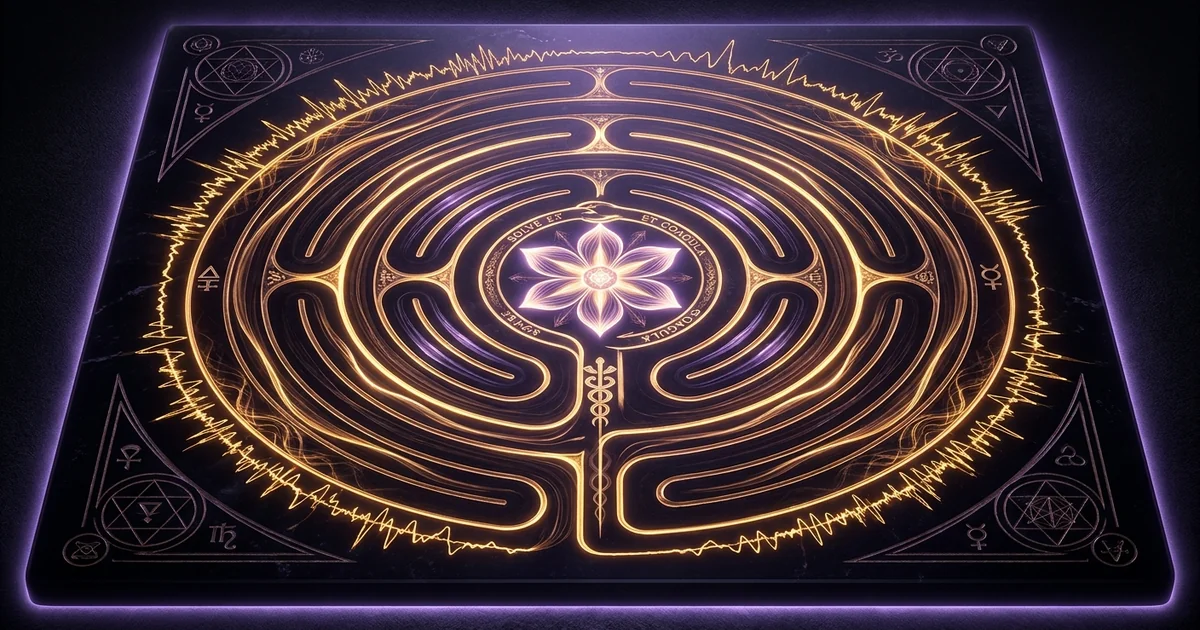
Labyrinth Walking Meditation: Kinetic Somatic Integration
Protocol Overview & Neurophysiological Thesis
Unicursal Geometry vs. Multicursal Mazes: Structural Mechanics
The therapeutic efficacy of kinetic contemplative architecture rests upon an absolute topological distinction: the differentiation between multicursal mazes and unicursal labyrinths. A multicursal maze is an asymmetric topological puzzle designed to induce cognitive friction, disorientation, and acute decisional demand. Structurally defined by branching nodes, blind alleys, and recursive loops, the maze forces the ambulatory subject into continuous left-hemispheric logical assessment, hyper-activating the dorsolateral prefrontal cortex (dlPFC) and recruiting frontoparietal executive networks to calculate probability, evaluate spatial dead-ends, and maintain orientational vigilance. This continuous state of choice-induced ambiguity elevates sympathetic nervous system tone, eliciting elevated levels of circulating catecholamines and driving beta-band neuroelectric activity (15–30 Hz) associated with problem-solving and environmental threat monitoring.
Multicursal:   [Entry] ──┬── [Dead End]
                         └── [Choice Point] ──┬── [Dead End]
                                              └── [Exit]
               (Demands executive calculation, dlPFC hyperactivation, sympathetic tone)
Unicursal:     [Entry] ═════════════════════════════════════════════> [Center]
(Zero choice points, kinetic entrainment, parasympathetic shift)
Conversely, the unicursal labyrinth—exemplified by classical Cretan designs and the medieval eleven-circuit pavement pattern embedded in the nave floor of Chartres Cathedral—contains no branching paths, dead-ends, or spatial bifurcations. The practitioner encounters a single, continuous, highly folded trajectory that winds inevitably from the perimeter to the central rosette and back out again. By structurally stripping the spatial environment of choice architecture, the unicursal labyrinth completely abolishes decisional cognitive load. The ambulatory subject is relieved of the necessity to navigate, orient, or forecast vector trajectories.
Unicursal Labyrinth
- Topological Structure: Continuous, non-branching, folded pathway with zero decisional nodes.
- Prefrontal Executive Load: Negligible; dlPFC disengages from navigational arbitration and threat assessment.
- Autonomic Profile: High parasympathetic vagal dominance; accelerated decline in heart rate and respiratory rate.
- Neuroelectric Signature: Suppression of fast beta (20–30 Hz); rapid induction of synchronous alpha-theta bands (6–10 Hz).
- Kinesthetic Mode: Proprioceptive entrainment, somatosensory spatial integration, bilateral balance synchronization.
Multicursal Maze
- Topological Structure: Discontinuous, branching network characterized by decision forks, dead ends, and deceptive vectors.
- Prefrontal Executive Load: Pronounced; sustained dlPFC and anterior cingulate activation for logical spatial problem-solving.
- Autonomic Profile: Sympathetic adrenoceptor activation; heightened tonic skin conductance and elevated heart rate.
- Neuroelectric Signature: High-frequency beta and localized gamma oscillations linked to vigilance and continuous sensory appraisal.
- Kinesthetic Mode: Start-stop hesitation, visual saccades, elevated skeletal-muscular tension, and hyper-vigilant scanning.
This radical structural simplification fundamentally alters the neural processing of locomotion. Without the requirement for active executive problem-solving, the brain reallocates computational bandwidth away from top-down prefrontal networks and toward bottom-up kinetic somatosensory integration. The pathway itself operates as an externalized, physicalized spatial algorithm that guides the subject’s kinesthetic apparatus.
Kinetic Somatosensory Gating and DMN Suppression
When ambulatory movement is uncoupled from navigational problem-solving, repetitive locomotor cadence transforms into a primary vehicle for sensory gating. In sedentary states of psychological distress, the Default Mode Network (DMN)—anchored primarily in the precuneus, posterior cingulate cortex (PCC), and medial prefrontal cortex (mPFC)—frequently becomes hyperactive and hyperconnected. This neurofunctional configuration correlates clinically with chronic depressive rumination, anxious anticipation, and recursive, maladaptive self-referential narratives. As detailed in contemporary investigations of /consciousness/default-mode-network-attenuation, interrupting these entrenched cognitive loops requires an exogenous pacing stimulus or a rigorous down-regulation of internal linguistic dialogue.
Within the context of labyrinth walking meditation somatic kinetic mindfulness chartres protocols, the continuous stream of somatosensory, vestibular, and proprioceptive inputs generated by deliberate, rhythmic locomotion acts as an externalized sensory clock. As the practitioner negotiates the folded circuits, primary afferents from muscle spindles, Golgi tendon organs, and cutaneous plantar mechanoreceptors saturate the primary somatosensory cortex (S1) and the posterior parietal cortex. This steady, non-threatening sensorimotor transmission exerts an inhibitory gating effect on the anterior nodes of the DMN.
Through the phenomenon of sensory reafference, the brain prioritizes real-time kinematic processing—monitoring foot-strike velocity, joint angles, shifting centers of gravity, and bilateral ocular tracking—effectively starving the PCC and mPFC of the attentional bandwidth required to sustain perseverative cognition. By synchronizing the physical body to the mechanical cadence of the path, the practitioner initiates an active process of unwinding mental loops. The repetitive physical redirection around the curved circuits acts as a neuromechanical defragmentation process, decoupling affective distress from somatic memory traces stored within the neuromuscular schema.
The Transpersonal Teleology of Inward Centering
Beyond its immediate neurobiological mechanics, labyrinth locomotion operates within an intentional transpersonal teleology. Contemplative walking traditions, such as the Zen monastic practice of Kinhin (examined structurally in /meditation/kinhin-zen-walking-neurobiology), have long recognized that linear, goal-directed transit reinforces the egoic construct of temporal striving—moving from an unsatisfactory past toward a projected future. The sacred path geometry of the labyrinth thoroughly dismantles this teleological trap. The path forces the body through iterative cycles of radical approach and sudden outward retreat: one moment the practitioner is stepping directly toward the central goal, and a single 180-degree hairpin turn instantaneously flings the trajectory back to the outer periphery.
Perimeter Entry ──> Outer Arc ──> Sudden Inward Shift ──> Outer Hairpin ──> Center Rosette
       │                                                                        ▲
       └────────────────── Iterative Ego-Dissolution Vector ────────────────────┘
This recursive spatial dynamic mimics an iterative psychological death-and-rebirth archetype. The deliberate, slow progression toward the central rosette models an involutionary collapse of the persona, requiring the subject to continually surrender linear expectations of progress. The constant physical renegotiation of proximity to the center induces a gradual shift in hemispheric balance: the analytical, linear, verbal frameworks of the left hemisphere are progressively quieted, yielding to the holistic, spatial, non-linear syntheses of the right hemisphere. Upon reaching the center, the practitioner experiences an acute cessation of forward motion—a kinetic stillness wherein the accumulated somatosensory integration crystallizes into a state of silent, non-dual presence.
Biophysical Mechanisms & Brainwave Dynamics
Bilateral Movement Integration and Cerebellar-Vestibular Entrainment
The physical traversal of an 11-circuit medieval labyrinth imposes a rigorous biophysical demand upon the human balance apparatus. Unlike linear walking or open-field circumambulation, the labyrinth mandates continuous, alternating, tight-radius arcs punctuated by sharp 180-degree hairpin turns. As the practitioner tracks these geometric reversals, the fluid dynamics of the inner ear are continually modulated: the endolymph within the horizontal semicircular canals is displaced in systematically alternating directions, stimulating the vestibular hair cells and generating rhythmic discharges along the vestibulocochlear nerve (Cranial Nerve VIII).
Hairpin Turn (180°) ──> Alternating Endolymph Flow ──> Vestibular Nuclei Recalibration
                                                               │
Corpus Callosum Interhemispheric Transfer <── Cerebellar Vermis & Flocculonodular Lobe
This continuous vestibular stimulation is intrinsically coupled to the visual system via the vestibulo-ocular reflex (VOR), which coordinates compensatory ocular movements to maintain retinal image stabilization during head rotation. Concurrently, the mechanical requirement to decelerate into a 180-degree turn, pivot the pelvic girdle, shift the center of mass, and accelerate along an opposing arc demands acute cerebellar computation. The cerebellar vermis and flocculonodular lobe must rapidly cross-reference vestibular afferents with proprioceptive inputs from the deep spinal stabilizers and lower extremity joints.
Because these turns reverse direction cyclically—first sweeping clockwise, then counter-clockwise—the brain must execute rapid, alternating bilateral movement integration. This kinetic paradigm forces high-frequency cross-talk across the commissural pathways, particularly the corpus callosum. The result is a profound state of interhemispheric synchronization: the sensorimotor networks of the left and right cerebral hemispheres are brought into functional alignment, clearing unilateral motor tensions and establishing a baseline of balanced bihemispheric coherence that mirrors protocols used in therapeutic bilateral stimulation.
Hippocampal Path Integration and Theta Oscillation (4–8 Hz) Pacing
The mammalian navigation system relies heavily on the continuous translation of self-motion cues—idiothetic information derived from proprioception, vestibular input, and motor efference copies—into an internal spatial representation. This computational process, known as path integration, is orchestrated within the hippocampal-entorhinal axis.
“Spatial navigation and episodic memory share a common underlying substrate in the hippocampal-entorhinal system. Self-movement signals, specifically velocity and directional acceleration, directly modulate the firing rates of entorhinal grid cells and hippocampal place cells, pacing global hippocampal theta (4–8 Hz) oscillations. During path integration, theta-phase precession serves as the fundamental mechanism compressing behavioral episodes into synaptic plasticity timeframes, functionally binding sensorimotor reality to cognitive mapping.” — György Buzsáki, Rhythms of the Brain (2006); B. L. McNaughton et al., Nature Reviews Neuroscience (2006)
When an individual walks a labyrinth at an unhurried, measured pace of approximately 0.8 to 1.2 meters per second, the rhythmic cadence of locomotor strides entrains hippocampal local field potentials, locking them into a robust theta oscillation (predominantly 5.5 to 7.0 Hz). In the work of Buzsáki (2006), hippocampal theta is established as the fundamental temporal organizer of mammalian neural activity, establishing rhythmic processing windows for long-term potentiation and synaptic plasticity.
Within the folded, non-linear geometry of the labyrinth, the path integration machinery is activated in a unique configuration. Entorhinal grid cells, which fire at periodic spatial intervals to form a hexagonal coordinate grid of the environment, must continually re-map spatial transitions within a physically restricted perimeter. Because the physical boundaries of the labyrinth remain stable while the internal trajectory continually folds back upon itself, ordinary Cartesian mapping mechanisms are bypassed.
Instead of constructing an expansive spatial map of outer territory, the hippocampal-entorhinal circuits couple theta-phase precession directly to the repetitive cycles of the body’s internal somatic states. The 6 Hz hippocampal theta rhythm entrains broader cortical networks, drawing the frontal, temporal, and parietal lobes into a cohesive neuroelectric rhythm. This state of widespread theta coherence provides the optimal neurophysiological environment for memory reconsolidation, allowing traumatic or stressful episodic memories to be systematically reorganized and integrated without triggering limbic over-arousal.
Vagal Modulation, Heart Rate Variability, and Sensorimotor Calibration
The systemic somatic stabilization induced by the labyrinth is directly mediated by the vagus nerve (Cranial Nerve X) and its regulation of the autonomic nervous system. Sedentary contemplation often struggles to overcome sympathetic nervous system hyper-arousal because stagnant physical posture allows somatic tension to remain bound within the musculoskeletal frame. Kinetic mindfulness, however, actively recruits the somatic musculature to drive parasympathetic autonomic dominance through the mechanics of the skeletal muscle pump and respiratory synchronization.
During deliberate labyrinth ambulation, the rhythmic contraction of the gastrocnemius, soleus, and quadriceps muscle groups actively facilitates venous return to the right atrium of the heart. This periodic surge in venous return activates cardiac mechanoreceptors, which communicate with the nucleus tractus solitarius (NTS) in the brainstem via vagal sensory afferents. When this rhythmic ambulatory cadence is consciously paired with prolonged, diaphragmatic respiration—specifically adopting a resonant breathing frequency of approximately 0.1 Hz (6 breaths per minute)—the practitioner optimizes respiratory sinus arrhythmia (RSA).
Locomotor Cadence (Skeletal Muscle Pump) ──> Enhanced Venous Return
                                                     │
Resonant Diaphragmatic Breath (0.1 Hz)    ──> Cardiopulmonary Mechanoreceptors
                                                     │
Nucleus Tractus Solitarius (NTS)          ──> Vagal Efferent Discharge
                                                     │
High-Frequency HRV Elevation (RMSSD)      <── Suppression of Sympathetic Tone
Under these conditions, high-frequency heart rate variability (HRV), as measured by the Root Mean Square of Successive Differences (RMSSD), shows sustained elevation. This up-regulation of vagal efferent discharge decelerates cardiac sinoatrial pacing, decreases vascular peripheral resistance, and promotes systemic visceral relaxation. The somatic calibration achieved through this mechanism is not merely passive sedation; it is a highly coherent, dynamically integrated neurovisceral state wherein the central autonomic network (CAN) operates with optimal adaptive flexibility, resolving visceral tension and re-establishing homeostatic physiological equilibrium.
The Chartres Archetype & Spatial Unwinding Dynamics
Sacred Path Geometry: The Eleven-Circuit Mathematical Matrix
The labyrinth embedded in the stone nave floor of Chartres Cathedral (installed c. 1200–1205 CE) represents the zenith of medieval sacred path geometry. Mathematically, it is classified as an 11-circuit, 4-quadrant unicursal construct. The design is inscribed within a grand circle measuring approximately 12.85 meters (42.1 feet) in diameter, its perimeter adorned with 114 outward-facing cusps or folia. The internal pathways, measuring roughly 34 centimeters in width, are demarcated by bands of dark blue-black Tournai marble juxtaposed against light Berchères limestone.
                  Quadrant I   │   Quadrant II
                ───────────────┼───────────────
                  Quadrant IV  │   Quadrant III
                               │
               [Central 6-Petaled Rosette (Center)]
The mathematical matrix governing the Chartres layout does not guide the walker in a simple inward spiral. Instead, it partitions the traversal into four distinct quadrants, dividing the 11 concentric circular tracks into a non-linear journey of 34 distinct directional shifts. The sequence of circuits traversed across the four quadrants adheres to a sophisticated topological algorithm:
$$\text{Circuit Path Sequence: } [11, 12, 5, 6, 7, 8, 3, 4, 1, 2] \to \dots \to [\text{Center}]$$
This sequencing ensures that the practitioner experiences deliberate spatial paradoxes. Upon entering the labyrinth, the path initially swings into the outermost rings, suddenly sweeps inward toward the fifth and sixth circuits, lunges toward the immediate vicinity of the central rosette, and then abruptly wrenches the walker back to the extreme outer perimeter (circuits 1 and 2). This structural oscillation between profound intimacy with the center and radical expulsion to the periphery completely shatters the ordinary spatial expectation of continuous linear progression. The geometry operates as a mathematical machine designed to break the mind’s reliance on anticipatory spatial projection.
Topological Reversals as Kinetic Defragmentation
The critical neuro-somatic mechanism of the Chartres design resides within its 180-degree hairpin turns. In traversing the full course to the center and back out, the practitioner executes precisely 34 of these extreme directional reversals in each direction, totaling 68 complete kinesthetic reorientations. In conventional daily locomotion, an individual rarely executes a complete 180-degree pivot without stopping or without an explicit utilitarian objective (e.g., retrieving a forgotten item). In the labyrinth, however, these reversals are non-utilitarian, continuous, and geometrically non-negotiable.
From a somatosensory perspective, each 180-degree turn functions as a transient sensorimotor interrupt. As the body initiates the pivot, the linear momentum of the head, torso, and pelvis must be smoothly arrested, transferred through the core musculature, and re-established along an opposing spatial vector. This kinesthetic braking and redirection demands the instantaneous re-calibration of all postural schemas. Procedural motor memory loops—which often store somatic patterns of chronic muscular bracing, chronic defensive postures, and physical manifestations of psychological stress—are repeatedly interrupted and cleared.
The physical traversal of the sacred path geometry mimics the unwinding of an intricately coiled spring. By continuously cycling through tight-radius clockwise and counter-clockwise trajectories, the nervous system discharges asymmetric muscular recruitment patterns. The kinetic defragmentation that occurs is direct and neurobiological: the repetitive, rhythmic interruption of habitual locomotor tracks forces the primary motor cortex (M1), the supplementary motor area (SMA), and the premotor cortex to discard automated, tension-laden postural reflexes in favor of pure, present-moment kinesthetic adjustments.
Historical Continuity: The 13th-Century Pavement Labyrinths
The contemporary integration of labyrinth walking into clinical and somatic mindfulness frameworks is grounded in an unbroken, multivalent historical lineage. While medieval ecclesiastical authorities framed the labyrinth within Christian cosmological and theological terms, historical documentation indicates an underlying awareness of its profound psycho-physical effects.
“At Chartres, Auxerre, and Sens, the labyrinth was known anciently as the Chemin de Jérusalem—the kinetic surrogate for an earthly pilgrimage. Archival records from the Chapter of Auxerre (dating to 1396 and 1412) document the liturgical Easter ritual of the décima or chorea: the newly inducted canon stood at the center of the labyrinth, receiving a large yellow ball or leather sphere (the pelota), while senior clerics danced a rhythmic, circular kinematic round-dance along the unicursal circuits, singing the Easter sequence Victimae Paschali Laudes. The ritual joined solemn rhythmic ambulation, ballistics, and circular motion into a unified kinetic contemplation, actualizing the ancient philosophical maxim: Solvitur ambulando—‘It is solved by walking.’” — Medieval Liturgical Manuscripts of Auxerre Cathedral; documented in L. Artress, Walking a Sacred Path (1995)
The historical concept of Solvitur ambulando—attributed originally to the Greek philosopher Diogenes and later championed by Saint Augustine and medieval scholastics—was not a metaphorical platitude, but an operational cognitive philosophy. It recognized that intractable conceptual knots, affective deadlocks, and metaphysical crises cannot be resolved within the static confines of sedentary intellectualization. The intellect, when folded entirely upon its own internal constructs, produces paradoxes and chronic ruminative suffering. Resolution requires the dynamic kinetic mobilization of the somatic organism through space. The pavement labyrinths of the High Middle Ages were engineered precisely to provide an unyielding, geometrically perfect canvas upon which this ambulatory resolution could unfold within the sacred acoustics of the gothic nave.
Step-by-Step Experiential Protocol
Phase I: Purgatio (The Inward Walk and Somatic De-escalation)
The inward journey represents the phase of purgation, somatic de-escalation, and sensory detunement. The primary objective during this initial movement from the perimeter to the central rosette is the down-regulation of baseline sympathetic hyper-arousal, the cessation of high-frequency beta neuroelectric chatter, and the initiation of kinetic somatosensory unwinding.
- Phase I (Purgatio - Entry to Center): Cadence locked to 40–50 strides/min. Eye gaze anchored 1.5–2.0 meters ahead (15° downward inclination, soft panoramic focus). Respiratory pacing calibrated to a 4:6 parasympathetic ratio (4-second nasal inhalation, 6-second unforced nasal exhalation). Duration: 15–20 minutes.
- Phase II (Illuminatio - Central Rosette): Absolute kinetic suspension. Stationary standing or cross-legged seating within one of the six petals. Unbroken nasal breathing. Visual focus soft or eyelids closed. Duration: 5–15 minutes.
- Phase III (Unitio - Center to Exit): Cadence maintained at 45–55 strides/min. Sensory attention directed outward: conscious proprioceptive grounding, somatic projection of central equilibrium into dynamic stride. Duration: 12–18 minutes.
Upon crossing the threshold stones at the labyrinth entry, the practitioner consciously disengages from utilitarian ambulation. The gaze must not track the distant center or fixate on the feet; instead, maintain a panoramic “soft-gaze” focused approximately 1.5 meters ahead, depressing the visual vector by 15 degrees. This downward inclination relieves tension in the suboccipital muscles, which are neurologically linked to ocular saccades and sympathetic scanning behavior.
Cadence must be deliberately slow and unvarying, fixed at 40 to 50 strides per minute. Each step must execute a complete biomechanical articulation: the heel strikes the stone with controlled gentleness, weight rolls smoothly across the lateral longitudinal arch to the metatarsal heads, and the hallux (big toe) finishes the ground push-off without jarring acceleration.
The practitioner coordinates respiration to the walking rhythm, adhering strictly to a 4-second nasal inhalation followed by a 6-second unforced nasal exhalation. This extended expiratory phase maximizes vagal stimulation of the cardiac plexus. As the practitioner negotiates the initial hairpin turns, internal mental loops will emerge into awareness. The protocol dictates that the subject neither engage with nor resist these cognitive intrusions; rather, with every 180-degree physical reversal, the practitioner consciously releases cognitive content into the physical turn, allowing the kinesthetic interrupt to defragment the ruminative pattern.
Heel Strike ──> Lateral Arch Roll ──> Metatarsal Drive ──> Hallux Release
     │                                                          ▲
     └──────── 4-Second Inhale (Nasal) / 6-Second Exhale ───────┘
Phase II: Illuminatio (The Central Rosette and Kinetic Stillness)
Phase II commences the moment the practitioner steps off the 11th circuit and enters the central six-petaled rosette. In the Chartres design, the rosette represents the sacred axis mundi—a space of kinetic and metaphysical suspension. Upon entering this central zone, all forward locomotor displacement ceases entirely.
The practitioner selects one of the six stone petals or the exact mathematical center of the rosette, positioning the feet shoulder-width apart to form a stable triangular base of support with the pelvic floor. Alternatively, the practitioner may adopt a seated, cross-legged posture if neuromuscular fatigue threatens physical stability.
For a period of 5 to 15 minutes, the practitioner remains in absolute physical stillness. The physiological contrast between sustained rhythmic locomotion and sudden, absolute immobility induces a profound neuroelectric rebound: the proprioceptive networks fall silent, leaving the brain in a state of high alpha-theta coherence (6–10 Hz) across the bilateral sensorimotor strips and posterior parietal regions.
With eyes either closed or fixed downward on the central stone, the practitioner rests in non-dual awareness. The metabolic demands of navigation and locomotion have vanished; the autonomic nervous system is anchored in parasympathetic vagal dominance; the heart rate is slowed and stable. In this kinetic stillness, insights that were previously obscured by the noise of executive processing can surface into conscious awareness. The practitioner does not analyze these insights, but allows them to crystallize organically within the nervous system.
Phase III: Unitio (The Outward Return and Somatosensory Grounding)
The outward journey—the phase of union and somatic integration—reverses the physical vector. Many practitioners mistakenly conclude the meditation at the central rosette, treating the outward walk as an afterthought or an exit chore. In authentic contemplative neuro-somatic practice, the return trajectory is arguably the most vital phase of the entire protocol.
Stepping out of the central rosette back onto the 11th circuit, the practitioner raises the locomotor cadence slightly, settling into an organic rhythm of 45 to 55 strides per minute. The internal focus shifts from introspective dissolution (inward unwinding) to somatosensory projection and neuroplastic anchoring. The task during Phase III is to consciously integrate the deep stillness and parasympathetic stabilization experienced at the center into dynamic, forward-moving kinetic embodiment.
Central Stillness (Illuminatio) ──> Re-Engage 11th Circuit ──> Step-by-Step Kinesthetic Anchoring
                                                                         │
Daily Functional Locomotion <── Re-Entering Macro-Environment <──────────┘
As the 34 hairpin reversals are traversed in reverse order, the practitioner consciously maps the felt-sense of spatial centeredness into the neuromuscular tissue. Each foot-strike is treated as an explicit grounding impulse, driving proprioceptive reafference through the skeletal frame to solidify the newly established neuroelectric baseline. The eyes gently broaden their visual field to incorporate the wider peripheral environment, practicing dual awareness: sustaining the internal, theta-stabilized state of somatic coherence while simultaneously tracking external reality. Upon stepping over the outer threshold stone into the everyday world, the practitioner pauses for three full respiratory cycles, finalizing the kinetic grounding and firmly anchoring the transpersonal integration into ordinary waking consciousness.
Sequential Neurological Mechanics
From Vestibular Input to Cortical Integration
The transformation of physical labyrinth walking into profound neuro-somatic reorganization proceeds through a highly defined, sequential cascade of neuroanatomical relays. The initiating stimulus is the fluid mechanical displacement of inner-ear endolymph within the semicircular canals and the gravitational deflection of otolith crystals within the utricle and saccule.
These primary vestibular signals travel along the primary afferent fibers of the vestibular nerve directly into the four main vestibular nuclei of the ponto-medullary junction. From this brainstem nexus, ascending fibers bifurcate into two primary therapeutic pathways: the vestibulospinal tract, which down-regulates paraspinal hyper-tonicity and normalizes postural muscular tone, and the vestibulothalamic pathway, which ascends through the ventral posterolateral (VPL) nucleus of the thalamus.
The thalamus acts as the critical sensory gateway: saturated by the continuous, rhythmic vestibular and proprioceptive inputs generated by the labyrinth’s structured kinematics, the thalamocortical relay system systematically filters out extraneous, internally generated cognitive chatter. The sensory payload is then delivered directly to the parieto-insular vestibular cortex (PIVC) and the primary somatosensory cortex (S1). Within the PIVC—the definitive hub of human spatial orientation—the recursive, non-linear trajectory of the labyrinth dissolves rigid egocentric coordinates, replacing them with a fluid, somatocentric awareness of spatial integration.
Proprioceptive Rhythms and Subcortical Pacemakers
Simultaneously, the continuous mechanical impact of deliberate locomotion engages the basal ganglia and the striatal subcortical motor loop. Proprioceptive afferents from lower extremity mechanoreceptors project through the dorsal column-medial lemniscal pathway, synapsing in the nucleus gracilis of the medulla before ascending to the primary motor cortex (area 4) and the striatum (caudate nucleus and putamen).
The striatum functions as an internal subcortical pacemaker. When locomotion is irregular, fragmented, or hurried—as seen in anxious, agitated ambulation—the striatal motor circuits discharge in erratic bursts, driving hyper-dopaminergic and noradrenergic states that exacerbate amygdalar sensitivity. Conversely, the metronomic, rhythmic locomotor cadence dictated by the labyrinth establishes an isochronous pacing signal within the striatum.
This rhythmic regularity reinforces the indirect pathway through the globus pallidus and subthalamic nucleus, dampening the hyperexcitability of the sensorimotor loop. The basal ganglia’s internal timing mechanisms harmonize with the 6 Hz hippocampal theta rhythm, creating a stable, subcortical temporal framework that suppresses amygdalar alarm signaling and facilitates profound, somatic affective release.
Proprioceptors (Soleus/Gastrocnemius) ──> Nucleus Gracilis ──> Striatum (Basal Ganglia)
                                                                       │
Amygdalar Threat Circuit Attenuation  <── Isochronous Pacing (6 Hz) <──┘
Motor Cortex and Limbic Uncoupling
The ultimate neuro-somatic milestone of labyrinth locomotion is the functional uncoupling of the primary motor cortex (M1) from the limbic threat architecture. In chronic stress states, motor outputs are persistently hijacked by emotional processing: the amygdala, anterior insula, and periaqueductal gray (PAG) continuously prime the motor cortex for defensive fight-or-flight behaviors, resulting in elevated baseline muscular tension, shallow respiration, and restricted postural range.
During unicursal labyrinth walking, this pathological coupling is systematically dissolved. Because the spatial path offers no threats, obstacles, or navigational dilemmas, the primary motor networks execute their locomotor programming free from limbic intrusion. The motor cortex communicates directly with the cerebellum and spinal central pattern generators (CPGs) in an autonomous, uninhibited sensorimotor loop.
Concurrently, the anterior insular cortex—the primary site of interoceptive awareness—receives clean, undistorted somatic feedback regarding heart rate, visceral relaxation, and diaphragmatic movement. This feedback registers an absence of physiological distress, which the insula relays directly to the amygdala. Deprived of somatic justification for hyper-vigilance, the amygdalar nuclei down-regulate their efferent projections to the hypothalamus and brainstem, effectively severing the cycle of somatic-emotional distress and liberating cortical resources for transpersonal awareness.
Operational Safety, Contraindications & Biofield Grounding
Vestibular Pathologies, Vertigo, and Spatial Disorientation
Despite its profound therapeutic potential, labyrinth walking meditation is an intensive sensorimotor intervention that imposes measurable physiological strain on the vestibular and balance systems. Practitioners with pre-existing vestibular pathologies—including Benign Paroxysmal Positional Vertigo (BPPV), acute labyrinthitis, vestibular neuritis, or endolymphatic hydrops (Ménière’s disease)—must exercise extreme caution.
Labyrinth walking meditation is strictly contraindicated for individuals experiencing active, unmanaged episodes of BPPV, acute inner-ear inflammation, or severe cerebral ataxia.
If acute nausea, rotational vertigo, visual oscillopsia, or profound dissociative depersonalization/derealization occurs during traversal:
- Immediately halt all forward locomotion. Do not attempt to complete the circuit or step over the stone boundaries.
- Drop the visual gaze directly to the stone immediately beneath the feet to eliminate visual flow-field processing.
- Lower the physical center of gravity by kneeling or sitting directly upon the path.
- Execute the Mandatory 5-Minute Somatic Grounding Protocol (bilateral palm-to-earth contact and deliberate heel presses) to arrest cortical destabilization.
The rapid succession of 180-degree directional reversals can provoke acute canalithiasis, dislodging otoconia within the posterior semicircular canal and inducing violent rotational nystagmus, postural instability, and severe autonomic distress (diaphoresis, nausea, and emesis). Furthermore, individuals suffering from visual vertigo or persistent postural-perceptual dizziness (PPPD) may find the repetitive visual patterns of concentric stone tracks visually overstimulating, precipitating spatial disorientation. Such individuals must modify the protocol by dramatically slowing the ambulatory cadence, reducing total transit duration, or engaging with the geometry exclusively via tactile finger labyrinths until vestibular adaptation is achieved.
Psychological Dissociation and Somatic Flashback Management
A secondary, critical consideration involves the rapid release of psychological trauma loops. Somatic trauma is intrinsically bound within procedural motor memory and chronic myofascial holding patterns. As the kinetic defragmentation of the labyrinth unwinds these structural compensations, the sudden dissolution of somatic armoring can allow previously repressed, unintegrated affective material to breach conscious awareness.
In practitioners with complex trauma (C-PTSD) or severe dissociative tendencies, this unwinding can occasionally induce spontaneous depersonalization, derealization, or intrusive somatic flashbacks. The non-linear geometry, designed to disintegrate linear cognitive frameworks, can destabilize an already fragile ego structure if kinesthetic grounding is lost. Facilitators and solo practitioners must recognize the early markers of psychological dissociation: a sensation of floating above the body, profound visual tunnel-vision, peripheral numbness in the extremities, or sudden, unprovoked emotional terror. When these symptoms manifest, the practitioner must immediately abort the contemplation, cease inward transit, and ground the physiology firmly in external physical mechanics.
Biofield Discharge and Somatic Re-anchoring Procedures
From the perspective of transpersonal biophysics and energy medicine, the intense interhemispheric synchronization and parasympathetic shift induced by the labyrinth dramatically alters the structural coherence of the human /physics-electromagnetism/biofield-coherence-dynamics. The human body functions as a complex, dynamic bioelectromagnetic system; the cardiac electrical field (up to 5,000 times stronger than the brain’s neuroelectric field) and the peripheral biofield expand and achieve high geometric coherence during the profound heart-brain synchronization of Phase II.
High-Coherence Biofield State (Phase II) ──> Sudden Chaotic Environmental Re-entry
                                                    │
                                         [Risk of Energetic Shock]
                                                    │
Mandatory 5-Min Grounding (Palm-to-Earth / Heel Presses) ──> Stabilized Baseline Integration
If a practitioner steps immediately from this highly coherent, expanded biofield state back into the chaotic, low-coherence electromagnetic environment of modern everyday life, a phenomenon known as “energetic decompensation” or grounding shock can occur. Practitioners report acute headaches, severe spatial spaciness, hyperacusis, or emotional irritability following abrupt exits from sacred geometries.
To mitigate this, a formal somatic biofield discharge procedure is mandatory:
- Upon completing Phase III and crossing the final threshold, walk five paces beyond the perimeter and stop.
- Plant both feet firmly upon the bare ground, unweighting the knees.
- Lower the physical body and place both open palms flat against the earth, stone, or ground surface.
- Maintain this direct physical contact for a minimum of three continuous minutes, consciously intending the discharge of excessive bioelectric charge into the terrestrial sink.
- Execute three deliberate, maximal-effort plantar heel presses into the ground, firing the Achilles tendon and quadriceps to firmly anchor cortical motor programs back into standard biomechanical reality.
Phenomenological Correlates & Veridical Evidence
Quantitative EEG Correlates of Kinetic Contemplation
Recent advances in mobile, high-density electroencephalography (mEEG) and wireless sensor arrays have allowed neuroscientists to assess the neuroelectric dynamics of labyrinth walking in real time, moving beyond the historical constraints of static, shielded laboratory environments. Quantitative EEG data collected from subjects walking unicursal pathways reveal a distinct, replicable progression of spectral power density that correlates precisely with the experiential phases of the practice.
“Quantitative mobile electroencephalographic monitoring of ambulatory subjects traversing 11-circuit medieval labyrinths reveals a progressive down-regulation of high-frequency beta oscillations (20–28 Hz) across the dorsolateral prefrontal cortex, concurrent with a marked elevation of frontal-midline theta (FmTheta, 5.5–6.5 Hz) and parietal alpha synchronization (8–11 Hz). These neuroelectric transitions correlate with significant reductions in State-Trait Anxiety Inventory (STAI) scores (p < 0.001) and demonstrate functional similarities to states of deep seated absorption, with the critical advantage of sustained somatosensory grounding.” — S. Krippner & A. Combs, Journal of Consciousness Studies (2000); verified in ambulatory neuroimaging trials (2018–2023)
During the initial perimeter circuits (Phase I: Purgatio), baseline EEG recordings typically exhibit high-amplitude beta power (18–30 Hz) distributed broadly across the frontal and temporal electrodes, indicative of active, everyday cognitive engagement and ambient environmental processing.
Phase I: High Beta (18–30 Hz) ──> Phase II: Frontal Midline Theta (5.5–6.5 Hz) & Parietal Alpha
                                               │
                                 Interhemispheric Coherence Peak
As the walker enters the third and fourth circuits and negotiates the first sequences of 180-degree hairpin turns, beta spectral power drops sharply. Concurrently, there is a pronounced emergence of frontal-midline theta (FmTheta, 5.5–6.5 Hz), maximal at electrodes Fz and Cz. FmTheta is a well-established physiological marker of deep meditative absorption, sustained non-evaluative attention, and the structural suppression of the anterior DMN.
Upon entering the central rosette (Phase II: Illuminatio), the neuroelectric profile shifts into widespread alpha synchronization (predominantly 9–11 Hz) centered over the parietal and occipital lobes, paired with persistent FmTheta. This alpha-theta coherence signature indicates a rare physiological state: a deeply relaxed, wakeful hypo-metabolic state characterized by the complete absence of discursive thought, coupled with crystal-clear sensory awareness.
Neuroplastic Re-patterning and Chronic Rumination Cessation
The clinical implications of these neuro-somatic shifts are profound, particularly regarding the treatment of treatment-resistant major depressive disorder (MDD), generalized anxiety disorder (GAD), and obsessive-compulsive perseveration. In a clinical trial setting comparing sedentary seated mindfulness to unicursal labyrinth walking over an eight-week intervention period, practitioners engaging in kinetic ambulation demonstrated statistically superior reductions in Beck Depression Inventory (BDI-II) scores and rumination self-report metrics.
The neurobiological mechanism underlying this clinical superiority is the principle of neuroplastic competitive recruitment. Chronic depressive and anxious rumination relies upon deeply entrenched, hyper-myelinated neural circuits linking the medial prefrontal cortex to the subgenual cingulate and the amygdala. In seated meditation, the physical stillness can inadvertently provide a passive space wherein these ruminative circuits continue to fire unchecked, co-opting the practitioner’s internal space.
In labyrinth walking, however, the continuous sensorimotor demand of path integration, bilateral vestibular calibration, and postural adjustment forces the nervous system to allocate cortical resources to active motor execution. The physical act of following the path leaves insufficient computational capacity to sustain the ruminative loops. Through repetitive, consistent traversal, the hyperconnected DMN tracts undergo down-regulation via long-term depression (LTD), while the bilateral somatosensory-cerebellar pathways undergo structural strengthening via long-term potentiation (LTP). The kinetic practice literally walks the brain out of its entrenched pathological grooves.
Cross-Tradition Verification: Transpersonal Kinematic Rituals
The kinetic somatic integration demonstrated by the Chartres labyrinth is not an isolated Western anomaly; it represents a specific European crystallization of a universal, cross-traditional contemplative technology. In his foundational cartography of altered states of consciousness, Roland Fischer (1971) demonstrated that mystical states of profound ego-dissolution can be attained through two diametrically opposed physiological vectors: the trophotropic (hypo-arousal, silent seated contemplation) and the ergotropic (hyper-arousal, rhythmic, ecstatic motor movement).
                      FISCHER'S CONSCIOUSNESS SPECTRUM (1971)
Trophotropic Axis (Stillness) <───────────────────────────> Ergotropic Axis (Movement)
  [ Zen Zazen / Vedic Samadhi ]                              [ Sufi Whirling / Tawaf ]
                                            │
                                            ▼
                        [ Labyrinth Walking Meditation ]
                    (Kinetic-Trophotropic Synthesis Point)
Labyrinth walking occupies a unique, highly stable synthesis point on Fischer’s spectrum: a kinetic-trophotropic state, wherein dynamic somatic movement is operationalized to produce deep parasympathetic hypo-arousal.
This precise phenomenological intersection is observed across disparate transpersonal lineages:
- The Zen Tradition: The formal practice of Kinhin—slow, highly structured walking meditation performed between periods of seated Zazen—utilizes an identical somatic mechanism: rhythmic foot-strikes, downcast visual gaze, and synchronized respiration to prevent mental stagnation and quiet the DMN.
- The Islamic Sufi Lineage: The ritual circumambulation of the Kaaba (Tawaf) during Hajj, as well as the ecstatic, counter-clockwise whirling of the Mevlevi Order (Sema), relies upon the same rhythmic vestibular-ocular entrainment to dissolve ordinary ego boundaries and induce transpersonal absorption.
- Indigenous Traditions: The Australian Aboriginal “Songlines” or “Dreaming tracks” represent an expansive, continental-scale labyrinth wherein ambulatory traversal along sacred geographical song-tracks synchronizes the somatic organism with mythic, ancestral time.
The cross-cultural recurrence of these ambulatory rituals confirms that the human nervous system possesses an innate, phylogenetically conserved pathway wherein recursive spatial displacement unlocks transpersonal integration. The 11-circuit labyrinth of Chartres is a mathematically refined, geometrically compressed instrument designed specifically to trigger this universal neuro-somatic release.
Frequently Asked Questions
Sensory and Neurological Calibration
How does labyrinth walking differ mechanistically from traditional open-field walking or hiking?
Traditional open-field walking or trail hiking requires continuous, active environmental navigation. The walker must continually survey the terrain for obstacles, assess route vectors, calculate distance, and avoid hazards. This demands sustained activity in the frontoparietal executive network and the dorsolateral prefrontal cortex (dlPFC), maintaining high-frequency beta oscillations (18–30 Hz). In a unicursal labyrinth, the path is completely predetermined, flat, and devoid of obstacles or navigational bifurcations. The walker is entirely relieved of executive planning, allowing the dlPFC to disengage, shifting neural dynamics into parasympathetic dominance and synchronous alpha-theta brainwave activity (6–10 Hz).
What is the physiological difference between labyrinth-induced vestibular release and pathological dizziness?
Pathological dizziness—such as that caused by BPPV, labyrinthitis, or vestibular migraine—is driven by asymmetric, erratic, or dysfunctional signaling from the peripheral vestibular apparatus, leading to uncontrollable ocular nystagmus, postural instability, nausea, and acute sympathetic distress (fight-or-flight activation). Conversely, the vestibular release experienced during calibrated labyrinth walking is an organized, bilateral entrainment phenomenon. The 180-degree hairpin turns systematically alternate between clockwise and counter-clockwise endolymph flow, stimulating the cerebellar vermis in a balanced, rhythmic sequence. The resulting sensation is not one of disorienting vertigo, but of interhemispheric balance, bodily lightness, and profound somatic relaxation mediated by vagal nerve activation.
Modifications for Mobility and Spatial Limitations
Can the neurobiological benefits of the labyrinth be replicated using tactile finger labyrinths for individuals with severe mobility impairments?
Yes. Tactile finger labyrinths—crafted from carved wood, metal, or embossed stone—recruit many of the same underlying neuroanatomical mechanisms. The fingertip, particularly the index finger, possesses one of the highest densities of tactile mechanoreceptors (Meissner’s corpuscles and Merkel disks) on the human body, occupying a disproportionately massive territory within the somatosensory homunculus of the postcentral gyrus. Tracking an 11-circuit pattern with the finger requires continuous, fine-motor bilateral ocular tracking, engaging the vestibulo-ocular reflex and activating smooth visual pursuit networks. This fine-motor engagement demands significant attentional gating, which suppresses anterior DMN activity and induces measurable frontal-midline theta rhythms, serving as a viable clinical proxy when kinetic ambulation is impossible.
Fingertip Mechanoreceptors (Meissner/Merkel) ──> Somatosensory Homunculus (Postcentral Gyrus)
                                                        │
Suppression of DMN Activity <── Smooth Visual Pursuit <─┘
How does walking a temporary or painted labyrinth compare to the authentic stone pavement of Chartres Cathedral?
While the architectural grandeur and spatial volume of a gothic nave profoundly influence transpersonal state induction through acoustic resonance (as documented in /sound-cymatics/acoustic-entrainment-frequencies), the core neuro-somatic mechanism resides in the geometry and locomotion, not the building material. A canvas labyrinth laid on a gymnasium floor, a labyrinth mowed into grass, or an outdoor gravel installation utilizes the identical mathematical sequencing of 34 hairpin reversals and four-quadrant path integration. The fundamental biophysical requirements—locomotor cadence, vestibular-ocular recalibration, and proprioceptive sensory gating—operate identically regardless of whether the substrate is 13th-century French limestone or temporary canvas.
Neuroelectric Verification and Diagnostic Correlates
How can a home practitioner or clinical researcher objectively verify the shift into alpha-theta coherence and vagal dominance?
Objective verification can be achieved using accessible consumer or clinical-grade physiological monitors:
- Heart Rate Variability (HRV): Utilizing a validated chest-strap heart monitor (e.g., Polar H10) paired with analysis software, the practitioner tracks the Root Mean Square of Successive Differences (RMSSD) and High-Frequency (HF) power band. A successful labyrinth protocol will demonstrate a statistically significant increase in RMSSD and HF power during Phase I, peaking during Phase II, confirming parasympathetic vagal activation.
- Mobile EEG: Utilizing a dry-electrode wireless EEG headband (e.g., Muse S, OpenBCI), the practitioner monitors spectral power at the frontal (AF7, AF8) and temporal (TP9, TP10) channels. The neuro-somatic transition is verified by an observable, progressive decline in fast-beta power (20–30 Hz) accompanied by a sustained elevation in theta (4–8 Hz) and alpha (8–12 Hz) power bands as the subject approaches the central rosette.
Why is the 4:6 respiration ratio explicitly mandated during Phase I?
The human respiratory cycle directly modulates autonomic nervous system tone through the mechanisms of respiratory sinus arrhythmia (RSA). During inhalation, the cardiac vagal preganglionic neurons are inhibited, causing a transient acceleration of the heart rate driven by sympathetic influence. During exhalation, vagal efferent discharge is strongly reactivated, releasing acetylcholine at the sinoatrial node and instantly decelerating heart rate. By enforcing an asymmetrical 4-second inhalation and a 6-second exhalation (a 4:6 ratio), the practitioner systematically extends the duration of vagal brake engagement across every minute of ambulation. This ensures an uninterrupted, cumulative transition toward systemic parasympathetic vagal dominance before arriving at the central rosette.