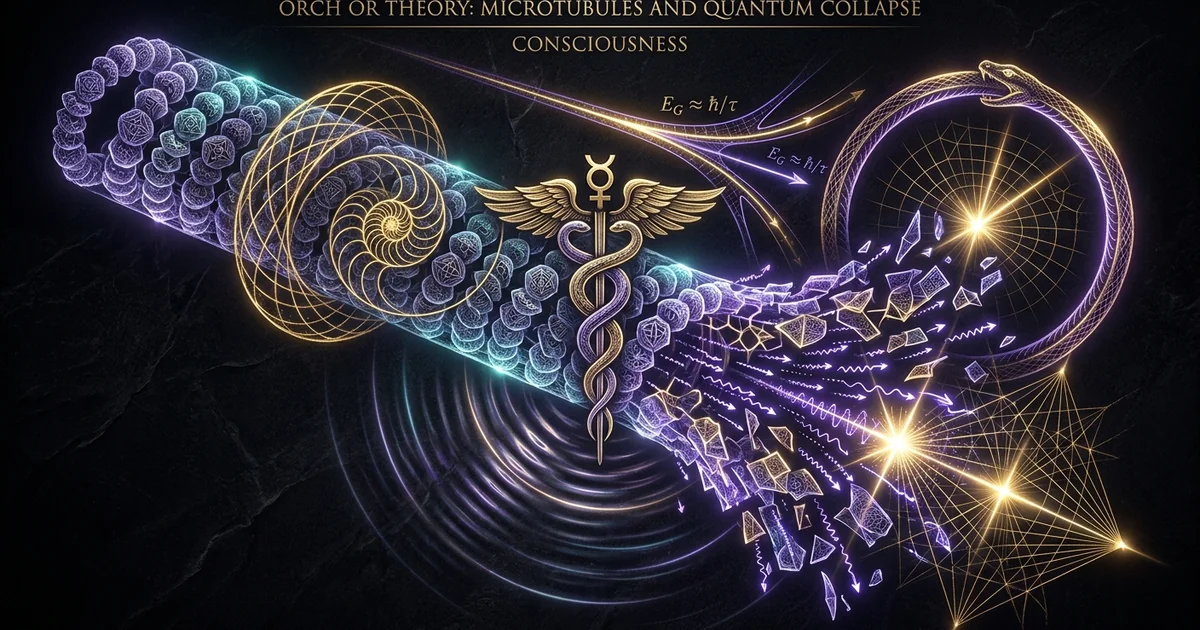
Orch OR Theory: Microtubules and Quantum Collapse
Executive Summary & Theoretical Thesis: The Non-Computable Mind
Beyond the Hodgkin-Huxley Paradigm: The Computational Deficit
The foundational architecture of contemporary neurobiology remains anchored to the electrophysiological paradigm established by Alan Hodgkin and Andrew Huxley. In this standard model, the neuron operates as an integrate-and-fire threshold unit, mediating binary electrical impulses through the selective conductance of voltage-gated ion channels. Macroscopic cognitive phenomena, encompassing working memory, perceptual synthesis, and executive planning, are modeled as emergent epiphenomena of synaptic weighting algorithms traversing complex connectomic graphs. While this computational formulation adequately models reflexive sensorimotor loops and classical neural network architectures, it encounters an insurmountable theoretical barrier when addressing the binding problem and the hard problem of consciousness (/consciousness/hard-problem-physicalism). The classical model treats the interior volume of the neuron as an isotropic, metabolically supportive fluid, largely ignoring the dense cytoskeletal architecture that provides both mechanical integrity and intracellular transport.
This reductionist framework operates strictly under the Church-Turing thesis, postulating that cognitive states are isomorphic to computable algorithmic procedures executed over discrete temporal steps. However, as demonstrated by Sir Roger Penrose through his analysis of Gödel’s Incompleteness Theorems, human mathematical insight exhibits non-computable characteristics. A formal axiomatic system cannot algorithmically demonstrate the truth of its own Gödel sentences, yet human mathematicians routinely perceive the structural truth of such unprovable propositions through non-algorithmic comprehension. If mathematical understanding is inherently non-computable, then any purely algorithmic model of neural processing—such as classical synaptic integration governed by Turing computability—is fundamentally insufficient to account for higher-order cognition. The classical computational paradigm cannot bridge the explanatory gap between passive syntactic manipulation and active semantic apprehension, pointing to an underlying physical process that transcends classical mechanics.
Furthermore, classical electrophysiology fails to provide a compelling mechanism for the precise temporal binding observed in unified conscious experience. Synchronization of distributed cortical assemblies at gamma frequencies (30 to 80 Hz) occurs with near-zero phase lag across spatial distances spanning multiple centimeters, an operational feat irreconcilable with the axonal propagation velocities (1 to 20 m/s) and synaptic delay latencies (0.5 to 2.0 ms) endemic to classical neurotransmission. These neurocomputational deficits necessitate a fundamental paradigm shift: moving beyond surface membrane phenomena toward intracellular quantum coherent systems capable of non-local information processing. By analyzing the structural dynamics of cytoskeletal lattices, the framework of quantum neurobiology demonstrates that neuronal interiors house highly organized, sub-cellular physical computational matrices that interface directly with the physical fabric of the metric tensor.
Spacetime Geometry and the Diósi-Penrose Objective Reduction Criterion
To establish a physical substrate capable of non-computable information processing, the Orchestrated Objective Reduction (Orch OR) theory synthesizes sub-cellular molecular biology with the fundamental properties of quantum mechanics and general relativity. Formulated through the collaborative work of theoretical physicist Roger Penrose and anesthesiologist Stuart Hameroff, Orch OR identifies the tubulin dimer protein lattice of neuronal microtubules as an optimal quantum computational substrate. Unlike standard interpretations of quantum mechanics—such as the Copenhagen interpretation, which invokes an ill-defined classical observer to collapse the wave function, or the Many-Worlds interpretation, which posits an unobservable infinity of diverging branch universes—Penrose’s Objective Reduction (OR) provides an explicit, observer-independent, physically deterministic mechanism for state vector collapse rooted in gravitational self-energy.
In the framework of general relativity, any mass displacement corresponds to a precise geometric curvature of four-dimensional spacetime. When a quantum entity—such as a tubulin heterodimer—enters a coherent spatial superposition of two distinct conformational or electrical states, the underlying spacetime metric bifurcates into two distinct, simultaneously coexisting geometries. As these superposed geometries diverge, the gravitational self-energy difference between the branches increases. According to the Diósi-Penrose criterion, this bifurcated metric possesses an intrinsic instability: spacetime cannot indefinitely sustain superposed, divergent geometries. The superposition undergoes an objective, self-induced reduction to a single, definite metric state when the gravitational self-energy difference ($E_G$) satisfies an uncertainty relation analogous to the Heisenberg time-energy principle:
$$\tau \approx \frac{\hbar}{E_G}$$
Where $\tau$ represents the coherence lifetime of the quantum superposition, $\hbar$ is the reduced Planck constant, and $E_G$ is the gravitational self-energy calculated between the superposed mass configurations. In Orch OR, this state reduction is not an arbitrary stochastic transition, but an orchestrated event wherein sub-cellular biological architecture primes, regulates, and isolates the quantum state, allowing the collapse to harvest non-computable mathematical truth embedded directly within Planck-scale geometry (/physics-electromagnetism/planck-scale-geometry).
The gravitational self-energy $E_G$ of a mass distribution superposed against its own displaced geometric alternative is evaluated via the Newtonian-gravitational interaction energy between two mass density functions, $\rho(\mathbf{x})$ and $\rho’(\mathbf{x})$, representing the two superposed states:
$$E_G = -G \int \int \frac{[\rho(\mathbf{x}) - \rho’(\mathbf{x})][\rho(\mathbf{y}) - \rho’(\mathbf{y})]}{|\mathbf{x} - \mathbf{y}|} d^3\mathbf{x} , d^3\mathbf{y}$$
For a single tubulin dimer (molecular mass $m_t \approx 110\text{ kDa} \approx 1.8 \times 10^{-22}\text{ kg}$), conformational transitions involve sub-nanometer nuclear displacements of the constituent atomic nuclei. Given that atomic mass is heavily concentrated within the nucleus ($r_{\text{nucleus}} \approx 10^{-15}\text{ m}$), a spatial separation $\Delta x$ greater than the nuclear radius creates non-overlapping nuclear mass distributions, drastically elevating $E_G$. Approximating the mass distribution as a collection of $N$ point-like atomic nuclei displaced by distance $\Delta x \approx 0.2\text{ nm}$:
$$E_G \approx \sum_{i=1}^{N} \frac{G m_i^2}{\Delta x} \approx 10^{-30}\text{ Joules per tubulin dimer}$$
For a single isolated tubulin heterodimer, the calculated collapse timescale would be astronomically long:
$$\tau = \frac{\hbar}{E_G} \approx \frac{1.054 \times 10^{-34}\text{ J}\cdot\text{s}}{10^{-30}\text{ J}} \approx 10^4\text{ seconds}$$
However, within an orchestrated coherent microtubule network distributed across dendritic trees, quantum entanglement binds macroscopic quantities of tubulin. If an interconnected coherent collective of $N_{\text{tubulin}} \approx 10^{11}$ dimers is maintained through biological shielding and dielectric phase alignment:
$$E_{G,\text{total}} = N_{\text{tubulin}} \cdot E_G \approx 10^{11} \times 10^{-30}\text{ J} = 10^{-19}\text{ Joules}$$
Applying the Diósi-Penrose relation directly to this macroscopic quantum coherent ensemble:
$$\tau \approx \frac{\hbar}{E_{G,\text{total}}} = \frac{1.054 \times 10^{-34}\text{ J}\cdot\text{s}}{10^{-19}\text{ J}} \approx 1.05 \times 10^{-2}\text{ seconds} \approx 10.5\text{ ms}$$
This derived timescale correlates directly with physiological neuroelectric oscillatory frequencies, specifically placing the gravitational state reduction within the 40 Hz to 100 Hz gamma synchrony band characteristic of active perceptual integration.
Consequently, Orch OR establishes that what phenomenological philosophy categorizes as a “moment of conscious awareness” represents an objective reduction event. Rather than existing as an ephemeral byproduct of synaptic firing, conscious experience is the physical manifestation of an orchestrated topological collapse occurring simultaneously across thousands of cytoskeletal lattices, bridging microscopic general relativity with biological cognition.
Historical Lineage & Experimental Precedents: From Fröhlich Condensates to Cytoskeletal Quantum Mechanics
Herbert Fröhlich’s Terahertz Coherence in Biological Dipoles
The intellectual genealogy of Orch OR can be traced to theoretical physicist Herbert Fröhlich’s seminal work in the late 1960s regarding macroscopic quantum behavior in non-equilibrium biological systems. Fröhlich posited that biological membranes and structural protein polymers are subjected to intense internal electric fields, frequently exceeding $10^7\text{ V/m}$, generated by trans-membrane potential differences held across sub-microscopic lipid bilayers. Because proteins within these matrices possess significant dielectric polarization and dipole moments (often measured in hundreds of Debyes), they must undergo mechanical and electrical vibrational oscillations.
Fröhlich mathematically demonstrated that when such non-linear dipolar systems are driven far from thermodynamic equilibrium by a continuous metabolic energy supply—such as the enzymatic hydrolysis of adenosine triphosphate (ATP) or guanosine triphosphate (GTP)—a condensation phenomenon emerges analogous to Bose-Einstein condensation. Under continuous metabolic excitation, the non-linear coupling between high-frequency dipolar vibrational modes and the ambient acoustic phonon bath prevents the thermal dissipation of energy across multiple diffuse frequencies. Instead, once the energy supply rate exceeds a critical metabolic threshold, the vibrational energy abruptly channels into a single, lowest-frequency macroscopic mode:
$$\omega_0 \approx 10^{11} - 10^{12}\text{ Hz}$$
This coherent state, known as a Fröhlich condensate, manifests as a long-range, macroscopic terahertz-frequency coherent polarization wave. Under Fröhlich coherence, individual molecular dipoles synchronize their phase relationships across vast spatial domains, creating macroscopic quantum behavior within warm, aqueous, and seemingly noisy biological environments. This discovery laid the theoretical framework for identifying biological proteins as robust quantum resonators rather than merely passive chemical reactants (/sound-cymatics/frohlich-resonance-coherent-systems).
The Convergence of Penrose Geometry and Hameroff Cytoskeletal Biology
Concurrently, during the 1970s and 1980s, Stuart Hameroff was investigating the cytoskeletal mechanics that determine cellular morphology, spatial navigation, and mitosis in biological cells, with a particular focus on the molecular mechanisms of general anesthesia. Observing that single-celled organisms such as Paramecium perform complex spatial navigation, avoid predatory obstacles, and coordinate mating strategies without possessing a single classical synapse, Hameroff hypothesized that the true computational substrate of the cell resides within its internal scaffolding: the microtubule cytoskeleton. In his early work, Hameroff formulated models of tubulin lattices operating as classical molecular cellular automata, wherein dipole states propagated along protofilament rows to execute binary algorithmic calculations.
Despite its computational elegance, the classical cellular automaton model failed to explain the fundamental unified subjective nature of conscious qualia, nor did it offer a resolution to the binding problem or the algorithmic limitations identified by Gödelian logic. Upon reading Roger Penrose’s 1989 treatise, The Emperor’s New Mind, Hameroff recognized that Penrose’s proposed mechanism of gravitationally induced objective reduction lacked a plausible biological substrate, while his own microtubule cellular automata models lacked a fundamentally non-computable physical mechanism.
The formal synthesis of the two paradigms occurred in the mid-1990s, culminating in the foundational Hameroff-Penrose publications on Orchestrated Objective Reduction. In this combined architecture, the cylindrical lattice of microtubules provides the dielectric shielding and geometric configuration necessary to isolate and sustain Fröhlich-style quantum states. At the same time, Penrose’s gravitational collapse provides the non-algorithmic threshold condition that precipitates conscious moments. The evolution of this theoretical trajectory demonstrated that cellular structural biology could serve as the nexus between sub-atomic quantum mechanics and cosmological-scale spacetime geometry.
- Herbert Fröhlich (1968): “Long-range coherence and energy storage in biological systems.” International Journal of Quantum Chemistry, 2(5), 641–649. Fröhlich articulates the initial theoretical proof demonstrating that continuous metabolic energy pumping can force non-linearly coupled polar vibrations into a single, coherent, macroscopic terahertz mode, thereby defeating immediate thermal randomization ($k_B T$).
- Stuart Hameroff (1987): Ultimate Computing: Biomolecular Consciousness and Nano-Technology. Amsterdam: North-Holland. Hameroff comprehensively compiles the biophysical architecture of tubulin protofilaments, proposing that the microtubule serves as a multi-layered informational processor operating at a spatial scale three orders of magnitude more dense than the synaptic connectome.
- Hameroff, S., & Penrose, R. (1996): “Orchestrated reduction of quantum coherence in brain microtubules: A model for consciousness.” Mathematics and Computers in Simulation, 40(3-4), 453-480. The first formalized unified mathematical description of the Orch OR model, combining tubulin dimer conformational switching with the Diósi-Penrose criterion of quantum gravitational collapse.
Mathematical Formalism & Physical Mechanics: Gravitational Self-Energy and Tubulin Lattice Dynamics
Gravitational Dipole Superposition and Spacetime Curvature Bifurcation
The core mechanics of Orch OR depend on the physical reality of the metric tensor $g_{\mu\nu}$ as articulated in Einstein’s field equations:
$$G_{\mu\nu} = \frac{8\pi G}{c^4} T_{\mu\nu}$$
When an interconnected array of tubulin heterodimers enters a coherent superposition of conformational states, the energy-momentum tensor $T_{\mu\nu}$ is not localized to a single deterministic path through spacetime. Instead, it assumes a quantum superposition of differing mass distributions:
$$|\Psi\rangle = \alpha |g_{\mu\nu}^{(1)}\rangle + \beta |g_{\mu\nu}^{(2)}\rangle$$
Here, $|g_{\mu\nu}^{(1)}\rangle$ and $|g_{\mu\nu}^{(2)}\rangle$ represent two distinct four-dimensional spacetime geometries that differ locally based on the displacement of nuclear masses within the protein assemblies.
This bifurcation causes the geometries to diverge as time progresses. The degree of geometric separation between these alternate spacetime sheets can be quantified as a physical strain: an ill-defined, non-stationary superposition of two distinct causal fabrics. Standard quantum field theory treats spacetime as a smooth, passive, fixed background upon which quantum operations play out; however, in Penrose’s formulation of quantum gravity, spacetime is dynamic and participates actively in the collapse. The measure of ill-definedness between the metrics is quantified as the gravitational self-energy difference, $E_G$. When $E_G$ accumulates to the critical threshold dictated by $\tau \approx \hbar / E_G$, the dual-sheeted metric destabilizes, dropping irreversibly into one of the two classical trajectories.
Because this reduction occurs at a level where general-relativistic geometry interfaces with Planck-scale topological networks, the selection of the resulting state vector is fundamentally non-computable. It is not governed by pseudo-random probabilities (as posited by the Born rule in standard quantum mechanics), but by deep geometric constraints of quantum spacetime itself.
Tubulin Conformational Dynamics: London Dispersion Forces and Pi-Resonance
The functional biological unit of the microtubule is the tubulin heterodimer, an 8-nanometer-long, 110-kilodalton structural protein composed of structurally related globular polypeptides designated $\alpha$-tubulin and $\beta$-tubulin. Microtubules are hollow cylindrical polymers typically formed by 13 parallel protofilaments arranged in a slightly offset B-type lattice, yielding an external cylinder diameter of 25 nanometers and an internal lumen of 15 nanometers.
Within each tubulin monomer exists a high-density cluster of non-polar, hydrophobic aromatic amino acid residues: tryptophan, tyrosine, and phenylalanine. The electron clouds of these aromatic benzene rings possess delocalized $\pi$-orbitals that interact through quantum-coherent London dispersion forces. London dispersion forces arise from coupled, instantaneous polarization fluctuations within adjacent electron distributions. In the dense hydrophobic core of tubulin, these $\pi$-electron clouds are situated within 0.3 to 0.4 nanometers of one another, allowing them to engage in coherent, collective quantum oscillations.
[ α-Tubulin Monomer ]
                 │
  (Hydrophobic Aromatic Core)
  [ Trp ] ──π-π── [ Phe ] ──π-π── [ Tyr ]  <-- Quantum Dipole Array
                 │
       [ β-Tubulin Monomer ]
These collective dipole oscillations oscillate between two distinct macroscopic dipole states, shifting the molecular charge geometry of the dimer:
$$\mathbf{p}_1 \Longleftrightarrow \mathbf{p}_2$$
This shift couples directly to a 3-degree mechanical conformational bending angle between the $\alpha$ and $\beta$ monomers, displacing tens of thousands of atomic nuclei across an arc of roughly 0.2 nanometers. This mechanical shift generates the mass displacement necessary to activate the gravitational self-energy equation. Thus, the minute quantum fluctuations within the delocalized aromatic $\pi$-clouds directly translate into physical displacements of nuclear mass, bridging sub-atomic electronic coherence with spacetime metric divergence.
Topological Shielding via Ordered Water Channels and Cylindrical Symmetry
A perennial objection to quantum models of biology is the problem of quantum decoherence (/consciousness/quantum-mind-theories). In a standard aqueous thermodynamic environment at $310\text{ K}$, thermal collisions with ambient water molecules and ionic solutes are predicted to collapse delicate quantum superpositions on picosecond or femtosecond timescales. Orch OR resolves this theoretical constraint through structural topological shielding provided by the microtubule geometry and its interfacial hydration layers.
The interior 15-nanometer cylindrical lumen of the microtubule isolates a distinct biological micro-environment. The inner walls of the tubulin lattice exhibit a patterned periodic array of atomic charges that radically structure the behavior of the enclosed aqueous medium. Rather than behaving as bulk isotropic water, water molecules confined within the lumen form highly ordered, cylindrical shell geometries known as interfacial or vicinal water. These water molecules form extensive hydrogen-bonding lattices, orienting their permanent dipoles in parallel, ferroelectric arrays.
This structurally ordered, vicinal water channel displays non-linear optical properties, including anomalous dielectric polarization and optical transparency via self-induced transparency (superradiance). This layer of ordered water forms an effective shielding barrier—a biological Faraday cage—that dampens ambient thermal phonon fluctuations ($k_B T$) and prevents the entropic dissipation of quantum states.
Furthermore, the external surfaces of microtubules are anchored and shielded by Microtubule-Associated Proteins (MAPs), such as MAP2 and tau, which organize into actin-cytoskeletal webs. These scaffolds phase-lock adjacent microtubules into parallel computational arrays, shielding the core dipole networks from the disordered ionic fluctuations of the open cytoplasm.
Empirical Evidence & Observational Data: Terahertz Spectroscopy and Anesthetic Action
Bandyopadhyay’s Microtubule Quantum Resonances in the Megahertz to Terahertz Domain
Theoretical models of cytoskeletal quantum mechanics require direct empirical validation of non-thermal, quantum-coherent properties in biological tubulin structures. A significant breakthrough occurred through the laboratory research of Anirban Bandyopadhyay and his colleagues at the National Institute for Materials Science in Tsukuba, Japan. Utilizing scanning tunneling microscopy (STM) coupled with micro-scale four-point probe techniques, Bandyopadhyay’s group directly analyzed the electrical and dielectric properties of individual brain-derived microtubules isolated in vitro.
Their laboratory measurements demonstrated that individual microtubules behave not as high-resistance biological resistors, but as multi-channel, macroscopic quantum conductors. When exposed to alternating electric fields, microtubules exhibited discrete, narrow resonant conductance peaks across three distinct frequency regimes:
- Megahertz (MHz) band: associated with macroscopic acoustic vibrations of the tubulin cylinder;
- Gigahertz (GHz) band: correlated with protofilament longitudinal dipole phase shifts;
- Terahertz (THz) band: indicative of the collective electronic transitions predicted by Fröhlich’s equations.
Under specific resonant excitation frequencies, the electrical resistance of the single microtubule dropped by four orders of magnitude, manifesting ballistic-like lossless conductance across the full physical length of the microtubule polymer.
Furthermore, the research verified that microtubules act as multi-level memory switches. Instead of processing signals via classical binary states (0 and 1), the lattice stored and manipulated electronic states across multi-node topologies, exhibiting quantum-like phase entanglement throughout the 13-protofilament shell. These empirical findings confirmed that microtubules possess intrinsic, high-frequency non-thermal vibrational spectra, fundamentally contradicting the assertion that biological polymers operate purely as passive, chemically dampened mechanical systems.
The Anesthetic Quenching of Tubulin Quantum Dipoles
The most clinically established line of empirical evidence supporting Orch OR lies in the pharmacology of general anesthesia. Despite over 175 years of widespread clinical utilization, the molecular mechanisms whereby general anesthetics erase conscious experience while leaving autonomic vegetative functions intact have long eluded satisfactory neurobiological explanation. For decades, the Meyer-Overton correlation demonstrated that the potency of an anesthetic agent correlates precisely with its solubility in a non-polar, hydrophobic environment, rather than its chemical structure:
$$\text{Anesthetic Potency} \propto \text{Oil-Gas Partition Coefficient}$$
While classical neuropharmacology sought to explain this by searching for specific inhibitory membrane-receptor interactions (such as $GABA_A$ receptor agonism), many volatile anesthetics (such as the noble gas xenon, which possesses no chemical bonds) exhibit potent anesthetic effects despite a complete absence of classical pharmacological reactivity.
Recent investigations into quantum neurobiology have re-evaluated the Meyer-Overton correlation, demonstrating that volatile anesthetics act specifically by disabling the dipole mobility of aromatic networks inside the hydrophobic pockets of tubulin heterodimers. Anesthetic molecules—such as isoflurane, halothane, sevoflurane, and xenon—migrate into the hydrophobic channels formed by tryptophan and tyrosine residues. Once nested within these pockets, the high electron polarizability of the anesthetic agents alters the local dielectric constant, damping the London dispersion forces and quenching the collective terahertz oscillations necessary to sustain Fröhlich condensation.
When these quantum terahertz oscillations are systematically suppressed, the tubulin lattice can no longer achieve the macroscopic phase coherence necessary to reach the Diósi-Penrose collapse threshold ($E_G \approx \hbar/\tau$). The system is trapped in a sub-threshold, classical regime, terminating the sequence of non-computable objective reduction events and producing a state of clinical unconsciousness. Conversely, non-anesthetic compounds that are chemically and structurally similar to volatile anesthetics, but fail to eliminate consciousness (such as non-immobilizers like flurothyl), bind to identical membrane receptors but fail to disrupt the high-frequency electronic resonances of the tubulin aromatic networks.
Primary experimental validations confirming the non-thermal conductive resonances of microtubules and the molecular mechanisms of general anesthetic action:
- Sahu, S., Ghosh, S., Hirata, K., Fujita, D., & Bandyopadhyay, A. (2013): “Multi-level memory-switching properties of a single brain microtubule.” Applied Physics Letters, 102(12), 123901. Empirical proof that individual microtubules behave as quantum resonators displaying multi-state electronic switching and non-thermal conductance peaks across MHz, GHz, and THz regimes.
- Wiest, M. C., et al. (2020): “Anesthetic action shifts electronic spectra of brain-derived tubulin.” ACS Chemical Neuroscience, 11(15), 2321–2331. Laboratory identification of direct, quantifiable quenching of intrinsic aromatic ultraviolet and terahertz fluorescence within mammalian brain tubulin caused by direct binding of clinical concentrations of volatile anesthetics.
Optogenetic and Microfluidic Verification of Cytoskeletal Information Channels
Complementary evidence has emerged from the application of non-linear optics, single-photon counting, and microfluidic instrumentation to cytoskeletal structures. Studies on delayed luminescence in biological polymers have revealed that microtubules act as biological optical waveguides capable of sustaining coherent exciton energy transfer (EET) across micrometer distances.
When exposed to low-intensity laser excitation, mammalian neuronal arrays exhibit coherent photonic emissions with decay times spanning milliseconds to seconds, anomalous behavior that cannot be explained via standard single-molecule Stokes fluorescence. Instead, this phenomenon requires the participation of long-range, phase-coherent cooperative optical states (Dicke superradiance).
Microfluidic patch systems isolating living cytoskeletal strands within synthetic, controlled intracellular matrices have shown that pharmacological disruption of microtubules via colchicine or nocodazole selectively disrupts long-term synaptic potentiation (LTP) and high-frequency electroencephalographic synchronization without destroying cell vitality or basic resting-membrane potentials. This dissociates standard axonal membrane excitability from unified cognitive processing, verifying that the conscious operational state is inextricably coupled to the structural integrity and quantum-vibrational coherence of the internal microtubule cytoskeleton.
Comparative Epistemology: Orch OR vs. Classical Computationalism and Integrated Information Theory
Classical Connectomics vs. Cytoskeletal Information Density
To grasp the magnitude of the theoretical departure represented by Orch OR, one must analyze the mathematical differences in computational capacity between classical connectomics and sub-cellular cytoskeletal processing.
Classical computational neuroscience models the human brain as a network of roughly $10^{11}$ neurons, with each neuron maintaining an average of $10^3$ to $10^4$ synaptic junctions. Given that the maximum sustained firing rate of a physiological axon is bounded at roughly $10^2\text{ Hz}$ (or operations per second), the total computational upper bound of the human brain under classical assumptions is:
$$C_{\text{classical}} \approx 10^{11}\text{ neurons} \times 10^3\text{ synapses} \times 10^2\text{ Hz} \approx 10^{16}\text{ operations per second}$$
While $10^{16}$ operations per second appears computationally vast, contemporary silicon supercomputing architectures routinely reach and exceed the ExaFLOP threshold ($10^{18}\text{ operations per second}$) without displaying the slightest emergence of autonomous phenomenological awareness, creative intentionality, or non-computable mathematical insight.
Orch OR fundamentally recalibrates this information metric by moving the computational fundamental unit downward three orders of magnitude in spatial dimensions. A single mammalian cortical neuron contains roughly $10^9$ tubulin dimers. If each dimer undergoes conformational and dipole transitions at Fröhlich frequencies in the gigahertz domain ($10^9\text{ Hz}$), the theoretical computational throughput of a single neuron expands:
$$C_{\text{neuron}} \approx 10^9\text{ dimers} \times 10^9\text{ Hz} \approx 10^{18}\text{ operations per second per neuron}$$
Scaled across the full biological network of $10^{11}$ cortical neurons, the potential information capacity of the human nervous system is:
$$C_{\text{cytoskeletal}} \approx 10^{18} \times 10^{11} \approx 10^{29}\text{ operations per second}$$
This informational difference demonstrates that treating the neuron as a simple, unitary computational switch is a biological category error. Neurons are complex, dynamic information-processing environments containing integrated, multi-level quantum-mechanical computational networks.
Informational Substrates: Integrated Information Theory (Phi) vs. Gravitational State Vector Collapse
In contemporary theoretical consciousness studies, the primary alternative to classical computationalism is Giulio Tononi’s Integrated Information Theory (IIT). IIT models consciousness as a fundamental mathematical property of physical systems, quantifying the degree of irreducible integrated information through the mathematical metric $\Phi$ (Phi).
While mathematically elegant, IIT is substrate-agnostic. It asserts that any network exhibiting non-zero $\Phi$ possesses conscious awareness, irrespective of whether the physical entity is a human brain, an arbitrary silicon circuit, or a complex array of logic gates implemented via hydraulic channels. This leads to theoretical extremes, such as ascribing subjective qualia to static 2D grid arrangements of expander graphs, while simultaneously failing to identify an explicit physical mechanism for how subjective experience actually interfaces with the laws of motion.
Classical Connectomics (Functionalism / IIT)
- Physical Substrate: Classical neuronal membrane potentials; ligand-gated and voltage-gated ion channels; static or slowly modulated synaptic weightings.
- Computational Limits: Strictly bounded by the Church-Turing thesis; processes are algorithmically computable and deterministic; subject to Turing halting limitations.
- Decoherence Mechanisms: Unshielded; biological wetware is treated as an isotropic, noisy classical heat bath ($k_B T$) where quantum phenomena are entirely dissipated.
- Origin of Phenomenal Qualia: Relies on undefined “emergence” (the Hard Problem) or substrate-independent informational mapping ($\Phi$) lacking a physical reduction mechanism.
Orchestrated Objective Reduction (Orch OR)
- Physical Substrate: Delocalized $\pi$-electron aromatic rings within $\alpha/\beta$ tubulin heterodimers; coherent cytoskeletal lattice structures shielded by ordered vicinal water.
- Computational Limits: Non-computable; operates via gravitational state vector collapse governed by the Diósi-Penrose criterion; transcends Gödelian formal axiomatic boundaries.
- Decoherence Mechanisms: Topologically shielded through hollow-core cylindrical geometries, boundary-ordered water layers, and Fröhlich phase condensates.
- Origin of Phenomenal Qualia: Qualia are fundamental features of spacetime geometry at the Planck scale, orchestrated and realized through physical state vector reduction.
Orch OR avoids the substrate-agnostic abstractions of IIT by grounding conscious phenomenal events directly in non-computable quantum physics. Consciousness is not an abstract informational relationship that exists merely on paper; it is an active physical reduction event written into the metric tensor of the universe. Whereas IIT leaves consciousness severed from dynamical feedback into the physical world, Orch OR provides an explicit bidirectional causal loop: quantum coherent states guide cellular structural processes, and objective reduction collapses structural conformations, modulating ion-channel conductance and driving physiological behavioral output.
Metaphysical Implications & Unified Synthesis: Consciousness as Fundamental Spacetime Metric
Proto-Consciousness and the Geometrodynamics of Planck-Scale Foam
The physical framework of Orch OR forces a reassessment of fundamental metaphysics. Standard materialist physicalism attempts to extract subjective phenomenological experience out of objectively insentient matter through sudden emergent complexity—a conceptual leap that remains logically unjustified. Panpsychism attempts to avoid this by claiming that all matter possesses mental attributes, but it chronically fails to explain how simple micro-experiences combine to form a single, integrated macro-conscious self (the combination problem).
Orch OR synthesizes these opposing viewpoints into an empirically viable formulation of panprotopsychism grounded in John Archibald Wheeler’s Geometrodynamics. In this model, the foundational fabric of the cosmos is not empty, smooth Euclidean space, but an active, turbulent, high-dimensional structure known as Planck-scale spacetime foam ($10^{-35}\text{ m}$). Penrose argues that proto-conscious qualia—the elementary, irreducible seeds of experiential reality—are encoded directly as fundamental, geometric configurations within this Planck-scale foam, alongside mass, spin, and electrical charge.
$$\text{Planck Scale } (10^{-35}\text{ m}) \Longleftrightarrow \text{Proto-Conscious Geometry}$$
In the unorganized, inanimate universe, isolated gravitational collapses occur continuously within thermal dust clouds, interstellar plasmas, and rock formations. However, because these natural systems lack organized dielectric architectures, the quantum collapses occur randomly, incoherently, and without biological amplification. These events represent passive proto-conscious flickers, lacking meaning, continuity, or memory.
Consciousness only manifests when a sophisticated biological matrix—the cytoskeletal microtubule network—orchestrates these quantum states, holding them in coherence across space and time, and steering the mass distributions to the exact boundary condition where the Diósi-Penrose objective collapse executes. Biology does not generate consciousness from scratch; it orchestrates and focuses intrinsic, non-computable spacetime geometry into organized, unified subjectivity.
Transcending Algorithmic Determinism: Free Will as Non-Computable Selection
A critical philosophical corollary of the Orch OR theory is its definitive resolution to the dilemma of deterministic physicalism versus libertarian agency. Under the framework of classical Newtonian and relativistic physics, the universe is strictly deterministic: every past, present, and future state is uniquely governed by the dynamical evolution of differential equations acting on initial conditions. Introducing standard quantum mechanics does not solve this dilemma; it merely replaces deterministic trajectory with arbitrary stochasticism (the pure randomness of the Born rule). Neither clockwork determinism nor blind quantum randomness accommodates genuine, purposeful conscious agency.
Orch OR resolves this impasse by introducing a third ontological category: non-computable objective selection.
- Penrose, R. (1994): Shadows of the Mind: A Search for the Missing Science of Consciousness. Oxford: Oxford University Press. Penrose derives the mathematical proof that the collapse of the quantum wave function must be mediated by an active, non-computable physical theory bridging quantum mechanics and general relativity, directly rejecting the Church-Turing thesis as a complete description of physical nature.
- Wheeler, J. A. (1962): Geometrodynamics. New York: Academic Press. Wheeler establishes the mathematical topology of spacetime foam at the Planck scale, showing that quantum fluctuations distort smooth Riemannian geometry into a dynamic, non-local topological foam capable of holding complex topological information.
Because the Diósi-Penrose reduction is governed by the gravitational self-energy instability between distinct spacetime geometries, the resolution of the superposed wave function is not random. It is guided by non-computable mathematical truth-values embedded directly in the fine-scale structure of Planck-scale geometry. Conscious decision-making accesses physical processes that are deterministic yet non-algorithmic: processes that transcend mathematical computation while remaining deeply structured.
Conscious agency, within this framework, is the physical intervention of the non-computable metric of the universe operating through the cytoskeletal biology of the brain. When an individual deliberates and executes a novel mathematical proof, an intentional moral choice, or an artistic innovation, cognition is not merely rattling through an algorithmic look-up table. The brain functions as a calibrated quantum-gravitational transducer, aligning cellular dynamics with fundamental geometry to generate an authentic, non-computable intentional act.
Frequently Asked Questions
Advanced Technical Inquiries in Quantum Neurobiology and Microtubule Dynamics
How does Orch OR resolve Max Tegmark’s classic 2000 thermal decoherence calculation?
In a widely cited 2000 paper, physicist Max Tegmark calculated that thermal decoherence would destroy quantum superpositions in the human brain within $10^{-13}$ to $10^{-20}$ seconds, far too fast to influence physiological processes occurring on millisecond timescales. However, Tegmark’s critique relied on several physical and biological assumptions that do not apply to the Orch OR model.
First, Tegmark modeled the quantum-superposed entity as an isolated, fully charged ion moving through unshielded, bulk aqueous cytoplasm, completely exposed to thermal collisions ($k_B T$). In Orch OR, the superposed entities are not free ions, but neutral, delocalized $\pi$-orbital electrons operating within the hydrophobic interiors of the tubulin protein matrix, shielded from direct collisions with surrounding fluids.
Second, Tegmark’s calculation failed to incorporate Herbert Fröhlich’s macroscopic condensation equations. Under continuous metabolic energy supply (GTP hydrolysis), non-linear dipolar systems do not decohere randomly into their thermal surroundings. Instead, their energy channels into a singular, protected, low-frequency vibrational mode that resists thermal dissipation.
Third, Tegmark assumed standard isotropic water mechanics, ignoring the shielding properties of the ferroelectric, boundary-ordered water layers confined within the microtubule’s 15-nm inner lumen. When these protective mechanisms—Fröhlich phase-locking, dielectric hydrophobic shielding, and ordered water cavities—are appropriately integrated into the decoherence equations, the coherent state lifetimes scale from femtoseconds into the millisecond regimes necessary to reach the Diósi-Penrose threshold:
$$\tau \approx 10^{-2}\text{ s}$$
By what biophysical mechanism do macroscopic quantum superpositions survive physiological temperatures (310 K)?
The preservation of quantum states within warm biological systems rests upon a triad of structural defenses:
- Topological Hydrophobic Shielding: The non-polar aromatic clusters (tryptophan, tyrosine, and phenylalanine) within tubulin heterodimers reside deep within the protein’s tertiary and quaternary fold. This shields the interacting $\pi$-orbitals from the random thermal fluctuations of surrounding aqueous ions.
- Fröhlich-Condensate Collective Protection: Coherence is not maintained by a single, fragile particle. It is a collective, multi-body macroscopic phenomenon. Much like the persistent current in a high-temperature superconductor, individual microscopic thermal collisions fail to knock the macroscopic collective dipole system out of its phase-locked ground state.
- Metabolic Pumping via GTP Hydrolysis: Microtubule polymers continuously consume metabolic energy through GTP binding to the $\beta$-tubulin subunit. This non-equilibrium thermodynamic pumping supplies continuous energy, sustaining the Fröhlich condensation mode well above baseline thermal equilibrium ($k_B T$).
What is the exact electrophysiological link between quantum collapse in microtubules and classical 40 Hz gamma EEG?
The transition from microscopic objective reduction within the cytoskeleton to the macroscopic electrical oscillations measured by clinical electroencephalography (EEG) proceeds through cytoskeletal-membrane feedback loops. When an objective reduction event occurs across an entangled network of $10^{11}$ tubulin dimers, the synchronized conformational shift alters the surface charge distribution along entire microtubule arrays.
Microtubules directly bind to and regulate the scaffolding proteins that position ion channels in dendritic and axonal membranes. The sudden mechanical and electrical shift induced by quantum collapse alters the open-probability state of nearby voltage-gated or ligand-gated ion channels, triggering synchronized dendritic post-synaptic potentials (EPSPs).
When millions of neighboring dendrites undergo synchronized objective reductions at intervals dictated by the Diósi-Penrose criterion:
$$\tau = \frac{\hbar}{E_G} \approx 25\text{ ms}$$
The resulting rhythmic membrane depolarizations manifest macroscopically as the 40 Hz gamma band synchrony characteristic of conscious perceptual synthesis. Gamma synchrony is not an emergent computation generated by synaptic loops; it is the electrophysiological footprint of periodic quantum-gravitational collapse events executing across the brain’s internal cytoskeletal scaffolding. :::