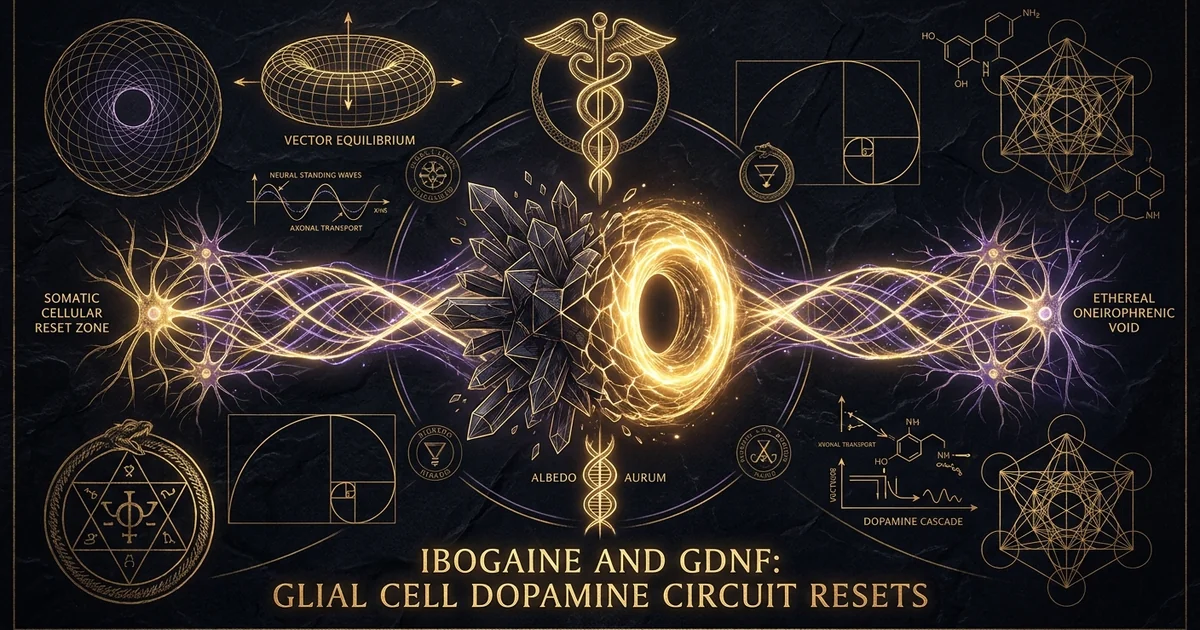
Ibogaine and GDNF: Glial Cell Dopamine Circuit Resets
Protocol Overview & Neurophysiological Thesis: Mesolimbic Architecture and GDNF Kinetics
VTA Circuitry Under Chronic Opioid Neuroadaptation
Chronic exposure to exogenous mu-opioid receptor (MOR) agonists precipitates profound, pathological remodeling of the mesocorticolimbic dopaminergic architecture. Under physiological conditions, dopaminergic projection neurons originating within the ventral tegmental area (VTA) and terminating within the nucleus accumbens (NAc) shell maintain homeostatic baseline firing rates governed by upstream gamma-aminobutyric acid (GABA) interneurons. Chronic opioid inundation disrupts this equilibrium via unremitting MOR stimulation on these local GABAergic interneurons. The resultant hyperpolarization relieves tonic inhibitory control over VTA dopaminergic neurons, generating supraphysiological dopamine efflux in the NAc. Over sustained periods, however, cellular counter-adaptations manifest as compensatory homeostatic tolerance.
This sustained dysregulation forces a compensatory downregulation of dopamine biosynthesis enzymes, principally tyrosine hydroxylase (TH), alongside a marked functional desensitization of postsynaptic dopamine D2 autoreceptors. As a consequence, the basal dopaminergic set-point collapses. In the state of acute or protracted withdrawal, the abrupt cessation of MOR agonism disinhibits VTA GABAergic interneurons, causing intense hyper-inhibition of dopaminergic firing. Concurrently, the uncoupling of Gi/o protein signaling pathways from adenylyl cyclase leads to a compensatory cyclic adenosine monophosphate (cAMP) and protein kinase A (PKA) hyperexcitation rebound. The organism enters a refractory state characterized by profound anhedonia, elevated dynorphin tone, stress-axis hyperactivity, and compulsive drug seeking—the definitive neurobiological hallmarks of chemical dependence.
GDNF Upregulation as a Molecular Homeostatic Switch
Glial cell line-derived neurotrophic factor (GDNF), a distant member of the transforming growth factor-beta (TGF-β) superfamily, functions as an indispensable neurorestorative agent within midbrain dopaminergic systems. Endogenously synthesized by striatal medium spiny neurons and surrounding astroglia, GDNF exhibits distinct, protective affinity for the survival, structural arborization, and electrophysiological stabilization of dopaminergic neurons in both the substantia nigra pars compacta and the ventral tegmental area. In the context of the ibogaine gdnf dopamine circuit reset opioid addiction paradigm, the administration of the monoterpenoid indole alkaloid ibogaine (Tabernanthe iboga) operates not merely as a receptor ligand, but as an epigenetic and transcriptional trigger for sustained neurotrophin synthesis.
Upon administration, ibogaine triggers rapid transcriptional activation of the Gdnf gene locus within midbrain glia. Unlike standard pharmacological interventions that temporarily occupy receptor sites without reversing structural pathology, the sudden elevation of glial cell line derived neurotrophic factor drives a profound morphologic and functional restoration of damaged dopaminergic axonal terminals. GDNF binds specifically to the glycosylphosphatidylinositol (GPI)-anchored co-receptor GDNF family receptor alpha-1 (GFRalpha1), which随后 induces the homodimerization and transphosphorylation of the RET (Rearranged during Transfection) receptor tyrosine kinase. This ligand-receptor interaction initiates retrograde trophic signaling pathways that effectively recalibrate the mesolimbic set-point, upregulating tyrosine hydroxylase transcription, restoring baseline dopamine synthesis, and re-sensitizing D2 autoreceptors to normal physiological ranges.
He, D. Y., McGough, N. N., Ravindranathan, A., Jeanblanc, J., Logrip, M. L., Phamluong, K., Janak, P. H., & Ron, D. (2005). Glial cell line-derived neurotrophic factor mediates the desirable actions of the anti-addiction drug ibogaine. The Journal of Neuroscience, 25(3), 619–628.
Key Empirical Finding: Ron and colleagues demonstrated that systemic administration of ibogaine (40 mg/kg, i.p.) in rodent models selectively and dramatically upregulated GDNF mRNA and protein expression specifically within the ventral tegmental area (VTA), but not in the substantia nigra. Microinjection of neutralizing anti-GDNF antibodies directly into the VTA completely abolished ibogaine’s inhibitory actions on ethanol and morphine self-administration, establishing that GDNF is both necessary and sufficient for the enduring anti-addictive efficacy of the alkaloid.
Noribogaine Pharmacodynamics and Sustained Neuroplastic Windows
The pharmacokinetics of ibogaine are dictated by rapid first-pass hepatic metabolism catalyzed primarily by the cytochrome P450 isoenzyme CYP2D6. Demethylation at the C-10 position yields the principal active metabolite, noribogaine (10-hydroxyibogamine). While parent ibogaine exhibits an elimination half-life approximating 4 to 7 hours in rapid metabolizers, noribogaine demonstrates a substantially extended terminal elimination half-life ranging between 24 and 48 hours, with lipophilic tissue sequestration allowing low-level systemic presence for weeks post-administration.
This sustained systemic exposure to noribogaine is critical for opening an extended neuroplastic window. Noribogaine operates through a pharmacology distinct from its parent molecule, demonstrating higher affinity as a serotonin reuptake inhibitor (SERT) and exhibiting partial agonist properties at the mu-opioid receptor while acting as a weak antagonist or partial agonist at the kappa-opioid receptor. The sustained presence of noribogaine within the central nervous system maintains the autocrine and paracrine feedback loops of GDNF signaling. This continuous neurotrophin signaling promotes structural neuroplasticity, dendritic spine reorganization, and axonal re-arborization, bridging the acute interruption of dependency with long-term mesolimbic stabilization. Further exploration of these structural shifts can be examined within our analysis of /consciousness/neuroplasticity-and-entheogenic-integration.
Biophysical Mechanisms & Brainwave Dynamics: Receptor Polypharmacology and Oscillatory States
Receptor Crosstalk: kappa-Opioid, NMDA, and Serotonin Transporters
The complex polypharmacology of ibogaine defies single-target receptor theory, relying instead on multidimensional, simultaneous receptor crosstalk. At micromolar concentrations, ibogaine and noribogaine bind across disparate neurotransmitter systems, functionally reconfiguring hyperactive or depleted circuits. Of principal interest is ibogaine’s low-to-moderate affinity antagonism at the N-methyl-D-aspartate (NMDA) receptor complex, localized primarily at the phencyclidine (PCP) binding site within the cation channel pore. Chronic opioid dependence inevitably results in an uncoupling of glutamate homeostatic uptake via astrocytic GLT-1 transporters, precipitating a dangerous, hyper-glutamatergic tone upon abrupt cessation. By non-competitively attenuating NMDA receptor activation, ibogaine prevents downstream excitotoxic calcium influx, thereby mitigating withdrawal-induced cellular stress and autonomic hyperexcitation.
Concurrently, ibogaine’s interaction with the kappa-opioid receptor (KOR) system represents an essential functional axis. Although acute synthetic KOR agonists (such as U-50,488 or Salvinorin A) induce dysphoria and marked psychotomimetic effects by acutely suppressing striatal dopamine, ibogaine acts as an atypical, biased KOR modulator. It momentarily activates KOR-mediated signaling, initiating downstream transcription that alters dynorphinergic tone, followed by functional desensitization of the receptor. This initial burst of KOR signaling is paradoxically required to initiate the downstream molecular cascade that triggers glial release of glial cell line derived neurotrophic factor, while its simultaneous inhibition of the serotonin transporter (SERT) elevates synaptic 5-HT, offsetting KOR-induced dysphoria and establishing an internal neurochemical milieu conducive to deep emotional and autobiographical processing.
Theta-Gamma Phase-Amplitude Coupling During Oneirophrenic States
The systemic neurobiological transitions induced by ibogaine generate profound, macro-level changes in cortical electrodynamics. Quantitative electroencephalography (qEEG) recordings reveal that as the subject enters the acute oneirophrenic introspective state, there is an absolute suppression of dominant cortical Alpha rhythms (8.0–12.0 Hz) and high-frequency Beta activity, replaced by high-amplitude, synchronized slow-wave activity dominated by the Theta-frequency band (4.0–7.5 Hz). This slow-wave oscillation originates in deep limbic structures, specifically radiating outward from hippocampal-septal oscillators and reciprocal entorhinal cortex loops.
Crucially, the Ibogaine-induced visionary state is not characterized by diffuse slow-wave disorganization typical of metabolic encephalopathy or toxic delirium. Instead, advanced signal processing demonstrates robust Theta-Gamma Phase-Amplitude Coupling (PAC). High-frequency Gamma bursts (35–45 Hz), associated with conscious visual representation, bind tightly to the troughs of the underlying high-amplitude Theta oscillations across the prefrontal cortex, temporal lobes, and secondary visual cortices. This oscillatory coupling mirrors the biophysical state of rapid eye movement (REM) sleep, yet operates while the subject maintains full waking lucidity. The synchronized, slow-wave scaffolding enables the retrieval and visual externalization of deeply suppressed autobiographical memories without triggering the typical high-frequency adrenergic fight-or-flight signatures often observed in trauma recall, a phenomenon aligned with research into /physics-electromagnetism/eeg-phase-synchrony-and-neural-oscillations.
Cellular Signaling Cascades: RET Kinase, MAPK/ERK, and Retrograde Axonal Transport
At the cellular level, the biological reset of the dopaminergic terminal requires an ordered, intracellular enzymatic cascade initiated by neurotrophin binding. Once glial-derived GDNF is synthesized and secreted into the extracellular space following ibogaine administration, it binds with high affinity to GFRalpha1. This assembly recruits two molecules of the RET receptor tyrosine kinase, forming a heterotetrameric complex. Dimerization induces autophosphorylation of critical tyrosine residues (specifically Tyr981, Tyr1016, and Tyr1062) located within the intracellular catalytic domain of the RET kinase.
Phosphorylation at Tyr1062 functions as a multi-docking site, recruiting adaptor proteins including Shc, Grb2, and Gab1/2, which simultaneously propagate two distinct intracellular pathways: the Mitogen-Activated Protein Kinase / Extracellular Signal-Regulated Kinase (MAPK/ERK) cascade and the Phosphoinositide 3-Kinase (PI3K)/Akt survival pathway. Activation of the MAPK/ERK pathway induces phosphorylation of the transcription factor CREB (cAMP response element-binding protein), which directly accesses the regulatory promoter regions of the Th gene, elevating transcription of tyrosine hydroxylase.
Simultaneously, the active signaling complex is internalized into signaling endosomes and undergoes dynein-dependent retrograde axonal transport from dopaminergic terminals in the striatum back to neuronal somas located within the VTA. This structural signaling loop restores dopamine transporter (DAT) trafficking to the cell surface, rectifies baseline firing frequencies, and halts the neurodegenerative decay initiated by toxic cyclic drug administration.
Step-by-Step Experiential Protocol: Phase Architecture and Therapeutic Entrainment
Phase I: Acute Vestibular-Oneirophrenic Emergence (Hours 0-8)
The initial phase of the ibogaine therapeutic intervention commences between 45 and 90 minutes post-oral administration of the alkaloid, reaching maximum systemic concentration of the parent molecule between hours 2 and 4. This phase is characterized by an abrupt emergence of pronounced vestibular instability, severe cerebellar ataxia, and intense auditory paraesthesia, frequently experienced as a continuous, high-frequency systemic buzzing or hum. These acoustic sensations herald the transition into the full oneirophrenic introspective state. Pharmacologically, this phase represents peak ibogaine saturation across central sigma-2, NMDA, and sodium channel binding sites, alongside substantial inhibition of the human Ether-à-go-go-Related Gene (hERG) cardiac channels.
+--------------------------------------------------------------------------------+
|                         IBOGAINE PHASE KINETIC TIMELINE                        |
|                                                                                |
| 0h        2h        4h        8h                20h                        36h |
| ├───▲─────┼─────────┼─────────┼──────────────────┼──────────────────────────┤  |
|   Admin   │         │         │                  │                          │  |
|           └─ Peak Ibogaine ───┘                  │                          │  |
|              Phase I: Oneirophrenic              │                          │  |
|                               └─ Peak Noribogaine ─────────────────────────┘  |
|                                  Phase II: Evaluative / Introspective         |
|                                                     └─ Phase III: Residual ─┘  |
+--------------------------------------------------------------------------------+
During Phase I, the subject must remain strictly supine and completely motionless. The slightest rapid acceleration or rotation of the cranium provokes profound, violent nausea and projectile emesis, mediated by intense activation of the vestibulo-ocular pathways and sigma receptor modulation within the area postrema. Sensory inputs must be systematically attenuated: pure darkness achieved via opaque eye-coverings, and external clinical or incidental noises masked using low-frequency acoustic stabilization. Hypnagogic imagery emerges rapidly when the eyes are closed, characterized by dense, rapidly moving visual panels depicting non-linear symbolic landscapes, ancestral or genetic lineage motifs, and hyper-dense archival files of previous life events. If the subject opens their eyes, the visionary phenomena abruptly collapse, and spatial orientation reasserts itself, proving the preserved integrity of reality testing despite the depth of the neurochemical shift. Interrupted withdrawal symptoms become clinically apparent within this initial phase, as the autonomic crisis of acute cessation is rapidly suppressed.
Phase II: Introspective Cognitive Processing and Memory Playback (Hours 8-20)
Between hours 8 and 12, the rapid, chaotic, and cinematic projection of Phase I begins to decelerate, demarcating the enzymatic shift from parent ibogaine to its primary metabolite, noribogaine. This initiates the second distinct phase: the evaluative and introspective window. The rapid, involuntary visual hallucinations subside into a state of heightened, emotionally neutral, detached cognitive clarity. Subjects encounter an extensive autobiographical review, frequently characterized as viewing the timeline of their personal biographical choices from an objective, third-person perspective. Traumatic life experiences, childhood developmental fractures, and the initial behavioral conditions that catalyzed drug self-administration are viewed with an absence of customary limbic-driven hyperarousal.
The therapeutic environment during Phase II demands absolute environmental isolation and meticulous psychoacoustic stabilization. To augment the endogenous transition toward Theta-Gamma synchrony, ambient acoustic soundscapes must be deployed using flat-response planar transducer headphones. The acoustic architecture must utilize pink noise (1/f power density) overlaid with a 4.5 Hz Theta binaural beat riding on an exact 136.1 Hz carrier frequency (the molecular-entrainment resonance). This specifically targets the limbic system to maintain slow-wave cortical coupling without evoking emotional panic or sensory overload. The patient’s head must remain elevated at precisely 15–30 degrees on a semi-rigid foam wedge to mitigate cerebellar ataxia and prevent posterior aspiration in the event of delayed gastric reflux.
The neurobiological substrate of Phase II relies on high-affinity SERT blockade coupled with prolonged mu-opioid partial agonism and balanced KOR desensitization by noribogaine. This specific receptor configuration creates an affective buffer: it silences the hyperactive amygdaloid threat circuits while simultaneously facilitating prefrontal-hippocampal communication. The subject is enabled to perform deep cognitive restructuring, dispassionately processing guilt, shame, and remorse. By removing the conditioned threat response from episodic trauma memories, ibogaine permits the cognitive apparatus to reorganize semantic meaning, facilitating sustained therapeutic consolidation. Methods for stabilizing these transpersonal states are detailed in /meditation/transpersonal-phenomenology-and-ego-dissolution.
Phase III: Residual Stimulation, Neurochemical Consolidation, and Grounding (Hours 20-36)
Phase III initiates as noribogaine achieves steady-state clearance kinetics while remaining functionally active in deep tissue reservoirs. Clinically, this is experienced as residual motor restlessness, physical exhaustion paired with cognitive insomnia, and a gradual somatic reconnect. The sensory and visionary phenomena have extinguished, leaving the individual within an empty, silent central space. While the patient may report profound physical fatigue, central nervous system alertness remains heightened due to ongoing, low-level monoaminergic modulation and persistent GDNF-driven neurorestoration.
During this terminal phase, grounding protocols are mandatory. The clinical and therapeutic team must facilitate gradual sensory re-engagement, introducing mild tactile anchoring, room-temperature hydration infused with balanced electrolytes, and direct exposure to natural photic cycles to begin the realignment of disrupted circadian pacemakers. Deep somatic processing becomes the focal objective: patients are guided to engage in somatic tracking exercises, breath-directed body-scanning, and structured, non-judgmental journaling of the autobiographical insights harvested during the preceding 24 hours. The acute craving for the addictive substance remains absent, replaced by a quiet, neuroplastic tabula rasa.
Operational Safety, Contraindications & Biofield Grounding: hERG Channel Dynamics and Cardiovascular Precautions
hERG Potassium Channel Blockade and QTc Prolongation Risk
While ibogaine’s molecular actions on central mesolimbic circuitry are uniquely restorative, its peripheral biophysical actions present extreme, life-threatening cardiovascular risks if unmonitored. The central mechanism of ibogaine-induced cardiotoxicity resides in its potent, direct inhibition of the human Ether-à-go-go-Related Gene (hERG) encoded K_v11.1 cardiac potassium channel. The hERG channel conducts the rapid activating delayed rectifier potassium current ($I_{Kr}$), which is fundamentally responsible for the terminal phase 3 repolarization of the cardiac ventricular action potential.
Normal Ventricular Action Potential:
      Phase 2 (Plateau: Ca2+ in / K+ out)
      ┌────────────────────────┐
     /                          \  Phase 3 (Repolarization: I_Kr current via hERG)
    /                            \
   /                              \
Phase 0 (Rapid Na+ Influx)         \
 /                                  \___________
/                                               Phase 4 (Resting Potential)

Ibogaine-Blocked Ventricular Action Potential (Prolonged Action Potential Duration):
      Phase 2 Prolonged
      ┌──────────────────────────────────────────┐
     /                                            \  Delayed Phase 3 Repolarization
    /                                              \  (hERG Channels Blocked)
   /                                                \
Phase 0                                              \
 /                                                    \___________
/                                                                 Phase 4
[<----------------------- Prolonged QT Interval ----------------------->]
Ibogaine and noribogaine act as high-affinity open-channel pore blockers of the K_v11.1 channel, binding directly within the central cavity to residues Tyr652 and Phe656. By arresting $I_{Kr}$ efflux, ibogaine causes concentration-dependent prolongation of the cardiac action potential duration (APD), translating clinically on the surface electrocardiogram (ECG) as profound prolongation of the corrected QT (QTc) interval. If the QTc interval extends beyond 500 milliseconds, the cardiac tissue enters a dangerous window of vulnerability. Early afterdepolarizations (EADs)—spontaneous, aberrant inward calcium currents through L-type $Ca^{2+}$ channels occurring during phase 2 or 3 of the prolonged action potential—can trigger extrasystolic beats. If an EAD falls upon the T-wave of the preceding beat (the “R-on-T phenomenon”), it invariably degenerates into a malignant, polymorphic ventricular tachycardia known as Torsades de Pointes (TdP), rapidly precipitating ventricular fibrillation and sudden cardiac death.
Administration of ibogaine is strictly contraindicated in the presence of any underlying cardiovascular pathology. Absolute clinical exclusion criteria include:
- Baseline QTc interval exceeding 440 ms in males or 460 ms in females, measured via continuous multi-lead ECG.
- Congenital Long-QT Syndrome (LQTS), family history of sudden unexplained cardiac arrest, Brugada syndrome, or intrinsic sinoatrial/atrioventricular conduction defects.
- Concurrent presence of any substance or pharmaceutical agent known to inhibit the cytochrome P450 isoenzyme CYP2D6 (which unpredictably skews the ibogaine-to-noribogaine metabolic conversion ratio) or any drug possessing intrinsic hERG-inhibitory properties (e.g., methadone, haloperidol, ondansetron, azithromycin, citalopram).
- Uncorrected electrolyte perturbations, particularly hypokalemia and hypomagnesemia. Continuous 12-lead telemetry must remain actively deployed and monitored throughout the entire duration of Phase I and Phase II until the QTc interval stabilizes under 450 ms.
Electrolyte Homeostasis and Mandatory Biomarker Screening
To dynamically mitigate the risk of hERG channel blockade degenerating into fatal arrhythmias, electrolyte homeostasis must be rigorously confirmed prior to the administration of any alkaloid material. Extracellular potassium ($K^+$) concentration directly modulates the inactivation kinetics and drug sensitivity of the hERG channel; hypokalemia paradoxically accelerates channel inactivation, markedly increasing the inhibitory potency of ibogaine, while simultaneously reducing the amplitude of the already compromised repolarizing outward current. Similarly, magnesium ($Mg^{2+}$) functions as a natural physiological antagonist of excessive inward L-type $Ca^{2+}$ flux, stabilizing the cardiac sarcolemmal membrane.
Clinical safety mandates the verification of serum potassium levels at or strictly above $4.0\text{ mEq/L}$, and serum magnesium concentrations at or strictly above $2.0\text{ mg/dL}$ (optimally $2.2\text{–}2.5\text{ mg/dL}$). If baseline biochemistry reveals sub-optimal electrolyte status—an extremely common artifact in individuals presenting with chronic opioid dependence, malnourishment, or recurrent emesis—pre-protocol intravenous or high-absorption oral repletion must be administered. In parallel, comprehensive biomarker panels must assess hepatic clearance integrity via aspartate aminotransferase (AST), alanine aminotransferase (ALT), and gamma-glutamyl transferase (GGT) concentrations, alongside complete renal metabolic panels, since hepatic clearance failure drastically magnifies parent ibogaine AUC (area under the curve) dynamics.
Psychological Containment and Autonomic Nervous System Stabilization
The profound psychoneuroimmunological disruptions that accompany ibogaine’s action require careful balancing of the autonomic nervous system. The rapid dissolution of ego structures, mediated by transient decoupling of the default mode network (DMN) alongside potent KOR-induced depersonalization, can provoke intense sympathetic overactivity. This autonomic discharge releases supraphysiological levels of endogenous catecholamines (epinephrine and norepinephrine), which act on beta-1 adrenergic receptors in the myocardium to heighten the risk of triggered ventricular arrhythmias under conditions of already delayed ventricular repolarization.
To systematically dampen this autonomic cascade, clinical practitioners must construct an environment of uncompromising psychological containment. Grounding protocols do not rely on cognitive re-framing during the acute visionary phases; instead, they rely on somatic anchoring and low-frequency auditory entrainment. The deployment of slow, rhythmic, non-invasive auditory markers (such as continuous, non-rhythmic ocean soundscapes, or precise binaural frequencies detailed in our framework on /sound-cymatics/binaural-theta-frequency-following-response) directly facilitates parasympathetic tone via vagal nerve stimulation. If acute hyper-adrenergic distress occurs, continuous, structured somatic containment—firm, non-intrusive tactile pressure applied to the patient’s feet, accompanied by synchronous, audible, steady breathing demonstrations by the facilitator—activates peripheral mechanoreceptors, stabilizing the baroreflex and steadily down-regulating sympathetic outflow.
Phenomenological Correlates & Veridical Evidence: Interruption of Addiction Trajectories
Resolution of Objective Opioid Withdrawal (OOWS) Metrics
The clinical interruption of severe chemical dependency by ibogaine is characterized by the rapid and total cessation of objective withdrawal manifestations. Under standard circumstances, the cessation of short-acting mu-opioid agonists precipitates an acute, agonizing physical crisis that reaches peak intensity within 48 to 72 hours, scored meticulously via the Objective Opioid Withdrawal Scale (OOWS) and Clinical OOWS (COWS). Parameters including spontaneous piloerection (gooseflesh), severe rhinorrhea, unremitting lacrimation, severe abdominal cramping, continuous diarrhea, resting tachycardia, muscular tremors, and intractable bone pain drive the dependent individual into immediate relapse.
Expected Withdrawal vs. Ibogaine Protocol Progression:
+--------------------------------------------------------------------------------+
| OOWS Score                                                                     |
| 30 ┤           Traditional Cold-Turkey Withdrawal Profile                      |
| 25 ┤               /\                                                          |
| 20 ┤              /  \     /\                                                  |
| 15 ┤    /\       /    \   /  \                                                 |
| 10 ┤   /  \     /      \_/    \_________________________________               |
|  5 ┤  /    \___/                                                               |
|  0 ┼─▲──────────────────────────────────────────────────────────               |
|    0h     12h      24h      36h      48h      60h      72h      84h            |
|                                                                                |
| Ibogaine Administration Profile (Single Dose, 15-20 mg/kg at 0h):              |
| 30 ┤                                                                           |
| 25 ┤                                                                           |
| 20 ┤                                                                           |
| 15 ┤                                                                           |
| 10 ┤  ▲                                                                        |
|  5 ┤   \                                                                       |
|  0 ┼────\_______________________________________________________               |
|    0h     2h       4h       8h       12h      24h      48h      72h            |
+--------------------------------------------------------------------------------+
Following the administration of a clinical dose of ibogaine (typically 15 to 20 mg/kg of the pure hydrochloride salt), the OOWS trajectory collapses abruptly. Within 90 to 180 minutes post-ingestion—a timeframe perfectly synchronized with the emergence of parent ibogaine in systemic circulation—objective autonomic withdrawal indicators diminish rapidly, frequently dropping to an absolute score of zero. Rhinorrhea and lacrimation vanish; gastrointestinal hypermotility halts entirely; tremors and piloerection dissolve. This rapid amelioration of withdrawal occurs without the administration of any exogenous mu-opioid receptor agonist, representing a profound departure from standard substitution strategies and serving as definitive veridical evidence of an immediate molecular stabilization within the central nervous system.
Autobiographical Review: Veridical Visual Recall vs. Delirium
The visual phenomenological architecture of the ibogaine experience represents a highly organized, introspective process fundamentally divergent from the confused, fragmented hallucinations associated with anticholinergic delirium or toxic metabolic states. Under the oneirophrenic introspective state, the cognitive processing centers retain intact reality testing, orientation to time and space, and explicit self-referential awareness. Subjects report the visual presentation of an internal holographic screen, upon which chronological or thematic episodes of their personal history are projected with remarkable sensory fidelity.
Crucially, these visual access windows exhibit veridical characteristics: subjects regularly retrieve highly specific, forgotten memories from early development, ancestral lineage imagery, or precise instances where catastrophic life decisions were enacted. Rather than being characterized by fearful, chaotic imagery, the visual field is described as an interactive visual library or digital memory interface. The participant can willfully select, pause, expand, or terminate specific memory streams simply by modulating intentional focus or by opening their eyes, which instantaneously dissipates the projection. This veridical retrieval process allows the individual to observe the self as a separate entity—an external, objective observer viewing the mechanistic formation of their own compulsive behavioral pathways. This detached perspective decouples the trauma narrative from visceral panic, facilitating deep emotional resolution and cognitive reframing.
Comparative Neurobiology: Full Receptor Agonism vs. GDNF Plastic Reset
The traditional standard of care for opioid use disorder relies exclusively on pharmacological substitution through long-acting, full or partial mu-opioid receptor agonists such as methadone or buprenorphine. While these interventions mitigate acute autonomic withdrawal and reduce harm, they do not resolve the underlying neurological pathology; they reinforce dependent homeostatic states, perpetuate D2 receptor downregulation, keep the baseline dopaminergic set-point depressed, and leave the subject bound to daily pharmacological stabilization.
Synthetic Opioid Replacement (Buprenorphine/Methadone)
- Mechanism of Action: Continuous, competitive binding and stabilization of the mu-opioid receptor (MOR) via partial or full agonism.
- Reward Circuit Architecture: Perpetuates baseline dysregulation; maintains elevated homeostatic thresholds within the VTA; leaves D2 receptor desensitization intact.
- Craving & Dependence Profile: Continuous basal craving remains suppressed only through drug presence; severe, prolonged physical withdrawal occurs upon cessation.
- Neuroplastic Adaptations: Minimal to negative; chronic opioid administration suppresses endogenous neurogenesis, arrests long-term potentiation, and downregulates BDNF/GDNF pathways.
- Endogenous Neurotrophins: Inactive; does not provoke transcriptional up-regulation of Gdnf or Bdnf loci within glial structures.
Neurotrophic GDNF Circuit Reset (Ibogaine Protocol)
- Mechanism of Action: Complex polypharmacology; rapid, transient NMDA channel block, biased KOR modulation, SERT inhibition, and CYP2D6 conversion to noribogaine.
- Reward Circuit Architecture: Molecular reset of baseline firing thresholds; transcriptional upregulation of Tyrosine Hydroxylase; normalization of DAT expression.
- Craving & Dependence Profile: Absolute interruption of withdrawal symptoms within 2–4 hours; enduring post-protocol suppression of compulsive drug-seeking behavior.
- Neuroplastic Adaptations: Profound, sustained neurogenesis; structural restoration of degraded dopaminergic axonal networks in the NAc shell and VTA.
- Endogenous Neurotrophins: Highly active; drives substantial, persistent autocrine and paracrine transcription of glial cell line derived neurotrophic factor via RET/GFRalpha1 signaling.
Frequently Asked Questions: Scientific Mechanisms and Post-Protocol Care
Cellular Mechanism of Long-Term Craving Suppression
The pharmacological clearance of ibogaine and noribogaine occurs over days, yet the suppression of substance craving frequently persists for months or years. The primary cellular mechanism underlying this persistence is the establishment of an autocrine and paracrine positive-feedback loop governed by glial cell line derived neurotrophic factor. Following the initial induction of Gdnf mRNA by ibogaine, elevated extracellular GDNF activates the RET-GFRalpha1 signaling pathway in adjacent dopaminergic and astrocytic populations. This continuous activation maintains long-term CREB phosphorylation, which in turn binds the cyclic AMP response elements (CRE) within the Gdnf gene itself, effectively driving its own persistent transcription long after the alkaloid molecules have been metabolized and eliminated.
Furthermore, this sustained neurotrophic signaling induces long-term structural neuroadaptations across the mesolimbic reward system. GDNF-activated MAPK/ERK signaling directs local protein synthesis at the synapse, remodeling dendritic arborization and stimulating spine morphogenesis on VTA projection neurons. This physical restoration reverses the morphological atrophy induced by chronic drug intake. With basal dopamine synthesis restored via normalized tyrosine hydroxylase activity, the endogenous dopaminergic tone within the nucleus accumbens shell returns to homeostatic, drug-naive levels, eliminating the neurobiological deficit that drives compulsive drug craving and acute relapse.
EEG Verification of Cortical Reset
The neurobiological transition from severe dependency to sustained stabilization can be tracked through quantitative electroencephalography (qEEG). In the chronic opioid-dependent state, resting-state qEEG mapping demonstrates abnormal power elevations in diffuse, low-frequency Delta (0.5–3.5 Hz) bands across frontal cortical networks, accompanied by a marked deficit in parietal and occipital Alpha synchrony. This slow-wave disruption reflects cortical hypofrontality, localized metabolic deceleration, and the functional uncoupling of the prefrontal cortex from subcortical reward nodes.
Following an ibogaine protocol, post-treatment qEEG recordings reveal an objective cortical reset. Frontal slow-wave dysrhythmias are attenuated, and organized, high-coherence posterior Alpha rhythms (8.0–12.0 Hz) are re-established. Bilateral hemispheric phase coherence, which is heavily fragmented in substance-dependent populations, demonstrates systematic resynchronization, particularly between the prefrontal cortices and the temporal-parietal integration hubs. The post-ibogaine brainwave architecture displays heightened global functional connectivity and optimized small-world network topology, biological indicators of restored cognitive control, affective stability, and structural recovery.
Post-Administration Integration and Dopamine Recovery Timeline
While ibogaine acts as an immediate molecular catalyst to halt withdrawal and stimulate neurotrophic cascades, realigning behavioral homeostasis requires sustained therapeutic engagement over a 90-day neuroplastic integration window. During this phase, the elevated levels of GDNF and its downstream signaling networks establish elevated neuroplasticity, rendering the central nervous system malleable to new somatic, environmental, and behavioral conditioning.
       POST-IBOGAINE 90-DAY NEUROPLASTIC WINDOW & RECEPTOR TRAJECTORY
  100% ┼─────────────────────────────────────── Endogenous Dopaminergic Set-Point
       │                                       (Normalized via GDNF Loops)
   75% ┼                                 . - ─ ─ ─ ─ ─ ─ ─ ─ ─ ─ ─ ─ ─ ─ ─ ─ ─ ─
       │                           . - ─
   50% ┼                     . - ─
       │               . - ─
   25% ┼         . - ─       High-Vulnerability Re-Conditioning Window
       │   . - ─             (Mandatory Nutritional & Psychological Integration)
    0% ┼─▲───────────────────────┼───────────────────────┼─────────────────────►
       0 Days                 30 Days                 60 Days               90 Days
To optimize the ibogaine gdnf dopamine circuit reset opioid addiction outcome, specific post-protocol procedures must be strictly enforced:
- Nutritional Precursor Provisioning: Supplementation with L-tyrosine (1000–1500 mg/day) and active cofactors (pyridoxal-5-phosphate, magnesium glycinate, and methylfolate) must be initiated 48 hours post-treatment to supply the foundational biochemical substrate required for accelerated dopamine synthesis catalyzed by upregulated tyrosine hydroxylase.
- Targeted Environmental Conditioning: The patient must not return to the physical or social environments associated with historical drug use. Because ibogaine induces robust neuroplastic malleability, re-exposure to previous drug-associated environmental cues can rapidly re-potentiate extinct behavioral loops.
- Autonomic Grounding Practices: Daily implementation of down-regulating somatic practices—including non-sleep deep rest (NSDR), specialized breathwork, and progressive cold-water adaptation—maintains parasympathetic tone, preventing the autonomic nervous system from reverting to stress-induced sympathetic hyperactivity.
- Systematic Cognitive Consolidation: Weekly therapeutic integration must explicitly leverage the autobiographical review material surfaced during Phase II, translating visionary insights into grounded, daily behavioral disciplines, thereby ensuring that the molecular reset translates into enduring behavioral liberation.