Second House: Material Resources and Terrestrial Value
Archetypal Thesis & Systemic Paradigm: The Energetics of Substance
Thermodynamics of the Succedent Mode: Stabilization of the Primal Monad
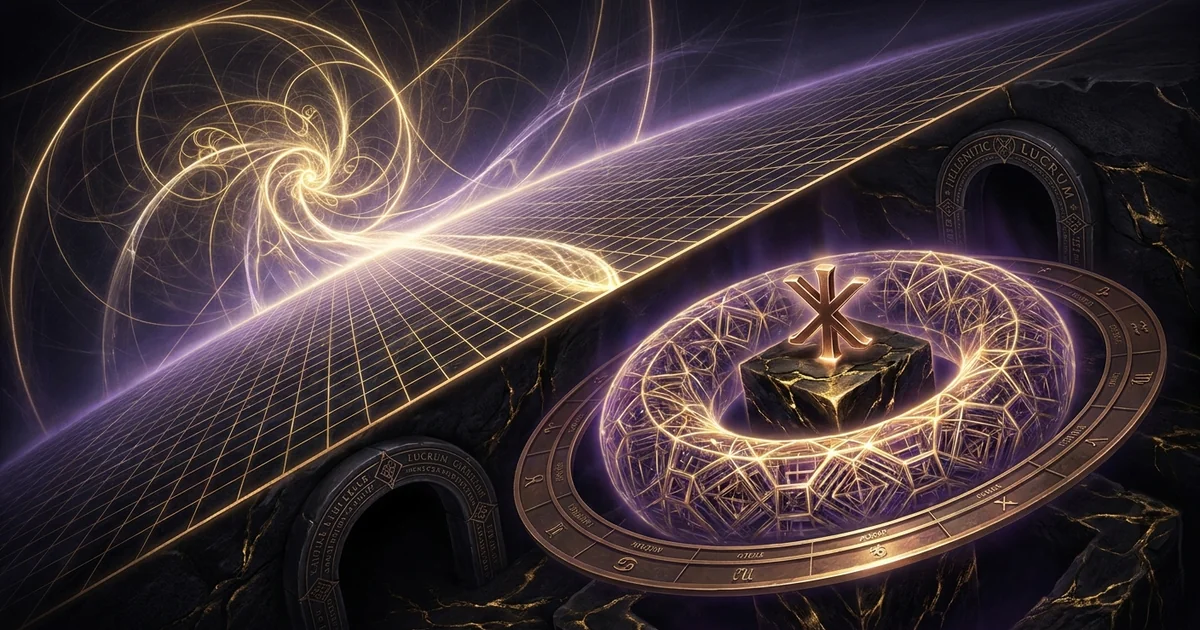
The foundational architecture of the twelve-fold astrological wheel operates on a triadic rhythm of energy mobilization: angular generation, succedent stabilization, and cadent distribution. Within this dynamic schema, the transition from the angular First House to the succedent Second House marks the critical metaphysical descent from pure, unconditioned subjectivity into systemic material embodiment. If the Ascendant represents the incandescent flash of the primal monad—the unmediated, somatic realization of subjective identity described in the /astrology/ascendant-first-house-ego-emergence framework—the second house astrological meaning encompasses the immediate physical consequence of that eruption. It is the crystallization of the primum mobile into concrete mass.
+---------------------------------------------------------------------------------------+
|                 THERMODYNAMIC SUCCESSION IN THE COSMIC QUADRANT                       |
|                                                                                       |
|   Angular Mode (House 1)       Succedent Mode (House 2)      Cadent Mode (House 3)    |
|   ------------------------     ------------------------      ---------------------    |
|   Dynamic Volition             Structural Coagulation        Informational Flow       |
|   "I Am" (Kinetic Ignition)    "I Have" (Potential Inertia)  "I Think" (Dispersal)    |
|   Entropy Inflation            Thermodynamic Homeostasis     Entropic Distribution    |
+---------------------------------------------------------------------------------------+
In the vocabulary of classical thermodynamics, the First House represents pure kinetic drive, an inflationary state of boundless psychic libido that lacks a containment field. Without an immediate succedent deceleration, this initial ontological pulse would dissipate into the cosmic void, exhausting its potential through unanchored projection. The succedent-house environment of the second locus acts as an energetic heat sink and gravitational trap. Here, the raw, undifferentiated assertion of “I Am” collides with the friction of spatio-temporal mechanics, precipitating out of its volatile gaseous state into the tangible, measurable coordinates of “I Have.”
This transition is governed by the laws of conservation. Energy cannot sustain subjective self-awareness in three-dimensional reality without an equivalent mass-energy substrate. The second house provides the physical ballast that prevents the nascent ego from succumbing to psychological inflation or physical evaporation. The second locus quantifies the cost of physical existence, transmuting the radiant psychic energy of the ego into biological fuel reserves, caloric buffers, and terrestrial leverage. It is the energetic reservoir that guarantees the continuous survival of the bodily vessel through the turbulent terrain of material incarnation.
The Somatic Mirror: Terrestrial Anchoring of the Incorporeal Self
The terrestrial anchoring facilitated by the second house constitutes a profound somatic mirror. Matter is not an inert, antithetical adversary to spirit; rather, it is the dense, slow-vibrational hypostasis of consciousness itself. Within the architecture of natal chart houses, the second house operates as the primary sensorium through which the newly individuated soul registers the feedback loops of physical incarnation. It registers the fundamental dialectic between hunger and satiation, cold and warmth, scarcity and abundance, thereby establishing the biological foundation of the terrestrial ego.
The incorporeal self, descending across the eastern horizon at the moment of the first breath, must immediately negotiate its dependence on the thermodynamic resources of the external biome. This physiological vulnerability forms the core of the second house complex. The corporeal shell is sustained only through the continuous ingestion, digestion, and metabolic assimilation of external terrestrial elements. Food, shelter, textiles, and protective implements are not mere commodities within this structural framework; they are externalized extensions of the biological organism. Through the possession and consumption of material substance, the boundary of the individual ego expands beyond the immediate epidermal layer, claiming a quantifiable perimeter of terrestrial sovereignty.
In this context, Dane Rudhyar noted in The Astrological Houses (1972) that the second house describes how the individual utilizes the physical and cultural inheritance bestowed upon them by the circumstances of birth. Rudhyar posited that material possessions are fundamentally tools for personal transformation, asserting that “matter is the condition of spiritual actualization.” The physical goods accumulated in the second locus represent psychic energy bound into stable forms, serving as structural counterweights that stabilize individual consciousness against the shifting winds of collective psychic life.
Economic Ego-Architecture: Value Systems as Psycho-Cosmic Boundaries
The generation of resources and the stabilization of personal wealth within the second house run parallel to the structural integrity of the psychological ego-architecture. Far from signifying only a bank ledger or collection of chattel assets, the second house demarcates an individual’s operational value matrix—the subjective scale of worth that dictates how consciousness allocates its most precious currency: focused attention and intentional action. The economic transactions carried out by an individual are precise psycho-cosmic projections of their internal sense of self-worth.
A robust second house creates stable, resilient boundaries between the self and the socio-economic matrix. When an individual achieves autarky—the self-contained ability to generate sufficient thermodynamic and economic resources—they insulate their inner life from coercive external pressures. Conversely, an impaired or structurally afflicted second house precipitates an ongoing crisis of boundaries. The inability to anchor value internally forces the psyche to solicit validation and sustenance from external systems, surrendering autonomous authority to whoever holds title to their survival.
Value systems, therefore, operate as defensive energetic enclosures. The historical attribution of physical property to this house reflects an esoteric truth: that which an individual owns, values, and protects forms the spatial boundary of their personal territory within Malkuth. These material boundaries define the limits of direct personal influence, establishing where the individual’s sovereign domain ends and the exterior wilderness begins. The second house demonstrates that true economic sovereignty is not merely a secular, socioeconomic achievement, but a structural requirement for genuine psychological individuation.
Classical Provenance & Textual Lineage: From Anaphora to Lucrum
The Hellenistic Gate of Hades: Sub-Horizonal Descents in Valens and Antiochus
To grasp the metaphysical depth of the second house, one must reconstruct its classical designation within Hellenistic astrology, where it was known as the Anaphora (literally, “rising up” or “carrying upward”). Positioned directly beneath the eastern horizon, the second house lies in the subterranean hemisphere, immediately preceding the Horoskopos (Ascendant) in the diurnal rotation of the cosmos. Because the diurnal motion of the celestial sphere carries planets from the second house up into the first house, Hellenistic astrologers perceived this sector as an energetic staging ground, an underworld antechamber from which forces steadily ascended toward incarnation.
       DIURNAL MOTION (Planets Rise Counter-Clockwise from Underworld)
                              [ HORIZON ]
               -----------------------------------------
               HOUSE 1 (Horoskopos)  | Emergent Being / Life
               =========================================
               HOUSE 2 (Anaphora)    | Gate of Hades / Sustenance
                                     | (The Subterranean Nursery)
Paradoxically, early Hellenistic authorities, including Antiochus of Athens and Vettius Valens, frequently associated this locus with ominous titles, most notably the Pyle Haidou—the Gate of Hades. This designation was not derived from modern moralistic notions of evil, but from strict cosmological optics. The second house cannot cast a classical Ptolemaic aspect (sextile, square, trine, or opposition) to the Ascendant; it sits in aversion (asyndeton or inconjunct) to the helm of the chart. Being sub-horizonal, visually severed from the horizon of consciousness, and situated directly in the shadow of the underworld, it signified the dark, unremitting labor required to pull matter from the earth to support bodily life.
“The second locus is that of Livelihood (Bios), the Anaphora of the Horoskopos, yet it is subterranean and disconnected from the helm. It reveals the foundations of possessions, the physical sustenance of mortal men, and the slow, arduous extraction of profit through bodily weariness and heavy toil under the shadow of the subterranean horizon.”
Valens meticulously categorized the second house as the domain of Bios—the material mode of life, the mundane career, and physical sustenance. The association with Hades underscored the inescapable mortality of the physical organism. To live, the native must continuously consume the carcasses of flora and fauna, wrestling nourishment from the chthonic depths. The Gate of Hades is the biological reality that life feeds upon life; matter must be bound, killed, and digested to preserve the structural integrity of the incarnate soul.
Hellenistic Cartography: The House of Livelihood (Bios)
┌────────────────────────────────────────────────────────┐
│ The Subterranean Arc: Inconjunct / In Aversion to H1  │
│ 30° Disjunction prevents direct Ptolemaic sight line   │
│ Planet in H2 rises TO the Ascendant via diurnal spin   │
│ Archetype: Somatic toil, physical maintenance, Hades   │
└────────────────────────────────────────────────────────┘
Medieval Reconceptualization: The Latinization to ‘Lucrum’ and Chattel Assets
As the Hellenistic astrological corpus was translated into Latin via the scholarly intermediaries of the Late Antique and early Medieval worlds, the profound cosmological and underworld nuances of the Anaphora were gradually flattened into legalistic, concrete socioeconomic categories. The influential fourth-century Roman senator and astrologer Julius Firmicus Maternus, in his Matheseos Libri VIII, codified this shift. Maternus categorized the second house bluntly under the heading of Lucrum—a Latin term denoting material gain, profit, pecuniary wealth, and chattel property.
Under this Roman juridical lens, the second house transformed from a site of chthonic existential survival into an economic ledger documenting movable wealth, gold bullion, commercial exchange, and inherited liquid assets. Firmicus Maternus instructed the practitioner to evaluate the second house to determine whether the native would be plunged into the indignities of penury or elevated to the status of a patrician possessor of expansive estates. The rich philosophical inquiry into how matter anchors consciousness was largely subsumed by the pragmatic imperative to calculate fiscal solvency and tangible estate sizes within the Roman monetary system.
During the subsequent Medieval European transmission, astrologers such as Guido Bonatti consolidated this perspective. The second house was designated as the significator of an individual’s personal movable goods, liquid currency, commercial ventures, trade receipts, and personal assistants or retainers who assisted in generating fiscal yield. The house lost its subterranean ambiguity, solidifying into the standard, secular significator of wealth, personal finances, and the acquisition of earthly commodities that characterizes modern astrological discourse.
Arabic Cartography: The Dorothean Paradigm of the Lord of Wealth
During the Abbasid translation movement and the Golden Age of Islamic astrology, master cartographers of the celestial sphere—including Abu Ma’shar, Masha’allah, and Al-Biruni—synthesized Hellenistic doctrines with the Persian and Indian lineages. They approached the second house with mathematical and systemic precision, rejecting simplistic single-planet assessments in favor of multifaceted algorithmic evaluations. Central to this methodology was the doctrine inherited from Dorotheus of Sidon regarding the triplicity rulers of the planetary houses and the calculation of the Arabic Parts (Sahm).
The Arabic masters prioritized the calculation of the Pars Substantiae, commonly known as the Lot of Substance or the Lot of Wealth. Calculated by projecting the angular distance between the ruler of the second house and the degree of the second house cusp from the Ascendant (with varying day and night inversions depending on the master consulted), the Lot of Substance served as a shadow second house—an esoteric verification of the physical house’s overt promises.
                                  AL-BIRUNI'S WEALTH EVALUATION TRIAD

     [ Physical House 2 ]           [ Pars Substantiae ]            [ Triplicity Lords ]
     Local material capacity        Esoteric reserve of fate        Chronological unfolding
     and direct cash flow           and structural inheritance      over the three ages of life
To determine an individual’s terrestrial fortune, Islamic astrological doctrine mandated a three-tier inspection:
- The condition, essential dignity, and configuration of the physical occupants of the second house.
- The planetary ruler (domicile lord) of the second house cusp, alongside its dispositor and its configuration to the benefic or malefic planets.
- The Three Triplicity Rulers of the sign on the second house cusp (for diurnal and nocturnal nativity sequences), which governed the trajectory of wealth across the early, middle, and late phases of the native’s incarnation.
Through this systemic matrix, the classical Arabic astrologers could pinpoint not only the quantity of resources at a native’s disposal, but also the ethical vector, structural longevity, and volatile reversals of their worldly fortunes.
Structural Mechanics & Symbolic Geometry: Polarities, Aspects, and Planetary Rulers
The Taurus-Venus Archetypal Resonance: Fixed Earth and Value Genesis
In natural house theory and the evolutionary schema of the Thema Mundi, the second house is profoundly resonant with the archetypal frequency of Taurus, the sign of Fixed Earth, and its planetary ruler, Venus (Aphrodite). While modern astrological theory often blurs the distinction between houses and signs, recognizing their structural congruence clarifies the systemic mechanics of value genesis. Fixed Earth represents physical matter in its most stable, crystallized, and bio-available state: topsoil, arable land, geological formations, architectural foundations, and tangible organic mass.
The natural affinity between astrological house 2 and the /astrology/taurus-archetype-fixed-earth manifests through the conservative stabilization of form. Taurus resists the entropic dissolution of energy by constructing permanent, unyielding containers. Venus, as the planetary archetypal force of attraction, aesthetic cohesion, and valuation, operates as the primary engine within this terrestrial sphere. Venus is the cosmological harmonic that draws disparate particles into resonant, functional unions. In the human realm, Venusian consciousness manifests as preference, appraisal, desire, and judgment: it assigns subjective and systemic worth to objective phenomena.
+-----------------------------------------------------------------------------------------+
|                  VENUSIAN-TAUREAN VALUATION SCHEMA IN HOUSE 2                           |
|                                                                                         |
|   Sensory Perception  ==>  Aesthetic Appraisal  ==>  Value Assignment  ==> Accumulation|
|   (Sensory Intake)         (Venusian Harmonic)       (Economic Worth)      (Fixed Earth)|
+-----------------------------------------------------------------------------------------+
When consciousness interacts with the physical world through the lens of the second house, it does not do so indifferently. Guided by the Venusian instinct, it weighs, measures, appreciates, and claims that which ensures physical well-being and sensory delight. The accumulation of resources is thus an aesthetic and sensual endeavor: an individual seeks to surround themselves with resources that resonate with their internal harmonic signature, constructing a tangible environment that mirrors their internal criteria of order, elegance, and physical security.
The 2nd–8th Axis: Individual Subsistence Versus Collective Debt Dynamics
No astrological house functions in isolation. The structural mechanics of the cosmic wheel demand that the second house be analyzed in perpetual dialectical tension with its polar opposite: the Eighth House (Epikataphora or the Involuntary Descent). This 2nd–8th polar axis represents the comprehensive metabolic cycle of the psyche operating within a collective matrix of resources, governing the systemic dynamics between autarkic individual subsistence and enmeshed collective debt.
House 2: Lucrum / Autarky
- Resource Ownership: Personal capital, movable goods, and direct liquid assets under sovereign control.
- Metabolic Function: Cellular nutrition, consumption, assimilation, and physical self-preservation.
- Psychological State: Self-worth, intrinsic value, autarkic independence, and self-sustenance.
- Thermodynamic Mode: Structural accumulation, coagulation, kinetic retention, and energetic boundary defense.
House 8: Epikataphora / Interdependence
- Resource Ownership: Shared capital, corporate assets, venture debt, inheritance, and tax liabilities.
- Metabolic Function: Cellular excretion, death, decomposition, and trans-personal regeneration.
- Psychological State: Existential crisis, vulnerability, collective trust, and psychological entanglement.
- Thermodynamic Mode: Dissolution of boundaries, metabolic exchange, systemic taxation, and entropic reset.
While the second house signifies the food one eats, the wages one earns by bodily exertion, and the savings one hoards, the eighth house governs the assets of the other, the liabilities incurred through social contracts, and the inexorable decay of all accumulated matter. As explored in /astrology/eighth-house-shared-resources-transmutation, personal property (House 2) is constantly vulnerable to systemic absorption by collective financial structures, inheritance disputes, or state taxation (House 8).
When a native over-identifies with the second house, they risk constructing an isolated bunker of personal wealth, suffering from paranoid isolation and metabolic constipation. Conversely, over-reliance on eighth house dynamic capital exposes the individual to the predatory wills of creditors, systemic institutional failure, and catastrophic loss of sovereign agency. Individuation requires a rhythmic, homeostatic balance across this axis: one must accumulate sufficient personal capital (House 2) to maintain sovereign integrity, while remaining capable of psychological surrender, systemic investment, and transformative exchange (House 8).
Aversion to the Ascendant: Blind Spots of Possession and Epikatafora Dynamics
One of the most consequential yet frequently overlooked structural mechanics of the second house is its geometric relationship to the First House. In classical Hellenistic aspect doctrine, signs that reside adjacent to one another—such as the first and second houses—are classified as inconjunct or in aversion (apophoron / asyndeton). They share neither gender (masculine/feminine), element (fire/earth/air/water), nor quadruplicity (cardinal/fixed/mutable).
THE GEOMETRIC AVERSION
               [ Ascendant / House 1 ]  <--- 30° Disjunction --->  [ House 2 ]
               (Conscious Self-Concept)                             (Material Property)
                                        \                         /
                                         \-- NO PTOLEMAIC SIGHT -/
                                             (Constitutional Blind Spot)</code></pre>
Because of this thirty-degree separation, the conscious ego residing at the helm of the First House cannot “see” the second house through any traditional Ptolemaic aspect of connection. The second house represents a permanent constitutional blind spot within the psyche. This structural aversion generates profound psychological consequences regarding the human relationship to material possessions:
- Ego-Alienation from Wealth: The conscious ego struggles to perceive its material holdings objectively. Individuals frequently misjudge their financial standing, feeling perpetually impoverished despite immense affluence, or squandering scarce resources under the delusion of limitless reserves.
- The Phenomenon of Instrumentalization: Because the ego does not directly identify with the second house, it views its resources either as disconnected instruments of mechanical survival or as alien entities that demand exhausting, unending maintenance.
- Possession by Possessions: In the absence of direct conscious integration, the material objects governed by the second house can turn upon the master. The individual becomes an unconscious servant to their possessions, laboring tirelessly to secure, maintain, and insure inanimate objects that the conscious self cannot even conceptually synthesize.
To overcome this systemic aversion, the native must engage in rigorous symbolic and reflective labor. The planetary dispositor of the second house cusp serves as the critical psychological mediator. Through this planetary ambassador—its placement, dignity, and aspects to the Ascendant—the psyche builds a conscious bridge over the void of aversion, transforming unconscious, reactive materialism into intentional, integrated terrestrial stewardship.
Psychological Dynamics & Operational Praxis: The Archetypal Economy of Consciousness
Object Relations and the Ingestion of the World: Somatic Self-Regard
When refracted through the analytical lens of modern Depth Psychology and psychoanalytic Object Relations Theory, the second house operates as the primary architectural blueprint of somatic self-regard. Pioneers of object relations, such as Melanie Klein, W.R.D. Fairbairn, and D.W. Winnicott, stressed that the psychological development of the nascent ego depends upon the primary infant-caregiver dynamic, specifically focused on the primal feeding experience: the ingestion of the mother’s milk, the somatic contact with the holding environment, and the infant’s foundational assessment of whether the physical world is fundamentally benevolent, safe, and nourishing, or barren, persecutory, and withholding.
PSYCHODYNAMIC STABILIZATION OF THE SECOND HOUSE MATRIX
[ Primary Feeding/Holding ] –> [ Somatic Ingestion of World ] –> [ Solidified Self-Worth ]
(Winnicott)                     (Kleinian Good Breast)            (2nd House Structure)
|                                    |                                 |
v                                    v                                 v
Physical Sustenance               Internalization of Safety           Capacity to Earn & Retain
The second house is the astrological codification of this internal “holding environment.” The sign on the second cusp, its planetary ruler, and the planetary occupants within this locus delineate how the individual experiences the foundational act of receiving sustenance. A well-integrated second house reflects an internalized, nourishing “good object.” Such an individual moves through the terrestrial world with an intrinsic, unshakable conviction that the world contains sufficient resources to sustain their physical and psychological needs. They experience an unforced somatic ease that allows them to receive value, charge appropriate fees for their labor, and digest experiences without lingering anxiety.
Conversely, a severely afflicted second house—traumatized by harsh aspects from malefics or the debility of its dispositor—mirrors the catastrophic internalization of a withholding or persecutory environment. In clinical practice, this manifests as deep-seated somatic dissociation, eating pathologies, pervasive financial panic irrespective of actual net worth, and structural boundary impairments. The individual unconsciously replicates their earliest developmental deprivations, continuously generating crises of scarcity that confirm their core psychological complex: the terror of physical abandonment and starvation at the threshold of the material world.
The Shadow of Accumulation: Hoarding as a Defense Against Thanatos
The structural shadow of the second house manifests primarily as compulsive material hoarding, hyper-capitalist extraction, and the defensive fetishization of physical security. Within the framework of Jungian archetypal psychology, these pathological behaviors are not mere economic anomalies; they are desperate, displaced psychic defenses against the reality of mortality, physical decay, and the inescapable presence of Thanatos (the death drive).
“The materialization of psychic energy is an inescapable biological fact, yet when the ego seeks to immunize itself against its own transitoriness by amassing inert physical matter, it falls victim to a profound alchemical illusion. The hoarding of gold is ever the terrified animal’s attempt to purchase immortality from the grave; it is the concrete fossilization of libido striving to erect an impervious physical citadel against the subterranean void of the unconscious.”
Because the second house immediately borders the underworld axis and remains geometrically blind to the conscious helm of the Ascendant, it harbors an unarticulated, archaic dread of extinction. When the individual cannot tolerate the vulnerability of physical incarnation, they attempt to solve the spiritual and existential dilemma of mortality through quantifiable, material means. They convert the volatile, frightening, and uncontrollable flow of life into static, predictable, and durable objects: gold bullion, real estate portfolios, corporate shares, and locked vaults.
This shadow accumulation represents an energetic arrest. Psychic libido, which ought to circulate dynamically through the chart’s upper quadrants toward social contribution (House 10) and collective communion (House 11), becomes pathologically trapped within the second locus. The hoarder seeks to construct an impenetrable physical carapace that can withstand the entropic dissolution of time. Yet this defense is inherently self-defeating: by surrounding the living soul with a crushing mass of dead matter, the native becomes interred alive within their own possessions, transforming the second house from a sustaining garden of nourishment into a veritable tomb.
Diagnostic Chart Delineation: Condition of the Ruler and Lot Integration
To execute a rigorous, publication-grade diagnostic delineation of the second house within a natal chart, the astrological investigator must eschew simplistic psychological generalizations and follow a multi-tiered structural methodology. The analytical workflow demands a systematic evaluation of planetary dignities, sectarian alignment, aspect geometry, and calculated lots.
+---------------------------------------------------------------------------------------+
|                    SECOND HOUSE DIAGNOSTIC DELINEATION WORKFLOW                       |
|                                                                                       |
|   Step 1: Cusp Geometry & Sign Modality (Fixed, Cardinal, Mutable Earth/Water/Air/Fire)|
|   Step 2: Occupant Analysis (Sect Status, Essential Dignity, Dynamic Aspects)         |
|   Step 3: Planetary Dispositor Track (House Location, Dignity, Reception to Cusp)     |
|   Step 4: Arabic Lot of Substance / Pars Substantiae (Condition, Dispositor, Angle)   |
|   Step 5: Synthesize Structural Potential: Autarky vs. Dependence vs. Dissolution     |
+---------------------------------------------------------------------------------------+
The diagnostic evaluation proceeds through five precise stages:
- The Cusp and Sign Modality: Determine the zodiacal sign on the cusp of the second house. Evaluate its elemental nature and quadruplicity. A Fixed Earth sign (Taurus) on the cusp anchors financial resources through conservative, compounding, long-term physical strategies, whereas a Mutable Air sign (Gemini) dictates a volatile, diversified, intellectually-driven, and fluctuating economic interface.
- Analysis of House Occupants: Examine any planets posited within the second house, evaluating their condition via sect status (day or night chart alignment) and essential planetary-dignity (domicile, exaltation, triplicity, term, or face).
- A benefic planet aligned with the sect (e.g., Jupiter in a diurnal chart) within the second house suggests ease in attracting material support, generous self-worth, and productive resource stewardship.
- A malefic planet out of sect (e.g., Mars in a diurnal chart or Saturn in a nocturnal chart) posited here introduces friction, sudden resource hemorrhages, hyper-defensive hoarding patterns, or persistent anxiety regarding material survival.
- The Dispositor Track: Locate the planetary ruler of the sign on the second house cusp. The house placement of this dispositor maps the primary operational field from which resources are extracted. If the ruler of the second house resides in the Tenth House, the native’s material sustenance is directly tethered to public reputation, executive authority, and professional standing. If the second house ruler is posited in the Twelfth House, resources are systematically tied to institutions of confinement, spiritual retreats, foreign isolation, or self-undoing expenditures.
- Reception and Aspect to the Ascendant: Ascertain whether the planetary ruler of the second house casts an aspect back to the Ascendant degree or to the ruler of the Ascendant. A favorable aspect (trine or sextile) with mutual reception between the first and second house rulers guarantees the successful, conscious integration of personal capacity into tangible fiscal solvency. An enduring aversion (inconjunct) or difficult aspect (square/opposition) without reception indicates chronic friction between who the individual wishes to be and the material activities they must perform to survive.
- Integration of the Lot of Substance: Calculate the Pars Substantiae. Examine the house in which this Lot falls and the planetary condition of its dispositor. If the physical second house appears afflicted, yet the Lot of Substance is situated on an angle conjunct a dignified benefic, the native will experience sudden, unearned material rescues or hidden reservoirs of wealth that counteract the apparent deficiencies of the primary house.
Philosophical Synthesis & Macrocosmic Correspondence: Terrestrial Density as Spiritual Crucible
Hermetic Entelechy: Matter as the Laboratory of the Soul
The second house, when understood through the expansive framework of Hermetic philosophy, represents the vital terrestrial crucible of the Great Work. The famous Hermetic axiom, “That which is Below corresponds to that which is Above, and that which is Above corresponds to that which is Below, to accomplish the miracles of the One Thing,” is frequently misinterpreted as an excuse to dismiss the physical plane in pursuit of ethereal, incorporeal realms. Traditional Hermetic entelechy asserts the absolute reverse: matter is the sole laboratory wherein spiritual archetypes can achieve physical actuality and conscious redemption.
The spirit descends into the density of the second house not to be punished, but to undergo intentional coagulation. Pure spirit lacks resistance; it is infinite, boundless, and incapable of experiencing its own contours without an opposing medium. Terrestrial matter provides that necessary friction. The weight of economic survival, the biological imperative of somatic preservation, and the structural laws of physical mechanics provide the recalcitrant matrix through which the soul tests its creative potency. The second house demands that spiritual values prove their efficacy under the unforgiving laws of gravity, economics, and biological necessity. To harbor elevated spiritual aspirations while remaining utterly incompetent at managing the resources of the second locus is, within the Hermetic paradigm, a failure of integration—a refusal to complete the alchemical descent into matter.
Malkuth and the Salt of the Earth: Kabbalistic Crystallization
Within the cosmological map of the Kabbalistic Tree of Life, the second house resonates directly with the tenth and final Sephirah: Malkuth—the Kingdom, the physical world of sensory perception, dense manifestation, and material actualization. Malkuth is the vessel into which the divine emanations of the upper nine Sephiroth pour their concentrated energies, achieving final, permanent crystallization. As detailed in the /kabbalah/malkuth-kingdom-physical-crystallization discourse, Malkuth is not fallen in an ontological sense; it is the ultimate destination of the divine will—the physical reality wherein the divine experiences its own manifestation.
KABBALISTIC-ALCHEMICAL CORRESPONDENCE OF THE 2ND HOUSE
    [ Ain Soph / The Absolute ]
                 |
   (Descent through Sephiroth)
                 |
                 v
         [ Kether / Crown ]  ======>  Ascendant / House 1 (The Initial I Am)
                 |
                 v
        [ Malkuth / Kingdom ] =====>  House 2 (The Crystallized I Have)
                 |
     Alchemical Salt / Sal
 (Boundary, Weight, Preservation)</code></pre>
In the alchemical tradition, this dynamic corresponds directly to the principle of Sal (Alchemical Salt), the third of the Tria Prima along with Sulfur (soul/fire) and Mercurius (spirit/water). As established in /esoteric-systems/alchemical-principles-sulfur-mercury-salt, Salt is the principle of coagulation, fixation, form-giving density, and preservation. While Sulfur represents the active, passionate will (House 1), Salt is the structural matrix that arrests this volatility, transforming dynamic flame into durable, crystal form (House 2).
The Second House functions as the astrological vehicle for the Alchemical Principle of Salt (Sal) and the Sephirah Malkuth. Without the contractive, coagulating property of Salt, psychic energy (Sulfur) and spiritual breath (Mercury) cannot crystallize into earthly reality. The second house provides the sacred boundary of density, turning ephemeral intentionality into permanent terrestrial substance.
The second house is the “Salt of the Earth.” It bestows stability, taste, endurance, and boundary definition to human experience. It demands that the individual cultivate respect for the physical vehicle, recognizing that the temple of the body and the physical resources that maintain it are the holy ground upon which the divine drama of self-realization unfolds.
Cybernetic Self-Regulation: Homeostatic Feedback Loops of Value
In contemporary systemic thought, the second house can be conceptualized as an advanced, closed-loop cybernetic feedback mechanism designed to preserve psychological and physiological homeostasis. Cybernetics, as pioneered by Norbert Wiener and expanded by Gregory Bateson, studies the regulatory processes, information transfers, and feedback loops that allow complex systems to maintain dynamic stability within changing external environments.
+-----------------------------------------------------------------------------------------+
|                  CYBERNETIC FEEDBACK ARCHITECTURE OF HOUSE 2                            |
|                                                                                         |
|    [ Internal Estimation ]         [ Behavioral Allocation ]        [ Terrestrial Yield]|
|    Self-Worth & Capability  ====>  Energy, Time & Labor     ====>  Capital & Sustenance|
|          ^                                                                |             |
|          |                                                                |             |
|          +=============== [ Dynamic Error-Correction ] <==================+             |
|                            (Entropy, Profit, Loss)                                      |
+-----------------------------------------------------------------------------------------+
The second house operates as the core sensor in this cybernetic loop. The process proceeds through a continuous, four-stage systemic cycle:
- Internal Estimation: The individual’s internal calculation of self-worth and operational capability (rooted in the second house cusp and dispositor) establishes an energetic baseline.
- Behavioral Allocation: The native projects this valuation outward, allocating energy, time, and physical labor into the socioeconomic environment.
- Terrestrial Yield: The environmental biome returns an objective output: income, debt, physical exhaustion, caloric sustenance, or tangible capital.
- Dynamic Error-Correction: The individual measures this physical return against their survival baseline. If there is a metabolic deficit (scarcity, burnout, financial insolvency), the cybernetic loop registers an error signal.
When the second house operates with structural integrity, this error signal prompts rapid homeostatic correction: the individual adjusts their boundaries, raises their prices, conserves their physical energy, or shifts their vocational mechanics. However, if the second house is structurally damaged or clouded by unconscious complexes, the feedback loop breaks down. The individual misinterprets the environmental data, doubling down on destructive allocations of energy, tolerating predatory exploitation, or descending into paralyzing material panic. The second house ultimately serves as an uncompromising, objective feedback mirror: it forces the subjective ego to confront the reality of its choices, correcting the illusions of the mind through the empirical reality of material consequences.
Frequently Asked Questions
Resolving Technical and Hermeneutic Ambiguities of the Second House
Does the second house signify only earned income, or all forms of personal liquid wealth?
In classical and modern delineation, the second house strictly governs personal, movable resources over which the native exercises direct, undisputed sovereignty. This includes earned income derived from personal labor or trade, liquid currency, gold and precious stones, personal vehicles, tools, and movable chattel assets.
It must be sharply demarcated from the Fourth House, which governs immovable property, real estate, ancestral land, subterranean minerals, and domestic structures. Furthermore, the second house must be distinguished from the Eighth House, which encompasses shared marital capital, insurance settlements, collective investments, venture capital, and liabilities incurred through debt. The second house is the ledger of individual autarky: if an asset cannot be liquidated directly by the native or moved at will without the consent of an external party, it does not belong purely to the second locus.
                         THE MATERIAL ALLOCATION SPECTRUM

   [ House 2: Lucrum ]         [ House 4: Immovable Estate ]     [ House 8: Shared Capital ]
   Movable property            Ancestral land                    Joint bank accounts
   Liquid bank deposits        Real estate / Farms               Venture capital / Loans
   Personal tools & goods      Subterranean minerals             Inheritances / Taxes
Why did classical Hellenistic astrology categorize the second house as a ‘weak’ or ‘unfavorable’ locus if it signifies wealth and sustenance?
The classical Hellenistic categorization of the second house as an unfavorable or difficult place (infortune) was based entirely on geometric optics relative to the Ascendant, rather than a moralistic judgment on the value of physical wealth. Because the second locus sits in aversion (asyndeton) to the First House, it cannot cast a major Ptolemaic aspect (sextile, square, trine, or opposition) to the Ascendant. In the optical cosmology of the ancients, this meant the helm of the chart could not “cast its gaze” upon the second house.
Consequently, the second house was viewed as an area of life fraught with blind spots, heavy physical labor, chthonic anxiety, and the unremitting metabolic pressure to stave off somatic death. While Hellenistic astrologers fully acknowledged that the second house granted Bios (livelihood and the resources to eat and thrive), they recognized that the unending struggle for material survival often distracts consciousness from the higher, philosophical pursuits of the mind and spirit located in the luminous houses that maintain direct optical access to the Ascendant.
What is the operational distinction between planets situated within the second house and the condition of its planetary dispositor?
The operational distinction between the occupants of the second house and its planetary dispositor (the domicile lord of the sign on the cusp) is fundamental to rigorous chart delineation. Planets posited directly within the second house describe the immediate, concrete experience and the specific qualitative texture of the native’s material life. For example, Uranus in the second house introduces sudden, erratic fluctuations, technological vectors of income, and unconventional attitudes toward physical property, directly coloring how money is experienced on a daily basis.
DIAGNOSTIC DUALITY: OCCUPANTS VS. PLANETARY DISPOSITOR
[ Planets Posited in House 2 ]   =====>   Immediate Phenomenological Experience
(e.g., Uranus: Volatile,                  (The environmental conditions, crises,
sudden windfalls, erratic income)         and sensual encounters with money)
|
| (Rooted in & Dependent Upon)
v
[ Planetary Dispositor of Cusp ]  =====>  Structural Capacity & Ultimate Yield
(e.g., Dignified Saturn in 10th:          (The foundational architecture, lasting
Enduring architectural legacy)            longevity, and final destiny of wealth)
The planetary dispositor, conversely, represents the structural engine, the ultimate destiny, and the capacity for material durability. A chart may feature volatile, difficult planets within the second house (such as Mars or Uranus), yet if the dispositor of that house is exceptionally dignified by domicile or exaltation, situated on an angle, and supported by favorable aspects from Jupiter, the native will successfully weather their internal monetary volatility, ultimately building a stable, long-lasting financial legacy.
Conversely, if the second house contains well-aspected benefics, but the dispositor is combust, retrograde, and fallen in the Twelfth House, the native may experience early windfalls and luxurious surroundings, only to have the foundational architecture of their estate erode beneath them due to structural mismanagement, legal dissolution, or unconscious self-sabotage. The occupants describe the phenomenological surface; the dispositor commands the structural reality. :::